The latest reaction of Iranian judicial authorities to the Evin Prison videos: "A few soldiers" committed violations
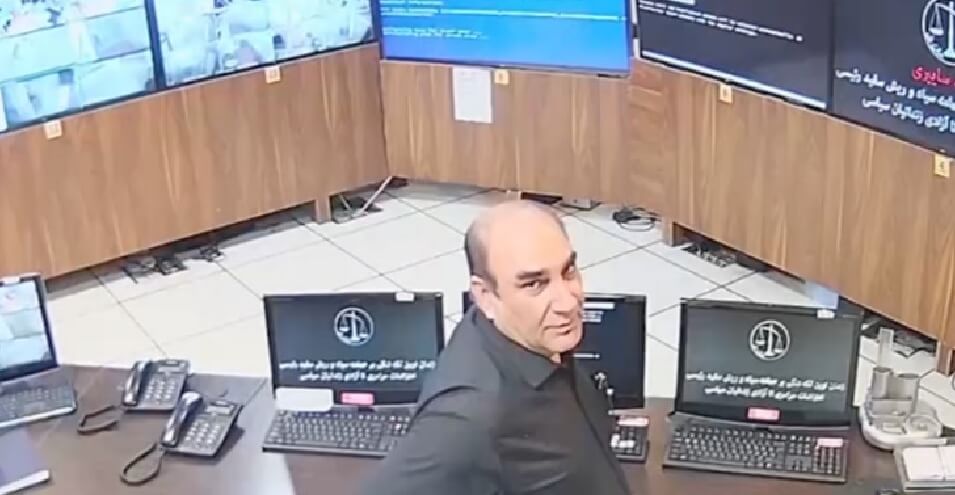
In the latest reaction to the release of hacked videos by the cyber group "Adel Ali," the Judiciary Spokesperson reduced the violation of prisoners' rights in the released videos to "the violation of a few conscripts" and said that it should not be blamed "on all employees" of the Prisons Organization.
On Tuesday, September 29, Zabihullah Khodayan said that the "violators" had been dealt with legally, adding: "Six people were identified, four were referred to the Military Prosecution and two to the Revolutionary Prosecution, and some are under arrest, and summons have been issued for two others, and some of the violators were dealt with in due course."
The spokesman for the Judiciary of the Islamic Republic of Iran also said, "Some people were unfair and said that the authorities do not pay attention to the rights of prisoners. Mr. Mohseni Ejei has been the head of the judiciary for about two months." Before him, Ebrahim Raisi was the head of the Judiciary.
According to reports, Zabihollah Khodayan described the films released from Evin Prison as "illegal" and "unjustifiable," and said that "based on this, the judiciary insists on dealing with the violators."
A spokesman for Iran's judiciary said: "We should not blame the violations of a few conscripts on all the hardworking employees of this organization. In any case, there will be violators in every stratum, and they will definitely be dealt with."
These remarks are being published in a situation where the mistreatment and beating of prisoners took place in front of surveillance cameras to which higher prison officials have access.
Stating that some prisoners are people who "may not be tolerated by even one person, even in a city," Khodayan once again called the hacked videos from Evin Prison's security cameras a "montage" and emphasized: "These videos were broadcast one after another, and people may think we witness these cases every day, but this is not true."
Activists, human rights groups, and former prisoners have repeatedly warned of the mistreatment of prisoners in the Islamic Republic’s prisons, and judicial officials have repeatedly denied those allegations. But with the release of the prison hacking videos, officials were silent for a while, then reacted to the images, and now it seems they are once again trying to downplay them.
In this regard, a lawyer told ILNA News Agency: "No matter how heinous the crime, it is not a license to use violence against the accused to prove it."
According to attorney Mohsen Shahin, one of the factors behind violent behavior toward prisoners is the increase in prison population.
Some Islamic Republic officials have questioned the authenticity of leaked images from Evin in recent days. On Sunday, Mohammad Mossadegh, Iran's first deputy judiciary chief, called "many of these leaked images" a "montage" and said the images "have nothing to do with the prison at all."
Khodayan also raised the issue of "montage" and said: "Those who published it, montage and put it together, and it may have been months or years ago, and it should not be imagined that we have such things every day in prison."
Last week, Amnesty International responded to leaked images from Evin, saying the images showed "appalling abuse of prisoners and a reminder of the impunity granted to prison authorities in Iran who subject detainees to torture and cruel, inhuman and degrading treatment."
Amnesty International says images of the mistreatment of prisoners in Evin are just the tip of the iceberg of the torture epidemic in Iran.
- Elegant audio file
In his first press conference as the spokesman for the judiciary, Zabihollah Khodayan also referred to the case of the release of the audio file of Mohammad Javad Zarif, the former Foreign Minister of the Islamic Republic of Iran, and said that "a case has been opened in the Tehran Revolutionary Prosecutor's Office" in this regard, and "more than 20 people have been summoned as informants, and evidence and documents have been collected, and the case is for summoning the defendant or defendants. In a question I had with the Tehran Prosecutor's Office, action will be taken to summon these defendants in the coming days, and we must await the outcome of the case."
A file of several hours of Saeed Lailaz's conversation with Mohammad Javad Zarif was leaked to the media in May of this year, while it was said that this series of conversations with officials of the Rouhani government were recorded under the supervision of the Iranian Presidential Center for Strategic Studies to examine the performance of the Iranian government.
At the same time, news agencies and media outlets close to Iranian security institutions identified Hesameddin Ashena, then head of the Presidential Center for Strategic Studies, as responsible for the audio file leak.
Khodayan also referred to the case of a number of lawyers and civil activists critical of the mismanagement of the coronavirus in Iran who were arrested last month, and described their charges as "disturbing order and some crimes against security."
These lawyers and activists were arrested after planning to complain to some high-ranking officials of the Islamic Republic, including Ayatollah Khamenei, who restricted the entry of vaccines into the country.
Regarding these arrests, Khodayan said: "About nine people were introduced to the judicial authority in this connection and four were released on the first day. Five people were arrested on bail and two of them have been released so far after accepting the bail."
While the coronavirus continues to claim many victims in Iran due to the ineffective policies of the Islamic Republic's authorities, there has been a lot of support for the detained lawyers and activists.
The human rights website HRANA wrote on Monday, September 28, that the Coordination Council of Iranian Teachers' Unions issued a statement protesting these arrests and describing the ban on the import of American and British vaccines by the Leader of the Islamic Republic as "massacre of the people."
Source: Voice of America