The ambiguous fate of "Donia Hosseini", a critical voice that will not be silenced under the burden of heavy sentences
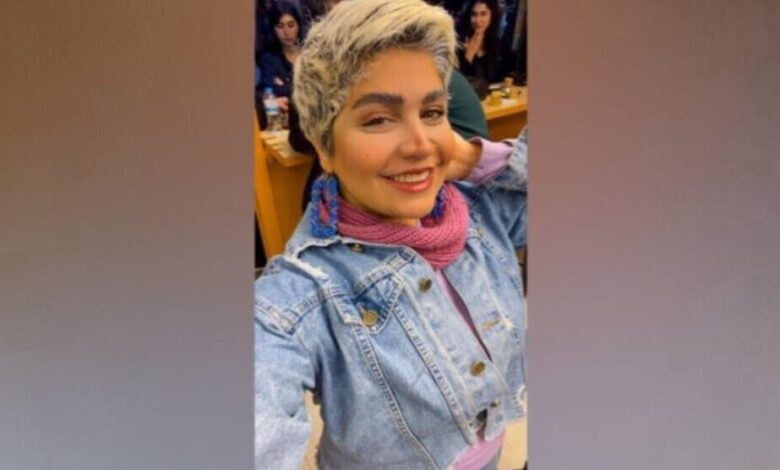
Judicial pressures on "Hosseini's World" and the increasing trend of security rulings in Iran indicate the suppression of critics and opponents by the Islamic Republic government.
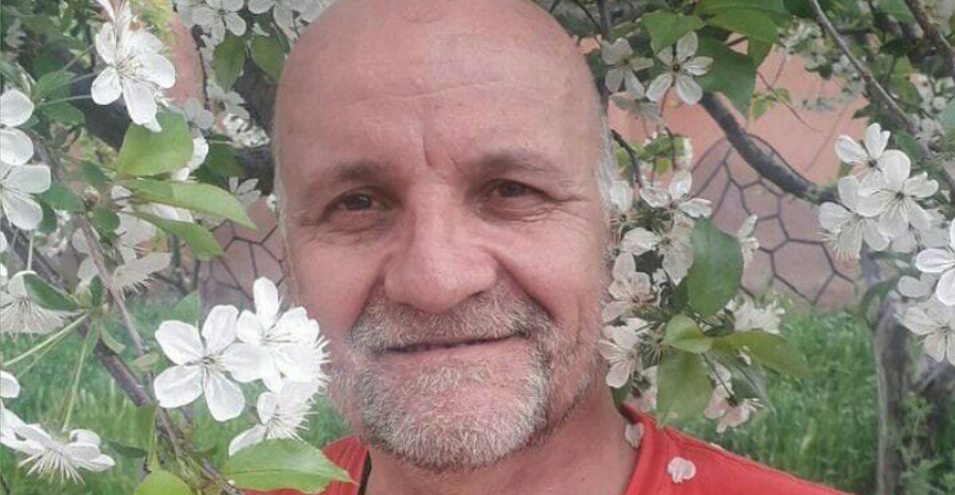
Donya Hosseini, a citizen living in Tehran and a civil activist who is also known by the pseudonym "Donya Azad", has once again been subjected to the execution of heavy security sentences. On December 29, she was summoned to the Execution Branch of the Tehran Public and Revolutionary Prosecutor's Office upon receiving a notification, and yesterday, December 10, she was issued a text message prohibiting her from leaving; a move that indicates that the judicial system intends to begin a new phase of her prosecution.
Hosseini had previously been sentenced to eight years and six months in prison and a fine in two separate cases by Branch 26 of the Tehran Revolutionary Court, presided over by Judge Iman Afshari. Although five years of this sentence were suspended, the penal portion of it remains in effect.
In November of this year (1404), Branch 36 of the Tehran Court of Appeals, headed by Judge Khojasteh, confirmed her previous verdict and issued a new verdict, according to which Donya Hosseini was sentenced to three years and six months in prison on the charge of "propaganda against the regime in order to strengthen the Israeli regime," a charge that has been used for years as one of the most common security labels against civil activists, journalists, and critical citizens.
Donya Hosseini was arrested by security forces on June 16 and transferred to Qarchak Prison in Varamin, a prison that has been repeatedly criticized by human rights organizations due to its inadequate conditions (especially for female political prisoners).
He was finally temporarily released on August 2, after posting a very heavy bail of three billion Tomans. This amount, like many similar cases, serves more as a tool to put additional pressure on his family and relatives than as a legal remedy.
Hosseini's legal case is not limited to this year. He was also sentenced to five years of suspended prison and a fine in a separate case in 1402. The series of these sentences shows that he is among the citizens who have been in the cycle of security prosecutions and has faced a new case practically every year.
Donya Hosseini, nicknamed "Donya Azad", was born on February 18, 1988, the daughter of Gholam Hossein, and lives in Tehran. Her media and social activities, as well as her presence on social networks, have made her one of the figures whose words and writings are followed with particular sensitivity by security agencies in recent years.
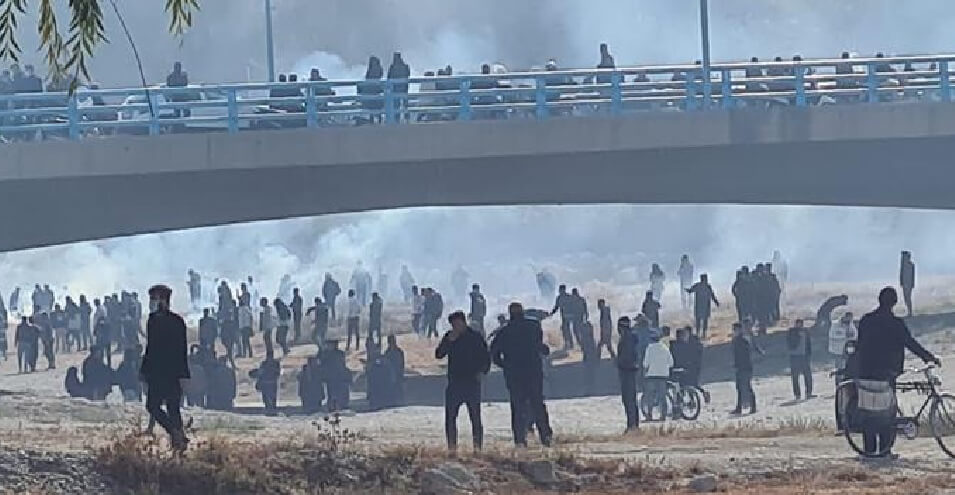
Without relying on any external source and considering the trend of recent years, it can be said that the increase in security sentences, the expansion of the range of charges such as "propaganda against the system", "disturbing the minds", and pressure on civil activists are part of Iran's judicial policy in the face of social protests and the media environment.
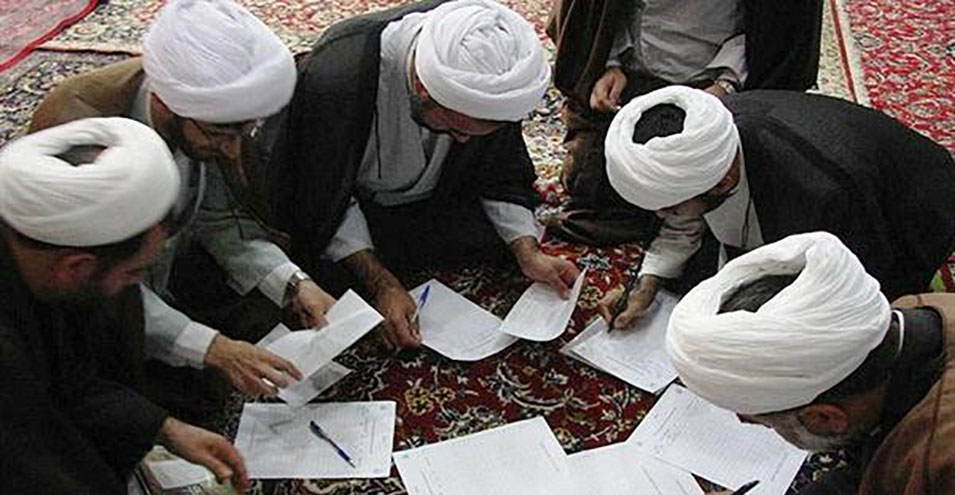
In many of these cases, the charges are very general and open to interpretation. Trials are held behind closed doors, sentences are handed down by well-known judges who are active in political cases, and astronomical bails are used as a tool to control and restrict citizens.
The case of Donya Hosseini follows a similar pattern, one that human rights organizations have called a clear violation of the right to freedom of expression and peaceful dissent. For many Christian observers and civil liberties advocates, the pressure on people like Donya Hosseini is part of a broader crisis facing Iranian society: “the suppression of protest, the restriction of independent voices, and the security crackdown on any criticism.”
These reports are particularly important for Christian media audiences because the messages of popes, bishops, and church leaders about human dignity, freedom of conscience, and justice are precisely at odds with such cases.
With Hosseini’s recent summons, the likelihood of the Ta’zir portion of his sentence being carried out has increased more than ever. It is not yet clear whether the court intends to activate all or just some of the convictions; but what is clear is that Hosseini’s world is set on another difficult path, one that many Iranian civil society activists have taken before him.