Three days before the Turkish presidential election, Erdogan increases the minimum wage
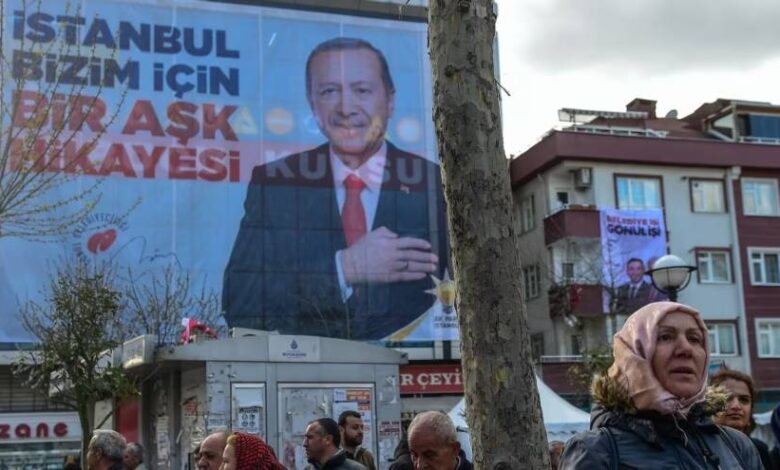
Three days before the Turkish presidential and parliamentary elections, President Recep Tayyip Erdogan increased the minimum wage by 45% and promised to draft a new constitution after the elections.
Continuing his relentless election campaign, Mr. Erdogan announced on Wednesday, May 10, that the salaries of at least 700,000 government employees would increase in line with inflation.
The Turkish Statistical Institute last week reported an inflation rate of 43.7 percent. According to Mr. Erdogan, employees will receive a 45 percent increase in wages, bringing the minimum wage to 15,000 liras. That is equivalent to about $750 and is the fourth salary increase in a year and a half.
He also announced other financial benefits, such as a 70% increase in overtime pay for employees, a reduction in insurance premiums for some workers, and a 10% increase in pensions for the wounded and relatives of those killed in military and terrorist attacks.
Mr. Erdogan also promised on Wednesday that if he wins the election, civil liberties and the independence of the judiciary would be guaranteed by drafting a new constitution.
He said that in the absence of a strong constitution, the country has witnessed numerous coups and changes in the past decades, but he went on to claim that during his two decades of rule, he has tried to compensate for "hundreds of years of deficits" by looking to strengthen democracy and development.
Türkiye's presidential election, which will be held on Sunday, May 14, will determine the fate of Recep Tayyip Erdogan's 20-year rule.
However, Western media representatives from Turkey report that the votes of some six million young people, who are considered early voters and who appear to express widespread support for Mr. Erdogan's opponent, will have a decisive effect on the outcome of the election.
The fate of this round of Turkish elections is of great importance to hundreds of thousands of Iranians living in Türkiye, as well as Iranians inside the country who are considering leaving Iran and living in Turkey.
Turkey has had a constitution since 1876, when it was still under the rule of the Ottoman Empire, which was revised under Kemal Ataturk, the founder of the "modern Turkey." The constitution emphasizes that Turkey is secular, democratic, and a republic, and that it derives its legitimacy from the people.
The last time, in 1982, when the Turkish army's top commander, Kenan Oren, seized power in a coup, the constitution was changed after a "referendum" and emphasized the country's secularism and republicanism.
Over the past two decades, Mr. Erdogan's opponents have accused him and his party of introducing Islam into governance and violating the constitution.
Meanwhile, voting among the approximately three and a half million Turkish citizens living in other countries ended on the evening of May 10, and Turkish diplomatic missions around the world have been tasked with transporting ballot boxes abroad so that the votes cast in them can be read and counted at the same time as Sunday's votes.
All assessments indicate that, given the sensitivity of the elections, a significant percentage of Türkiye's approximately 61 million citizens will vote in Sunday's elections.
Deborah Brown, a Human Rights Watch official, announced that in the run-up to the elections, government control over the Internet and cyberspace has intensified.
According to news agencies, public sentiment and the latest polls conducted last week suggest that Kemal Kilicdaroglu, the candidate of the rival six-party coalition, has a relatively good chance of winning, even if the presidential election is pushed to a second round on June 27.
According to these reports, the Republican People's Party led by Mr. Kilicdaroglu may also win more seats in the 600-seat parliament than the Justice and Development Party, which supports Mr. Erdogan, and change the balance of political power in the parliament.
However, experts in Turkey have told news agencies that there are still 20 percent of floating votes that could tip the scales back in favor of Mr. Erdogan, 69, and his Islamist party.
Source: Radio Farda