Death sentence issued for "Sultan Khodro" and his wife; two members of parliament convicted
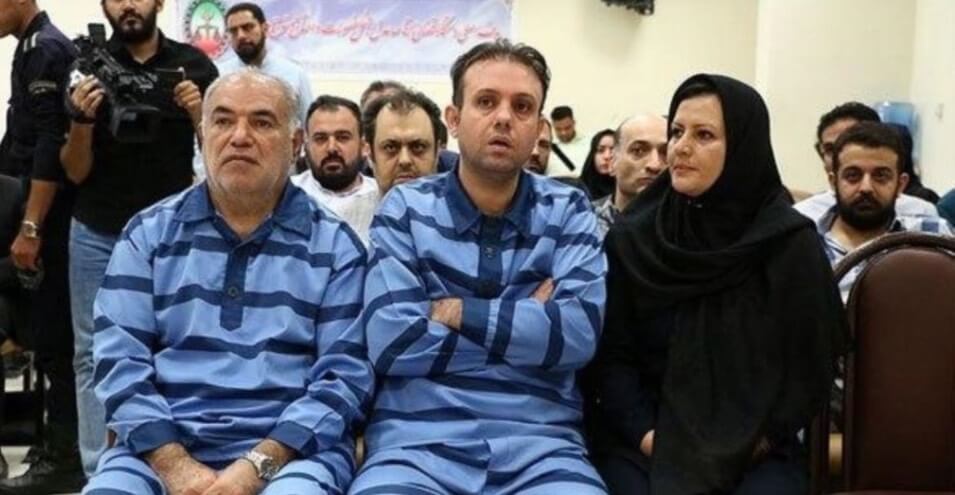
The spokesman for the Iranian judiciary announced the issuance of death sentences for two defendants in the case of "disrupting the foreign exchange system and the automobile economic system."
According to a report on Tuesday, May 20, ISNA news agency, quoting spokesman Gholamhossein Esmaeili, Vahid Behzadi and his wife, Najva Lashidai, have both been sentenced to death for the crime of "participating in a major disruption of the monetary and foreign exchange system leading to foreign exchange smuggling."
However, the verdict issued to these two individuals has been declared appealable to the Supreme Court of Iran.
The couple's verdict states that they disrupted the currency and automobile systems by "registering formal orders, disrupting the country's public needs distribution system through the pre-purchase of more than 6,700 vehicles from Saipa, participating in money laundering operations amounting to 32 trillion rials, and issues related to coins, including 24,700 Bahar coins and 100 kilos of gold, which were discovered in the defendant's home."
Vahid Behzadi is referred to as the "King of Automobiles" in some Iranian media.
In Iran, numerous cases of economic corruption have been filed, and the main defendants are referred to by titles such as "Sultan of Coins," "Sultan of Embezzlement," "Sultan of Sugar," "Sultan of Dried Fruit," and "Sultan of Billion-Dollar Collateral."
According to Mr. Esmaili, this case had more than 50 defendants, of whom more than 40 were indicted, and 34 were convicted in court.
As announced by the Judiciary Spokesperson, Mohammad Azizi and Fereydoun Ahmadi, two members of the Islamic Consultative Assembly, have also been sentenced to 61 months in prison each on charges of "assisting in disrupting the automobile distribution system."
Fereydoun Ahmadi and Mohammad Azizi, representatives of Zanjan and Abhar in the parliament, were arrested in August last year on charges of "disrupting the automobile market" and released a few days later after posting bail of 10 billion tomans.
Another defendant in this case, which Gholamhossein Esmaili called a "combined" case, is Mehdi Jamali, the former CEO of Saipa, who was sentenced to seven years in prison for participating in disrupting the distribution system.
Reza Taghizadeh Makoui, former vice president of marketing at Saipa, was also sentenced to 15 years in prison, and Hassan Hashtroudi, former head of Saipa's general security, was sentenced to 61 months in prison for aiding and abetting in disrupting the distribution system.
The level of corruption in the Islamic Republic has become so widespread that, at the request of Sadegh Larijani, former head of the judiciary, and with the approval of the Leader of the Islamic Republic, special courts have been established to address this issue.
The holding of these trials and the issuance of heavy sentences for a number of these defendants are regularly covered in the Iranian media, but no report has been published on the effectiveness of these arrests and sentences in reducing the level of corruption in Iran.
However, a number of Friday imams, without mentioning the reason for such widespread corruption in the structure of the Islamic Republic, are calling for strict action against the accused and issuing death sentences to them.
Source: Radio Farda