Rally in front of the Central Bank to protest "embezzlement and inefficiency" in the Nimai currency system
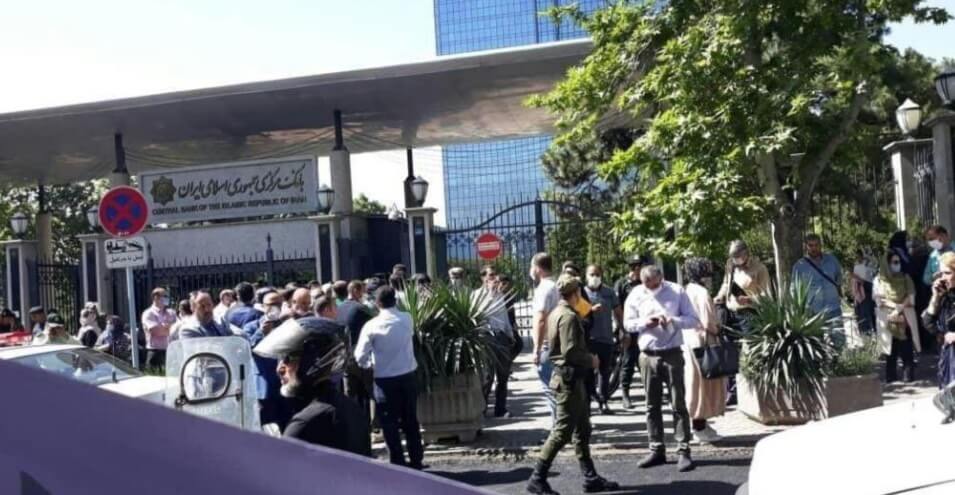
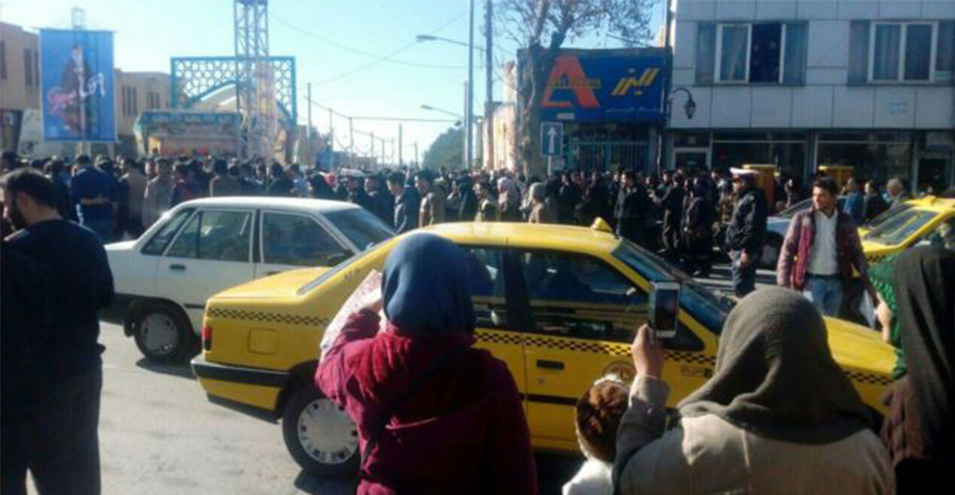
On Sunday afternoon, June 15, a group of protesters gathered in front of the Central Bank of Iran; the protesters say that "inefficiency and embezzlement" in the Nimai currency system has caused them to lose money.
According to images and videos posted on social media, protesters called for the resignation of Abdolnaser Hemmati, the governor of the Central Bank, as well as the collapse of the Nimai currency system.
There have also been reports of security forces deployed around the Central Bank, which is located in central Tehran.
Some of the slogans of the rally were "Resignation, resignation," "They closed the factories, they tied our hands," and "The wounded worker is left in the struggle."
The foreign exchange market in Iran has had at least three rates since April 2018: the official currency known as the dollar at 1,400 tomans, the Nimai currency, where each dollar is currently worth about 15,000 tomans, and the free market currency, where the price of each dollar has exceeded 18,000 tomans.
The "Integrated Foreign Exchange Transactions System," or "NIMA" for short, was created to create a secure buying and selling environment between importers and authorized exchange offices, according to the Central Bank.
A few months ago, news about embezzlement in this system was published, and protesters on Sunday said that they had been depositing rial money for months but had not received any foreign currency.
However, Tasnim News Agency and a number of conservative websites have called Sunday's rally "suspicious" and defended Abdolnaser Hemmati's actions.
An hour after the rally, the Central Bank published a new list of recipients of government currency and the Nima system.
Livelihood problems, as well as the publication of numerous reports about widespread discrimination and corruption, have led to various protests in different cities of Iran in the last two years.
These protests, which have included diverse groups, including farmers, marketers, and other urban guilds, have often been met with repression.
The protests in January 2017 initially began with the slogan "No to price hikes," and the spark for the protests in November 2019 was the tripling of gasoline prices. Both protests were brutally suppressed.
The Islamic Republic has refused to provide any official report on the statistics of these two protests; according to various sources, more than 50 people were killed and about 8,000 were arrested in the 2017 protests, and according to Reuters, the 2019 protests left at least 1,500 dead. However, Iranian officials deny these statistics.
Recently, Iranian Interior Minister Abdolreza Rahmani Fazli implicitly stated that between 200 and 225 people were killed in the November 2019 protests, and 80 percent of them lost their lives with organizational weapons.
Mojtaba Zolnour, head of the National Security Commission of the 10th Parliament, has also said that about 230 people were killed during these protests.
Source: Radio Farda