Brain drain: A serious loss to Iran and its scientific connection with the world
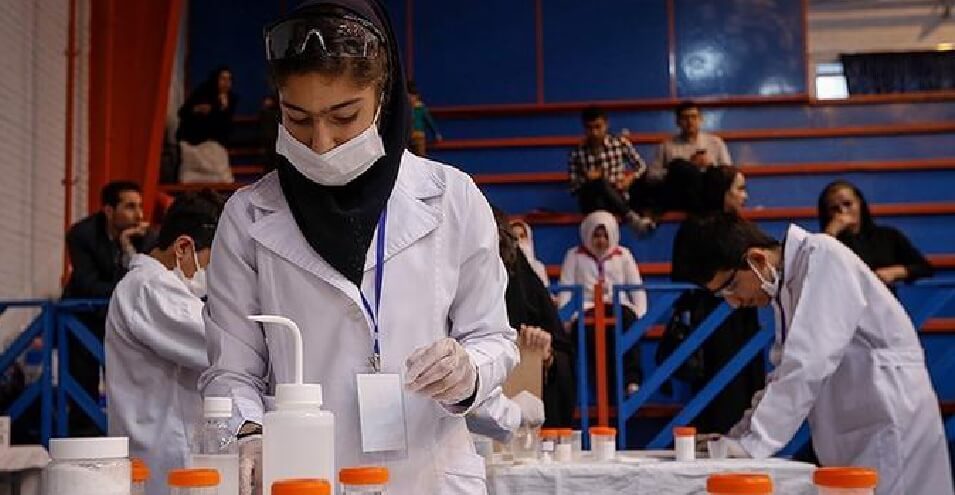
Iranian academics are increasingly turning their backs on their country. Nearly 900 university professors have left Iran in the past year alone. But Germany still sees fruitful scientific cooperation with Iran as viable.
You have a job, but you no longer want to stay in your country. This is the beginning of a report by Kirsten Knipp, a DW correspondent who has been investigating the brain drain from Iran. A summary of the report.
About 900 university professors left Iran in 2020. Mansour Gholami, Iran's Minister of Science, Research and Technology, has also confirmed this.
The migration of professors is part of a brain drain that has been on the rise since the 1979 revolution. According to a Stanford University study last year, about 3.1 million Iranians have left their country since the revolution. That's about 3.7 percent of Iran's current population.
During the same period, about 700,000 Iranian-born people have completed their education abroad. Currently, 130,000 people are studying abroad, which is the highest figure in various periods.
If in 1979, about 90 percent wanted to return to their country and live there after completing their studies, now Stanford research shows that this figure has fallen to less than 10 percent. Currently, about 110,000 Iranians are working in universities and research institutions outside Iran. This figure is equivalent to one-third of those working in academic and research centers inside Iran.
“Serious damage to Iran”
These figures are worrying for officials in Iran. Is Iran losing its connection to the international scientific community? The Brussels-based think tank Vocal Europe cited a quote from the IRNA news agency: “Our inability to return students who have completed their studies abroad to Iran is seriously damaging the country.” IRNA wrote in the report about the inability of officials to create the right conditions to encourage experts to stay in their country.
The Minister of Science, while presenting the latest statistics, also emphasized that the government should provide more attractive conditions for professors, both financially and in other ways.
According to Stanford University research, the roots of academic migration are diverse: “Iran’s brain drain crisis is linked to decades of isolation from the global economy, underinvestment, entrenched corruption, and authoritarian political conditions.” It also points to “the significant presence of ideological elements” in educational institutions and universities, which has created an uncomfortable environment for many professors. Furthermore, a significant proportion of academic positions are allocated to aghazadehs and government affiliates.
“Main fulcrum in Germany”
There is also a tendency among Iranian academics and students living in Germany not to return to their country. According to Christian Holzhorster, head of the southern section of the German Academic Exchange Service (DAAD) scholarship program in Bonn, many Iranian students remain in Germany. 9,000 Iranians were studying in Germany in 2019. The DAAD has supported 1,300 of them financially in various projects.
Many students have tried to integrate into the German job market and also to obtain German citizenship after completing their studies. “They want to earn money and continue their education. That is a very important aspect for them,” says Holzhorster, but “that does not mean that they are no longer interested in their country. On the contrary, they often have a strong sense of patriotism, which is of course mixed with a clear tendency to be critical,” and those who return to Iran “attach great importance to maintaining their position in Germany.”
Scientific collaboration despite limitations
According to Stanford University studies, Iranian professors are also dissatisfied with the politics of their country's universities. For them, it is very important to present a picture of a modern academic system both inside and outside Iran. This includes trying to publish as many scientific research papers as possible in specialized journals, which does not necessarily indicate their actual scientific quality.
Christian Holzhorster disagrees with this assessment and says: "Iranian universities have a high level of competence. The Iranian university system is a competitive arena in which some universities have made significant progress. That is why we work very intensively with Iranian universities. This academic exchange is also beneficial for Germany."
She acknowledges the problems, of course, and says, "We are not naive. Iran is, of course, a difficult country politically. However, there is a good atmosphere for scientific activity there. This is the fourth time that we have sent a Catholic nun to Iran to teach feminist readings of the sacred texts."
Of course, collaborations have their limits, “including in fields like nuclear physics,” where participation is impractical, according to Christian Holzhorster, but “despite such limitations, the special strengths of a scientific dialogue are evident.” “We are always looking for new channels of communication where there is a possibility of exchanging many ideas,” he says. “Of course, we have political differences, but these differences do not prevent our exchange of ideas and are carried out on an equal footing.”
Source: DW