"Confiscation or Death": The Islamic Republic's old policy of plundering Iranian property has become public again
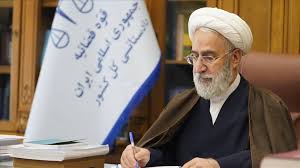
With the Islamic Republic's Prosecutor's Office's new threat of "confiscation or death" for Iranians abroad, the government's long-standing policy of confiscating people's property (from immigrants and religious minorities such as Christians to the families of those killed in protests) has once again come under the spotlight.
As Iran is in the midst of one of its most tense military and political periods, the Islamic Republic's judiciary has taken an unprecedented step by threatening Iranians abroad with property confiscation and even the death penalty; a threat that many see as a continuation of the government's decades-long policy of economic and legal pressure on dissidents and religious minorities.
On the tenth day of the war, today, Monday, March 9, the Attorney General's Office issued a statement announcing that the property of Iranians abroad would be confiscated for what it called "collaboration with the enemy." The statement also explicitly mentioned severe punishments.
The announcement states that the property of Iranians who "sympathize, accompany, and cooperate" with the enemy will face confiscation and may even be sentenced to death.
The Attorney General's Office also stated, citing the Espionage Punishment Intensification Law: "Any operational action for Israel, the United States, or other hostile regimes and groups will result in the death penalty."
These threats are being made at a time when, according to human rights sources, security and judicial pressures on civil activists and government opponents have increased along with war conditions and increased regional tensions.
The confiscation of citizens' property is not a new issue in the Islamic Republic. From the very first months after the 1979 revolution, institutions such as the Mostazafan Foundation and the Revolutionary Courts took on the responsibility of massively confiscating citizens' assets.
During those years, thousands of properties, factories, land, and private assets were seized by government agencies under various pretexts, ranging from affiliation with the former regime to political accusations. Many of these properties belonged to Iranians who had left the country after the revolution.
Religious minorities have also been a significant part of the victims of this trend. Numerous reports indicate that many Christian families have faced property confiscation, business closures, or pressure to hand over their assets since the 1979 revolution. Human rights activists say this policy is often justified on security or religious grounds.
Critics of the Islamic Republic say that the government has used economic tools to pressure opponents in recent years. One controversial example of this policy is the collection of money known as “bullet money” or “shooting money” from the families of those killed in protests, an issue that has been reported during various protests, including the January protests of this year and since. In these cases, families have been forced to pay government institutions in order to receive the bodies of their loved ones or to avoid legal pressure.
In addition, many Iranians living abroad have also faced threats of property confiscation or seizure of their assets in Iran in recent years, especially those who have engaged in media or political activity against the Islamic Republic.
The recent threat from the prosecutor's office comes at a time when military clashes and the country's security situation have intensified. Observers say such statements could be an attempt to create an atmosphere of intimidation among Iranians abroad, especially political activists, journalists, and civil society activists.
The statement states that any cooperation or intelligence activity against the Islamic Republic, even abroad, could lead to complete confiscation of assets and severe punishments. Critics say this approach shows that the government is using not only security tools but also economic tools to silence critics.
Among the groups that have been most affected by these policies are religious minorities, including Christians.
In recent decades, many house church ministers and other Christian activists have faced arrest, security pressure, and property confiscation. Some have also reported that their properties or assets in Iran have been seized after they emigrated.
Minority rights activists believe these measures are part of a broader policy aimed at limiting the growth of independent religious communities and preventing the spread of Christianity in Iran.
Experts believe that confiscation of property in the Islamic Republic is not only a security tool, but in many cases has become an economic source for government institutions.
From large economic foundations to quasi-state entities, many assets confiscated in past decades have now become a significant part of the state-controlled economy.
In such circumstances, the prosecutor's new threat against Iranians abroad is reminiscent of the same old pattern for many observers: using the law and security charges to seize citizens' property.
With the release of this statement, the question has once again been raised as to whether the Islamic Republic will resort to economic pressure and property confiscation more than in the past in times of crisis to control society and its opponents; a policy that critics call "economy of confiscation" and believe has become one of the constant features of the government in Iran over the past four decades.