Seventeen days after father's suicide; authorities oppose Amir Hossein Moradi's presence at family mourning ceremony
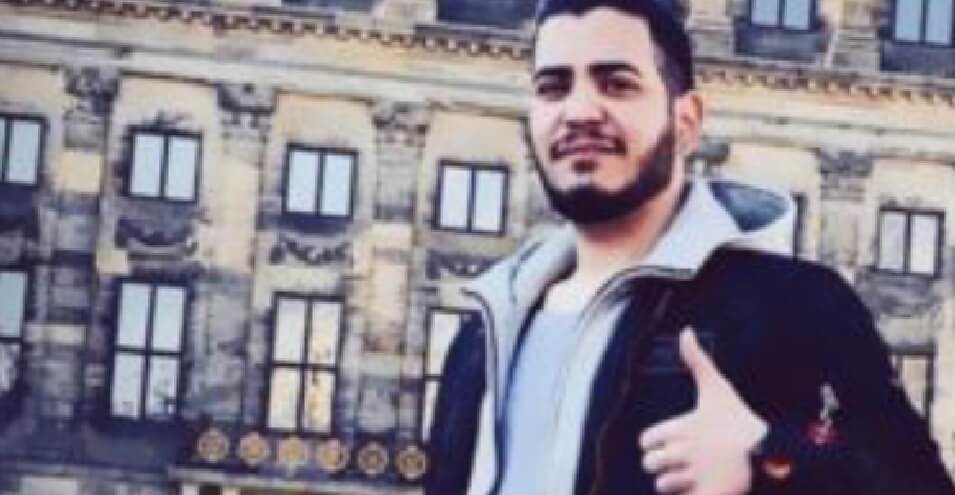
Amir Hossein Moradi, one of the three protesters sentenced to death for the November 2019 protests, is still denied permission to attend his family's mourning ceremony under the protection of officers, despite the fact that seventeen days have passed since his father's suicide. Yesterday, after Mr. Moradi's family approached him, they were told that until the Supreme Court's decision regarding the case of this political prisoner is clear, it is not possible for him to attend the ceremony, and only if his death sentence is overturned by the Supreme Court, he will be able to attend his father's ceremony. This is while Mr. Moradi missed his father's funeral due to obstruction by the authorities of the Greater Tehran Prison and the Prosecutor's Office, and he is still trying to be with his family in their mourning.
According to HRANA News Agency, the news agency of the Human Rights Activists in Iran, Amir Hossein Moradi, one of the three protesters sentenced to death for the November 2019 protests, is still deprived of even short-term visits to his family despite the loss of his father.
Following Mr. Moradi's family's request yesterday to follow up on the authorities' promise to send Amir Hossein Moradi under guard to attend his father's mourning ceremony with his family, the deputy prosecutor told them that until the Supreme Court's ruling on the case of this political prisoner is clear, it is not possible for him to attend the ceremony, and only if his death sentence is overturned by the Supreme Court, he will be able to attend his father's ceremony.
A source close to Mr. Moradi’s family previously told HRANA in this regard: “Amin Vaziri, the deputy prosecutor overseeing political prisoners, had deferred his approval for release to the prosecutor’s opinion. In recent days, when Mr. Moradi’s relatives went to the prosecutor’s office, they were told that it depends on the prosecutor’s opinion and that they should talk to him. Finally, they were told that Amir Hossein Moradi is scheduled to attend a family ceremony and his father’s burial site in Behesht Zahra, but due to security issues, he and his family are not informed of the time and date of his presence in advance. It seems that the prison authorities are using this method to prolong the process and ultimately prevent Mr. Moradi from being sent under the protection of the officers.”
Nasser Moradi, the father of Amir Hossein Moradi, committed suicide at his home on Monday, October 27, 2020. Mr. Moradi’s body was buried on Thursday morning, October 1. The ceremony was attended by dozens of family members and close friends of the Moradi family and the families of Saeed Tamjidi and Mohammad Rajabi, two of Amir Hossein Moradi’s co-defendants. However, judicial authorities did not allow Amir Hossein Moradi to attend his father’s funeral.
On Wednesday, October 6, a memorial service was held for Nasser Moradi and Amir Hossein Moradi at their homes; however, this political prisoner was unable to be with his family at this mourning ceremony.
On July 25, 2020, the HRANA news agency reported that the Supreme Court had upheld the death sentences of Amir Hossein Moradi, Saeed Tamjidi, and Mohammad Rajabi, three citizens arrested during the nationwide protests of 2019 known as the “November protests.” Finally, on Sunday, July 19, the lawyers of Amir Hossein Moradi, Saeed Tamjidi, and Mohammad Rajabi issued a joint statement announcing that the request to apply Article 477 had been accepted by the Chief Justice of the Supreme Court and that the case of the three protesters sentenced to death for the November protests had been referred to one of the courts for re-examination. In part of this statement, the four lawyers wrote, “Currently, the execution of our clients’ death sentences has been suspended until the final judicial decision is made in this case, and since one of the judges of the Supreme Court in the examining court had previously opposed the ruling, we hope that the previous ruling will be overturned.”
HRANA has previously conducted numerous interviews with informed sources and reviewed documents, and divided the report into sections to provide details and examine what happened to these individuals in the various processes of their activities up to their conviction.
Source: HRANA