Continued arrests after Israel's 12-day war and the arrest of 65 Gilak citizens
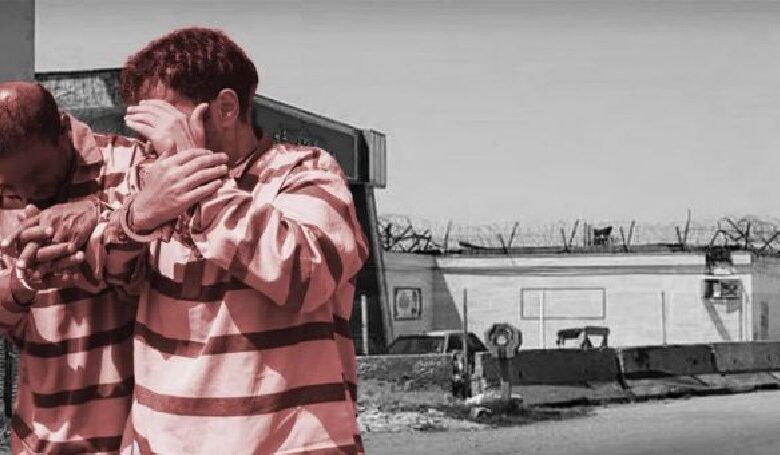
Following the continued arrests after Israel's 12-day war, dozens of Gilaks were arrested in Rasht and other parts of Gilan and charged with security and collaboration with Israel, and some faced long-term prison sentences.
Following the 12-day war between Iran and Israel, new reports have emerged indicating that the Islamic Republic’s security forces have carried out a mass arrest of a number of Gilani citizens. According to these reports, at least 65 people, mostly from the Gilak region, have been arrested in the city of Rasht and other cities in Gilan province.
The arrests appear to be the result of intense surveillance of social and digital activities. Some individuals have been accused of “propaganda against the regime,” “intelligence cooperation with a hostile government,” and even “collaboration with Israel” for private chats with family, comments on Iranian or foreign social media pages, and sharing opinions on social media.
Among those arrested, there are cases where they have received long prison sentences. For example, a 52-year-old Gilak worker who left a satirical comment in Persian under an Israeli tweet was sentenced to 5 years and six months in prison by the Rasht Revolutionary Court.
It was also reported that many of the detainees were “ordinary people,” individuals with no political or significant opposition history who were arrested only after their cell phones were searched at security checkpoints. These individuals were then held in the non-political wards of Rasht’s Lakan Prison.
In addition to this wave of arrests of Gilakis, pressure on Christian citizens has also continued. According to reports from human rights organizations, many Christians, especially those who have formed informal “house church” groups or have been active on social media, have faced charges such as “propaganda against the regime,” “forming a house church,” or “collaborating with enemies.” According to a recent report, some of these individuals have also been arrested and, after trial, sentenced to several years in prison.
According to analysts, government policy during this period has been part of a preemptive crackdown; an attempt to suppress citizen voices, closely control cyberspace, and prevent any possible opposition or criticism amid security tensions and war.
Reporters say that in many cases, arrests and trials have occurred without a history of protest or armed action, simply for expressing an opinion, sharing content, or religious affiliation.
The ongoing oppression of religious minorities, particularly Christian citizens, in Iran has been documented many times in recent years. Human rights groups say that even in normal times, Christians (especially those who have converted from Islam to Christianity or have house churches) face arrest, torture, denial of religious freedom, and severe restrictions.
But the current crisis, coupled with the 12-day war and the heightened security environment, has become a turning point for the intensification of these repressions. The arrest of Gilak people without clear reason, the reliance on vague security charges, and the heavy prison sentences are all signs of the system's distrust of society and its attempt to silence dissenting voices.
This process is not only a violation of human rights and freedom of religion and expression, but it can also harm the social cohesion of ethnic provinces like Gilan, where ethnic, cultural, and linguistic affiliation is part of the people's identity.
Published documents show that the wave of arrests after the conflict with Israel was not limited to religious opponents or political activists, but even ordinary citizens with no history of protest or political action were targeted simply because of a comment or private message.
If such policies continue unabated, they could exacerbate the climate of fear and widespread self-censorship among minorities and decentralized ethnic groups, silencing the voice of civil society forever.
It should be noted that this report is based on the information published to date.