Parliament approves removal of 4,200-toman dollar; joint decision of "revolutionaries" for major economic surgery
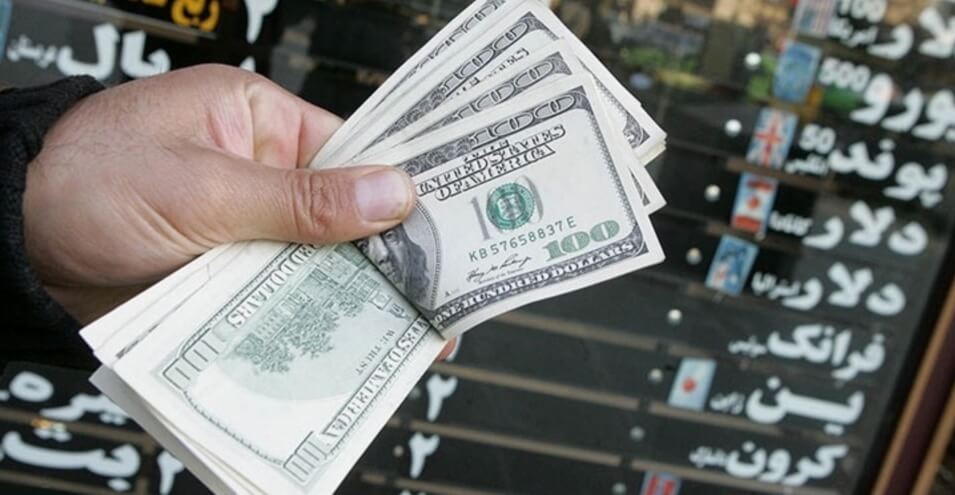
The government of Ebrahim Raisi and the Islamic Consultative Assembly, which their supporters call "revolutionary," have each made numerous economic promises since the beginning of their term, including "eliminating the 4,200-toman currency" and making "revolutionary" decisions to improve the people's dire economic situation. Yesterday, they also agreed to the general outlines of a bill that could directly affect the way this decision is implemented.
The senior and "revolutionary" managers of the Islamic Republic, who took full control of the executive branch after the Khordad 1400 elections, repeatedly mention in their speeches an important, vague monetary-banking program with the general title of "the country's biggest economic surgery," and every word about it simultaneously confronts society and economic activists with concerns about the situation ahead.
The 4,200-toman currency is the economic legacy of the previous government of the Islamic Republic of Iran, headed by Hassan Rouhani on April 10, 2018, an economic policy that sought to neutralize the effects of US financial and banking sanctions and normalize the challenges arising from the consequences of the government's controversial nuclear and missile activities.
Ebrahim Raisi submitted the 2018 budget to the Islamic Consultative Assembly on December 11, 2022, while various officials have repeatedly emphasized the need for economic surgery by eliminating the 4,200-toman currency and have called for the direct entry of representatives to implement it. On the other hand, many economic experts and even political figures opposed the implementation of such a policy and issued serious warnings about its consequences.
IRNA, the government's official news agency, called this preferential and state currency a "preferential rent" in a report and wrote: "The 4,200-toman currency... can perhaps be called Iran's biggest loss in the last decade; a loss that not only failed to prevent price increases, but also brought deep inflation to the country."
Hassan Forouzanfard, a member of the Tehran Chamber of Commerce, told ISNA in an analysis of possible conditions after the elimination of this state currency in December 2011: "Although raw materials are not reaching producers at preferential prices at the moment, the elimination of this currency will suddenly bring a kind of excitement and shock to the economy and will change the relative prices in addition to the prices of basic goods."
Mehrad Ebad, vice chairman of the Trade Facilitation and Export Development Commission of the Tehran Chamber of Commerce, also told IRNA in November about the destructive effects of the preferential exchange rate policy on domestic production: "It is also very important what policy will replace the current conditions? Changing policies should not make the conditions worse. We have witnessed in the past years that whenever they removed legal conditions in order to correct them, they have made the situation worse."
This controversial currency, which in recent months has been strongly emphasized by senior managers of the Islamic Republic on the "need to be eliminated" and which has also been supported by media outlets close to the Revolutionary Guards, has also become known as the "Jahangiri Dollar" due to its first announcement by First Deputy Prime Minister Hassan Rouhani.
In a virtual meeting held on the Clubhouse platform in May 2014, Eshaq Jahangiri stated that such a decision was made jointly by the heads of the three branches of government at the time, and said, "The foreign exchange reserves at the beginning of 2018 were less than one day's supply in 2017."
This senior official of the 11th and 12th governments, who also headed a headquarters called the "Resistance Economy Headquarters" based on the orders of Ayatollah Ali Khamenei, the Leader of the Islamic Republic, and by decree of Hassan Rouhani, added: "There were three options on the table: continuing the status quo, determining a fixed number, determining a floating number so that we can both have a supply of foreign exchange and prevent the shock caused by the US withdrawal from the JCPOA."
Yesterday, with all the approvals and objections, the representatives of the Islamic Consultative Assembly finally approved the general outline of the 1401 budget bill with 174 votes in favor, 76 votes against, and 6 abstentions out of a total of 260 representatives present. At this stage, the budget bill will be referred to the specialized and consolidation committees for a second reading and review of the details, a bill in which the Raisi administration has taken its main steps for its alleged "economic surgery."
Masoud Mirkazemi, head of the Planning and Budget Organization, said in the open chamber of the parliament: "In the past few years, we have had a shortage of foreign exchange, and foreign exchange has been purchased from the open market and paid for at a price of 4,200 as a preferential currency, which has increased the monetary base. We are in a situation of economic war and we must make a wise decision regarding foreign exchange."
Gholamreza Mesbahi-Moghaddam, a former member of parliament and current member of the Expediency Discernment Council, also wrote in the state-run Iran newspaper today: "Although some members of parliament yesterday opposed the elimination of the preferential currency, which is the responsibility of the parliamentarians themselves, and considered the elimination of the preferential currency to be equivalent to possible inflationary shocks, let us not forget that the parliament itself voted in favor of the general provisions of the 1401 budget bill."
Given that various sectors of the Islamic Republic have concluded in 1400 that the government's economic policies in 2018 will undergo fundamental changes for 2021, some experts predict that these new measures, or what they call "major economic surgery," like the previous "preferential currency" plan, could cause significant harm to society, especially low-income groups, small businesses, financial markets, or a significant portion of producers.
Source: Voice of America