Banking obstacles to women's entrepreneurship and self-employment
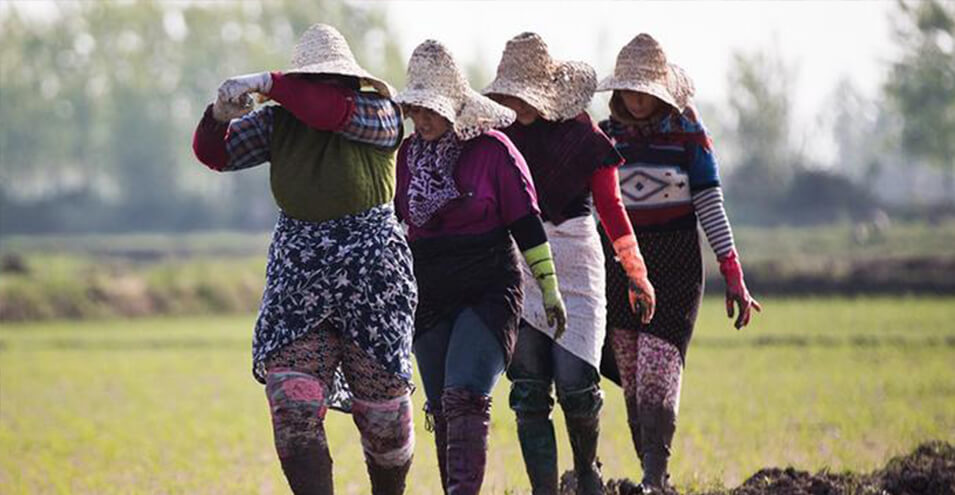
A member of the parliament's labor faction says that banks do not give loans to women who intend to become entrepreneurs or work in cooperatives. Cooperatives account for 25% of Iran's economy, and only 10 to 12% of cooperative activities are carried out by women.
In the Fifth Development Plan, the share of cooperatives in the Iranian economy was predicted to be 25%, but this figure was not achieved by the end of 2015. The cooperative sector is considered an employment-generating area, and the aforementioned quota has been extended in the Sixth Plan. Bahman Abdollahi, head of the Iranian Cooperative Chamber, says that there is still a long way to go to achieve this figure.
Khatreh Ostad Rezaei, head of the Women's Commission of the Iranian Cooperative Chamber, says that only 10 to 12 percent of cooperative activities are carried out by women. This is despite the fact that cooperatives are considered the best platform for entrepreneurship and employment for women, especially in developing countries.
In March 2018, the Deputy Minister of Cooperative Affairs at the Ministry of Labor stated that there were 10,000 women's cooperatives across the country and said that the general approach is to allocate government facilities for the expansion of these cooperatives or marketing of products produced by rural women.
But Fatemeh Zolqadr, a member of the parliament's labor commission, says there are obstacles to women's efforts to form cooperatives, including the fact that they cannot get loans.
ILNA News Agency, Wednesday, October 8, quoted Zolqadr as writing: "Many women who want to start a business, despite their capabilities, do not have the initial capital to start their work. When it comes to supporting employment, the first thing is to help people obtain initial capital. Accordingly, women who want to start a business should be able to get loans."
The CEO of the Cooperative Development Bank has previously said that one-third of the bank's customers are women, and 27 percent of the bank's total accounts and 10 percent of its total resources belong to female depositors. In September 2019, he announced that 50 billion rials of Qarz-ul-Hasana loan facilities, in the form of 500 facilities of 100 million rials each, with an interest rate of 4 percent, would be paid to women's cooperatives.
But Ms. Zulqadr says that it is more difficult for women to get a loan than for men, and in some cases, the approach is biased; banks have refused to give loans to women with the mindset that they have more difficulty repaying their loans than men.
Women in local communities traditionally and culturally participate in economic groups. International organizations have also introduced the formation of women's cooperatives as one of the strategies for reducing gender inequality and increasing women's participation in economic and social affairs, and recommend that governments support cooperatives to help women's self-employment. Women are mainly active in cooperatives in the food industry, handicrafts, kilims and carpets, or businesses related to clothing and medicinal plants.
The member of the Women's Faction of the Parliament added that this faction follows up on the problems of women, especially women heads of households, in obtaining loans: "The fact is that women have been more successful than men in creating businesses in many cases. Helping women create jobs by paying loans not only enables them to become job owners themselves, but also provides employment opportunities for other women. We have witnessed that women who have established a workshop somewhere and produce a product often turn to women when they need workers. In this way, removing obstacles to women's participation in cooperatives has a great impact on eliminating women's unemployment."
Women's share of the total employment market in Iran does not even reach 20 percent. The share of cooperatives in the total economy of Iran is one-fourth, and the number of men active in the labor market is four times that of women. The Vice Presidency for Women and Family Affairs has proposed goals such as the proliferation of women's entrepreneurship associations, the distribution of 18 billion tomans in facilities in villages for women's investment, and networking for women's employment. Goals that have been left unfulfilled due to the limitations of the 2019 budget.
Source: DW