The possibility of the lambda strain of the coronavirus entering Iran cannot be ruled out
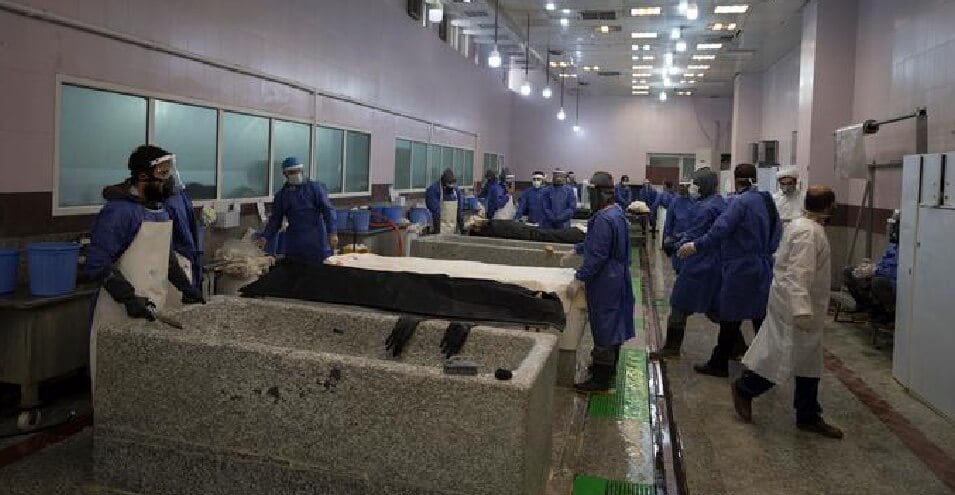
The Lambda strain is most prevalent in South America, but examples have also been seen in Turkey, India, and Qatar. Virologists say this strain of coronavirus is highly transmissible and highly immune-evading.
There is talk of the fifth peak of the coronavirus outbreak in Iran. According to statistics published by the Ministry of Health of the Islamic Republic of Iran, more than 30,000 new cases of coronavirus were recorded in the 24 hours ending on May 1.
More than 4,500 of these people are said to have been hospitalized due to severe COVID-19 infections. The Iranian Ministry of Health also reported the deaths of about 600 more people due to the disease in the past 24 hours. This brings the number of coronavirus victims in Iran to about 109,000.
Peak Five
The deputy head of the Corona Headquarters in Tehran announced that Iran has reached the fifth peak of the Corona epidemic and spoke about the requirement to wear two masks at the same time.
Nader Tavakoli, while pointing out the inadequacy of Iranian-made coronavirus vaccines, emphasized the need to import more vaccines made abroad.
He emphasized: "The domestic production basket currently does not meet the public's needs, and foreign and approved brands are being imported."
According to Tavakoli's prediction, the mortality rate will increase at the peak of Peak 5 after the number of outpatients increases. Tavakoli made these remarks at a time when another concern is lurking for the health of the people of this country: the possibility of a new strain of the coronavirus.
Lambda strain
Alireza Naji, head of the Virology Research Center at Beheshti University of Medical Sciences, has spoken about the observation of the Lambda strain in Iran's neighboring countries.
Naji said: "Cases of the Lambda variant, a new type of coronavirus, have been identified in neighboring countries such as Turkey, India, and Qatar, and it is not at all unlikely that the new type of virus will enter the country."
It should be noted that reports had previously been published about the registration of this strain of coronavirus in Gilan province. Referring to the spread of this strain of coronavirus in the mentioned countries, Naji said: "Given the contacts that Iran has with these countries, it is not surprising that this variant could enter the country."
What has caused concern among the people and health officials of the Islamic Republic is the transmission capacity and also the ability of this strain of coronavirus to resist antibodies.
Naji also said: "Based on the genetic changes that have been made, the transmission of the virus is very intense and its immune evasion is severe, so a lot of information must be obtained in order to be able to combat it."
The head of the Virology Center at Beheshti University further pointed out that in Iran, the phenomenon of genetic monitoring of the coronavirus is being ignored, and this makes it difficult to predict the coronavirus pandemic in this country.
He also emphasized the need to fully comply with health protocols and the need to accelerate vaccination in Iran. It is said that the symptoms of the lambda strain of the coronavirus are similar to those of previous strains.
The official news agency of the Islamic Republic of Iran, IRNA, on Thursday, September 2, quoted experts as saying that the main symptoms of infection with the Lambda strain are "fever, dry cough, shortness of breath, fatigue, sore throat, diarrhea, conjunctivitis, headache, loss of sense of smell and taste, skin rash or discoloration of fingers and toes."
Source: DW