What does it mean for Iran to violate the JCPOA?
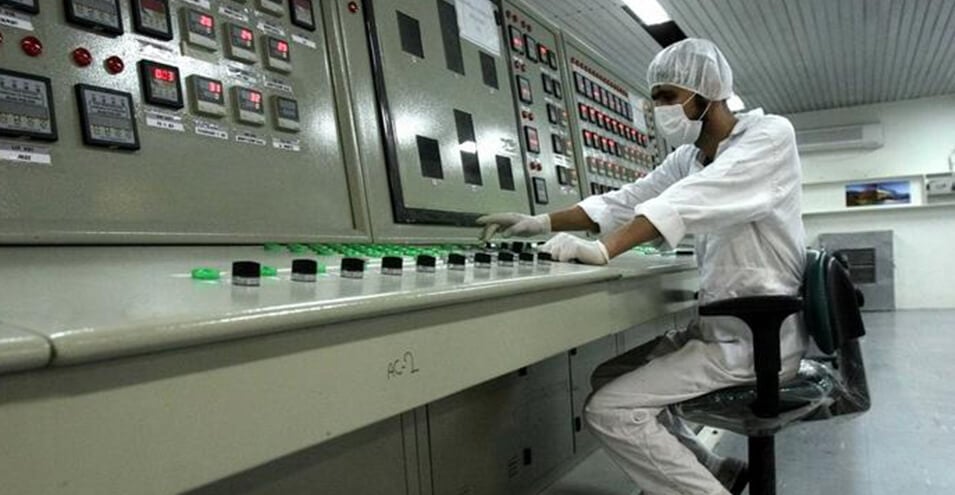
Iran is responding to US sanctions and unfulfilled European promises by announcing its intention to withdraw from its commitments under the JCPOA. Hans Sprouse, a correspondent for the German service of Deutsche Welle, reports on Iran's recent actions.
A year after the United States unilaterally withdrew from the nuclear deal with Iran, President Hassan Rouhani announced “partial and overall reductions in Iran’s commitments under the JCPOA” and announced that it would no longer adhere to the limits on uranium and heavy water stockpiles. The Iranian president also said on Wednesday: “We will abandon this commitment [to 3.7 percent enrichment] and increase enrichment to whatever level we want and need.” Rouhani gave the European parties to the JCPOA until next Sunday, saying, “From July 6, if the other parties do not fulfill all their commitments according to the schedule, the Arak reactor will return to its previous conditions.”
All of these restrictions have been imposed to limit Iran's path to obtaining a nuclear bomb for as long as possible.
On Monday, July 1, Iran announced an increase in its enriched uranium reserves. In its initial reaction to the news of exceeding the permitted amount, the International Atomic Energy Agency announced that it was aware of the issue and would report on Iran's action soon.
Has Iran moved closer to an atomic bomb with this step?
The answer to this question is that in principle yes, in practice no. Iran does not have sufficient reserves of uranium with the required enrichment for this purpose. At the time of the JCPOA, Iran had access to approximately 12,000 kilograms of depleted uranium and a far greater number of operating centrifuges than it does today to produce the uranium needed for use in nuclear weapons.
Experts say that Iran would need to have at least four times more enriched uranium than it currently has, and continue to enrich, to make a warhead. Oliver Meyer, a weapons expert at the Berlin-based Institute for Knowledge and Politics, believes that the message of Iran’s recent steps, the withdrawal from the JCPOA commitments, is not the resumption of a military nuclear program. “To do this, completely different measures are needed, both in terms of scope and quality,” he adds. According to Meyer, Iran’s nuclear program is still by far the most “strictly controlled” nuclear program in the world, and for this reason, it cannot be said that Iran is resuming a military nuclear program with these steps.
Is the nuclear deal on the verge of failure?
Since, with the exception of the United States, all the countries that signed the JCPOA, including Iran itself or at least the government of Hassan Rouhani, want to continue this agreement, it can be said that the JCPOA has not yet failed.
But if Iran were to withdraw from its commitments under the JCPOA, the question would be, according to Oliver Meyer, “what will be the European response?” The expert continued: “They have always said that they will support the nuclear deal as long as Iran also adheres to all its commitments. But Iran is no longer on this path, and after actions such as increasing enrichment or resuming the operation of the Arak heavy water reactor, it will certainly be more difficult for the Europeans to preserve the JCPOA and argue that this is not a “significant violation.”
In other words, excessive provocation of Iran could, in the worst case scenario, lead to the return of all EU and UN sanctions and a new confrontation between the international community and Iran.
Iran says it has not violated the nuclear deal despite crossing certain defined boundaries. How should this be assessed?
Oliver Meyer says: “In fact, Iran explained in 2015 and included this issue in the agreement that if sanctions were resumed, it would consider this as a reason for partial or total suspension of its obligations under the JCPOA.” However, according to this expert, the European Union has always rejected Iran’s argument that if the US or the Europeans do not implement some of their obligations, the other side will not implement some of its obligations either. According to Oliver Meyer, the European position is that a violation of the agreement by one party is not a justification for the same action by the other.
Is the European Union the recipient of Iran's recent actions? How successful will Iran be in forcing Europe to fulfill its commitments?
According to François Nicolaud, former French ambassador to Iran, the deliberate violation of the JCPOA, whether implemented or threatened by Iran, is above all a cry for help to partners to help Iran out of the growing economic problems it is facing as a result of US sanctions.
To this end, Britain, Germany, and France launched INSTEX, which is initially a financial mechanism for non-sanctioned trade in essential and vital goods.
Oliver Meyer says this financial mechanism has been strengthened in recent weeks.
The European Union announced the operationalization of INSTEX last Friday, and other European countries also announced in a statement that they are ready to participate in the shares of INSTEX. From Iran's perspective, the deliberate violation of the JCPOA, or in other words, the threat to violate or reduce commitments, has been successful, albeit limited. However, INSTEX has still not played a role in the two important areas of resuming oil transactions and increasing important investments in Iran.
Source: DW