Islamic Republic fears Arab countries' military cooperation with Israel
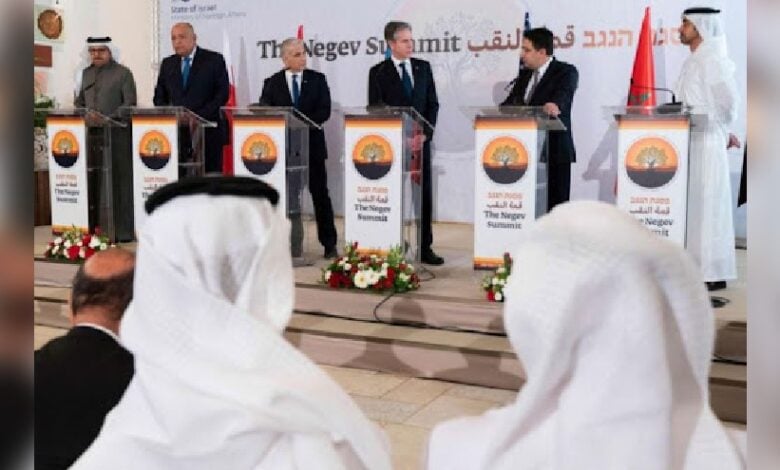
The Islamic Republic is fearful and concerned about the military cooperation of Arab countries with Israel.
After the attack on Israel and the possibility of a retaliatory attack from that country, as well as the beginning of military cooperation between Arab countries and Israel, the Islamic Republic warned the Arab countries of the Persian Gulf: "It is unacceptable for Tehran to be allowed to use their airspace or military bases against the Islamic Republic. Any action of this kind will be met with a reaction."
Iranian Foreign Minister Abbas Araqchi, who traveled to Riyadh, also warned before this trip about a possible Israeli attack and the cooperation of Arab countries, saying: "The Islamic Republic is not seeking to increase tension and war, although we are not afraid of war and are prepared for any scenario. The armed forces of the Islamic Republic are in full readiness and have identified all the necessary targets."
At the same time as the Islamic Republic warns of pressure on regional governments to intimidate them if they cooperate with Israel, Joe Biden is also trying to limit a possible Israeli attack on Iran. America's concern about the spread of war in the region and the increase in oil prices is one of the reasons for this country's efforts to limit the war.
Concerns about rising oil and gas prices and fears of an "Iranian oil vacuum" in the energy market are among the deterrent factors that the Biden administration and European governments are using to try to at least dissuade Israel from targeting the Islamic Republic's refining facilities.
Reuters also wrote: "If Israeli retaliation destroys some of the country's facilities, the Organization of the Petroleum Exporting Countries (OPEC), which is effectively led by Saudi Arabia, has enough surplus oil capacity to compensate for any loss of supply by Iran."
Also, a diplomatic official in the Persian Gulf said: "The Islamic Republic clearly stated that Tehran calls for regional unity in the face of the Israeli attack and considers the neutrality of the Persian Gulf countries meaningless."
According to the diplomat, the Iranian regime has clearly stated that Tehran will monitor how each of the Persian Gulf countries reacts to the Israeli attack, as well as how the United States will respond.
It should be noted that Bahrain, Kuwait, Qatar, Saudi Arabia, and the UAE host American forces. After the signing of the Abraham Accords, several Arab governments increased their economic, cultural, defense, and military cooperation with Israel, which is exactly what Ali Khamenei has explicitly stated his opposition to.