The 73rd trial session of Hamid Nouri; the lawyer known as the British "Queen's Counsel" took the witness stand
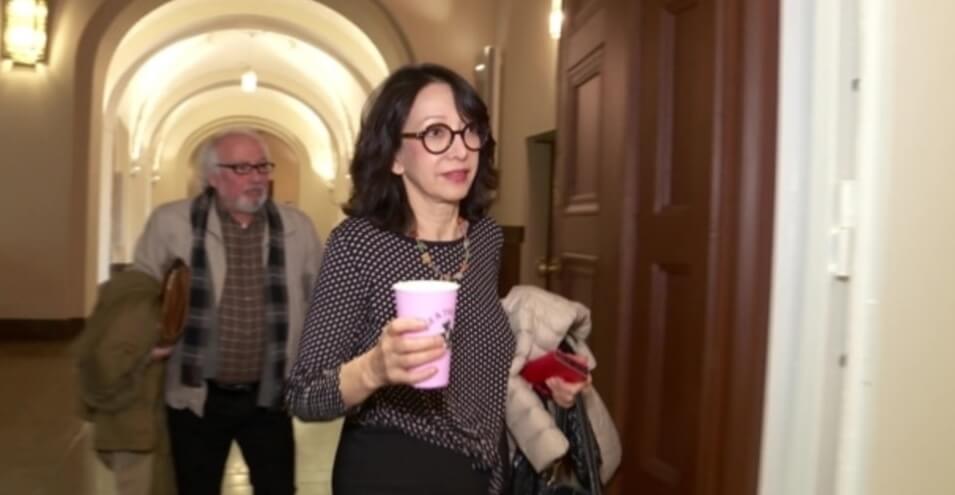
The 73rd trial session of Hamid Nouri, accused of participating in the execution of prisoners in the summer of 2018 in Gohardasht Prison, was held in Stockholm, Sweden, at 2:00 PM on Thursday, March 19, 2021.
The trial was witnessed by international judge Geoffrey Robertson, who joined the hearing via video link from the UK, with a slight delay. Judge Robertson’s report is one of the most important pieces of written evidence in the prosecution’s indictment in the Hamid Nouri case, and has been cited repeatedly throughout the more than seventy court hearings.
Justice Geoffrey Robertson began by introducing himself as one of Britain's most senior lawyers, known as "Queen's Counsel." He began his testimony by answering questions about how the Abdul Rahman Boroumand Foundation contacted him and why he accepted the commission to write its report.
Judge Jeffrey Robertson said he spent several weeks ensuring the credibility of the foundation that commissioned the report and the nature of the research requested.
Judge Jeffrey Robertson explained that in his report he interviewed about 40 survivors of the summer 1988 executions and a number of victims' families. He answered questions from prosecutors and defense attorneys about the number and method of selecting interviewees.
Judge Jeffrey Robertson said about the authenticity of Ayatollah Khomeini's fatwa ordering the execution of prisoners and opponents of the Islamic Republic:
- Overall, I have no doubt about the authenticity of the fatwa and the documents surrounding it.
- [This fatwa] was issued with particular malice.
- This fatwa is mentioned in the memoirs of Hossein Ali Montazeri, the number two man in the Iranian regime. He was a disgruntled person within the Supreme Council of the country and opposed to these executions.
- Seyyed Abdul Karim Mousavi Ardebili, who was himself a judge, also refers to this fatwa. Mousavi Ardebili says that he received this fatwa directly from Ayatollah [Khomeini].
- Evidence suggests that there was a second fatwa in which the execution of leftists was ordered.
Judge Jeffrey Robertson commented on the nature of the executions as follows:
- When it comes to the two prisons of Gohardasht and Evin, there is strong evidence that the most horrific scenes took place there.
- Considering my research and witness accounts, I have no doubt that the executions occurred in two waves.
- I have no doubt that more people were executed in the first wave. The first wave also attracted public attention and was about the Mujahideen.
- The apostate female prisoners were flogged five times a day. However, the apostate male prisoners were sentenced to death.
Judge Jeffrey Robertson explained the reason for Ayatollah Khomeini's fatwa as follows:
- First, Ayatollah Khomeini was angry at the acceptance of a ceasefire in the war between Iran and Iraq. He had said that he wished he had drunk poison instead of accepting a ceasefire.
- Second, the regime's intention was to eliminate all its opponents, and eventually Operation Mersad or Forough Javidan occurred.
The prosecutor asked Judge Jeffrey Robertson what evidence you used in your report to suggest that the executions had been planned weeks in advance. The witness replied:
- There was evidence that files were being prepared for [prisoners] who were pro-MEK and right-wing [prisoners]. In one prison, they used a code or color, such as red, for prisoners who were to be executed.
- These executions were to be carried out at the right time. This right time was Forough Javidan… A meeting was held in January to prepare for the execution of the Mujahideen, the news of which came after the publication of my report. This meeting paved the way for the execution of the Mujahideen prisoners. This action of theirs [the executions] certainly required prior coordination. This plan [to carry out the executions] was planned at least a few weeks in advance.
Judge Jeffrey Robertson, while emphasizing that the executed individuals were called enemies of God and executed for not accepting or approving the country's official religion, explained the manner of the executions as follows:
- According to my research, there is evidence. The trials that were held in these prisons were not like the trials we know. They called the prisoners and asked them if they were supporters of the Mujahedin or not… Then they lined them up and took them to the Husseiniyeh prison. They later transported the executed prisoners to the cemeteries at night in refrigerated trucks.
Judge Geoffrey Robertson, while emphasizing Articles 8 and 9 of the ICC Statute – the Statute of the International Criminal Tribunal for Crimes against Humanity – stated:
- These executions were definitely genocide. I have written about this in my book. But genocide is not one of the charges in this court.
- This [the executions of the summer of 1967] was a war crime and a crime against humanity.
In response to the prosecutor's question about what sentences those responsible for these executions should face based on his investigation and report, Judge Jeffrey Robertson commented as follows:
- In my report, I have mentioned the criminal responsibility of those who ordered and carried out these executions. Here, there was also individual responsibility. Not only those who gave the orders, but everyone who participated in the execution is responsible. This issue covers a wide range and is a crime against humanity.
Jeffrey Robertson's testimony was met with objections from Hamid Nouri. The defendant said, "He [Robertson] should use his memory. But he's telling everything from a book."
In response to the defendant's objection, Judge Thomas Sander explained that this is how it should be. "I gave him permission. We have the entire report and it's part of the case file. So whether he reads it or not, we all know and have read it. You've read it before. Don't show that you're upset and unhappy," he said.
Judge Thomas Sander told Noori: "This witness is very different from other witnesses and those who have to use their memory to testify. From now on, there will be a lot of witnesses like this... you have to get used to it."
On the sidelines of today's hearing, Hamid Nouri's son and son-in-law expressed their objection to the way the VOA team filmed the courtroom. In response to the VOA cameraman, who apologized and explained that he was only doing his job, the defendant's son said in English: "Film me, but not my mother and the ladies [referring to his sister]."
It is necessary to clarify that Jeffrey Robertson's report, which was prepared on behalf of the Abdolrahman Boroumand Foundation and was published on August 26, 2010, contains interviews and a lot of information about the executions of the summer of 2018.
The Robertson report addresses the important point that in events such as the political executions of 1988, not only were some people killed for their political and religious beliefs, but their families were also subjected to state torture and suffered mental and physical harm, unaware of the status of these prisoners, and for this reason they have the right to seek compensation from the government.
Another important point about the Robertson report is that it shows that crimes against humanity never include the passing of time, and that there is hope and the possibility of justice for the families of the victims and society.
The next hearing of Hamid Nouri's trial will be held on Tuesday, March 15, 2022, with the testimony of Payam Akhavan, an Iranian-Canadian lawyer and human rights activist.
Source: Voice of America