Ministry of Agricultural Jihad: Traditional bread has not become more expensive, we will provide subsidies to people in the coming days
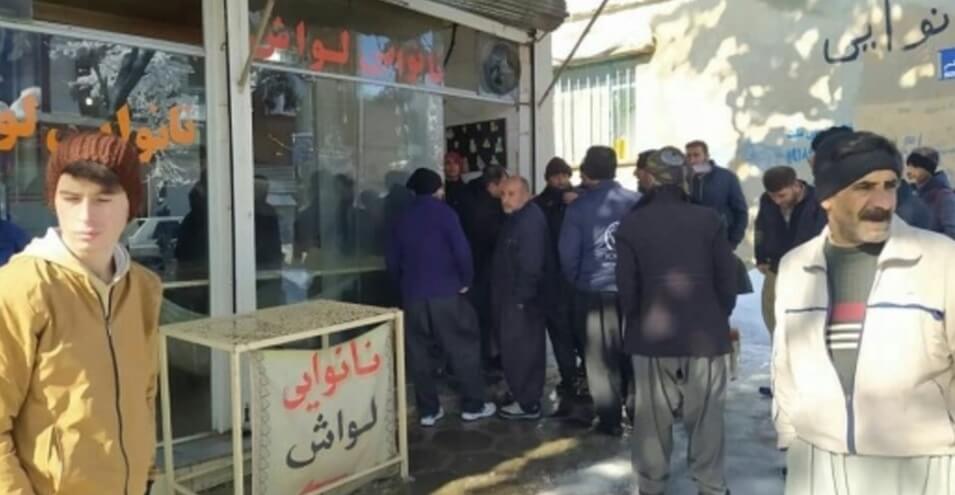
Following the announcement of new prices for different types of bread and criticism of price increases in Iran, the Ministry of Agricultural Jihad is trying to respond to these criticisms by denying "rumors" about the increase in the price of traditional bread, as well as promising new subsidies.
Jam Jam Online wrote on Wednesday, May 4, quoting the Director General of Inspection and Supervision of Essential Commodities of the Ministry of Agricultural Jihad: "Rumors circulating in cyberspace regarding the increase in the price of traditional bread, including Berber, Sangak, Lavash, and Khorasani bread, are denied."
The ministry official's comment comes a day after a list of new prices for popular bread types was released to the media, showing that, for example, the price of a regular baguette has increased from three thousand to ten thousand tomans.
Last week, the head of the Flour Producers Association announced that factories were notified ten days ago that the price of flour for pasta, cake, cookie, starch, and noodle producers had increased fivefold, and for this reason, the price of these products in Iran would also increase significantly.
The Ministry of Agricultural Jihad's denial regarding the price of traditional bread has been published at a time when the price of flour will naturally increase, as well.
Tejarat News on Tuesday quoted Hossein Yazdejerdi, head of the Iranian Flour and Bread Industries Association, as saying: "When we used to pay 2,700 tomans for wheat to the guild and industry, and this year we set the price of wheat for them at 12,000 tomans, it is natural that the price of this guild's products would increase accordingly."
It seems that it was in response to criticism of these price increases that the Minister of Agricultural Jihad promised on Tuesday night that a new subsidy would be paid to the people for the increase in the price of flour, a subsidy that, he said, "will be greater than the amount of the increase in costs."
Javad Sadatinezhad, Minister of Agricultural Jihad, said in an interview with Channel One News on Radio and Television: "The price of artisanal and industrial bread has been liberalized, and to compensate for this, the government will compensate for this price increase in the coming days by depositing an amount in the form of a subsidy, which will be more than the cost of this increase."
Mr. Sadatinezhad has also tried to portray this increase in prices in the country as the result of the increase in grain prices globally following Russia's invasion of Ukraine.
He said: "New conditions have been created for world food security, and the Iranian government has decided to liberalize flour for industrial use in order to maintain the sustainability of our country's food security due to the widespread smuggling of products made with flour."
But this is only partly true, and the price increases in Iran have not started in the two months since the war in Ukraine. President Ebrahim Raisi promised to reduce inflation and stabilize the market from the very beginning of his presidency, but official statistics and field reports have been showing the opposite of these promises for months, indicating rising prices, unemployment, and increased liquidity in the country.
In addition, the head of the IMF's Middle East and Central Asia Department said last week that the Ukraine war has not affected the food supply of countries like Iran and Iraq, and that "Iraq and Iran can meet any need for wheat and other food items with rising oil prices."
Source: Radio Farda