When the rain creates a "sea of blood" and reminds the world of the last covenant in Revelation
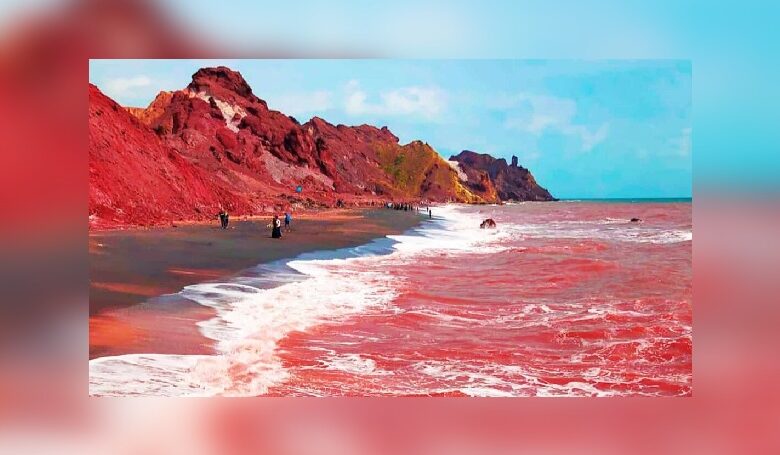
The rain and the coloring of the Hormuz coast in blood have created a space between science and biblical symbols, from the "river of blood" to a dreamlike image.
The publication of images and videos of rain and red water flowing on the coast of Hormuz Island has caused a wave of reactions on social networks around the world. The scenes in which rainwater flows from the rocks and red soil of the island and pours into the sea have reminded many of a horrifying and mysterious image; as if "rivers of blood" have flowed into the sea.
The images were released just as Iran, after experiencing its driest autumn in more than 50 years, was hit by a wave of rainfall starting Wednesday, December 10. In Hormuz, the rain not only watered the thirsty land, but also turned a coastline that was previously known for its unique colors into a striking red and blood-red hue.
Dozens of videos of the phenomenon were posted on social media, although it is unclear whether all of them are from the recent rainfall or if some are related to similar images seen in Hormuz in March last year. However, the combination of rain, drought, and the bloody color of the water has sparked users' imagination and reflection.
Some users have linked the scene to biblical prophecies. One Twitter user, X-Net, wrote: "Blood in the water is an apocalyptic sign primarily from the Book of Revelation (chapters 8 and 16) which describes angels pouring out the bowls of God's wrath that turn the sea, rivers and springs into blood as divine judgment in the end times."
Another user wrote in a questioning tone: "It looks like a Bible. Is this a common scene?"
For Christian readers, these reactions are reminiscent of the clear verses from the Book of Revelation: “And the second angel poured out his bowl into the sea; and the sea became blood as of a dead man: and every living thing in the sea died.” Revelation 16:3.
And also: “And the third angel poured out his bowl upon the rivers and fountains of water; and they became blood.” Revelation 16:4. These prophecies are also found in Revelation 8, verses that have been interpreted in Christian theology for centuries as signs of divine judgment and the end of times.
In addition to these religious beliefs, geoscience experts have also provided a clear and documented explanation. Hormuz Island has soil and rocks that are very rich in iron oxide, especially a mineral called hematite, which is the main cause of the island's red color. When it rains, particles of these minerals combine with water and create a red runoff that flows toward the coast and the sea.
According to geologists, this phenomenon is completely natural, harmless and well-known, and it is repeated at different times, especially after heavy rainfall. Similar old images have also been recorded in previous years, and there is no sign of pollution or environmental danger in them.
Hormuz Island has been a destination for tens of thousands of domestic and foreign tourists for years due to these unique geological features. However, the re-release of the images of the "Bloody Beach" showed how natural phenomena can simultaneously lead the human mind to science, faith, and deep theological questions.
Whether we see this scene as simply a wondrous manifestation of creation or a thought-provoking sign that draws our gaze back to the Bible, one thing is clear: "When the sea turns red, man once again reflects on the limitations of his own understanding and the grandeur of God's creation."