Who allowed Judge Mansouri to enter Germany?
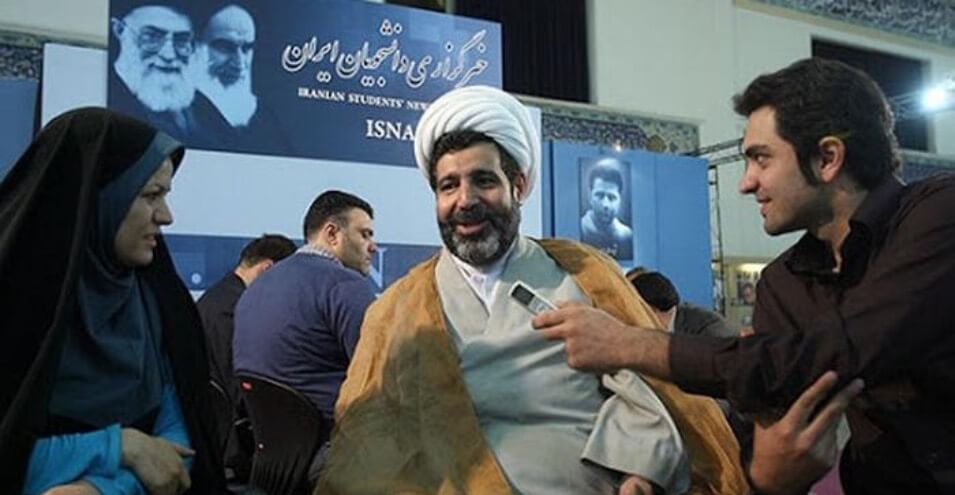
Representatives of the two liberal and green parties are demanding an explanation from the German government regarding Gholamreza Mansouri's stay in Germany. The Foreign Ministry says it has not issued him a visa. Iranians abroad are demanding that Mansouri be tried in Germany.
The website of the German newspaper “Die Welt” has addressed the controversy surrounding the presence of Gholamreza Mansouri in the country in an article titled: “Germany is the secret clinic for the judges who kill mullahs.” Gholamreza Mansouri is the ninth defendant in a corruption case in the judiciary and, according to the prosecutor’s representative, he fled the country after receiving a bribe of 500,000 euros.
Mansouri, who was an investigator in one of the branches of the Culture and Media Prosecution and has a history of issuing heavy sentences for some media and political activists, released a video message on Monday, June 9, claiming that he had left the country for treatment and was unable to return to the country due to the closure of the borders during the coronavirus pandemic.
Die Welt wrote that the director of a private clinic in Lower Saxony that allegedly admitted Mansouri called his hospitalization at the clinic “fake news” and emphasized that it had not admitted a person named Gholamreza Mansouri in the past or present. The newspaper did not name the clinic or its director.
Iranian domestic media have reported that Mansouri has been admitted to Professor Samiei's clinic in Hanover.
In response to Die Welt, the German Foreign Ministry said that German diplomatic offices did not issue a visa for him - Gholamreza Mansouri - and that the ministry has no information about his whereabouts.
Mansouri can travel to all Schengen countries, including Germany, with a Schengen visa. The Iranian embassy in Berlin has refused to provide information about Mansouri. However, the Etemad newspaper reported on Tuesday, June 10, that Mansouri had not visited the Iranian embassy in Berlin.
Bijan Jirsaei, a representative of the German Free Democrats, has called on the country's government to clarify Mansouri's situation as soon as possible to determine whether he is in the country illegally. Bijan Jirsaei emphasized that if such a person's residence was secretly agreed upon, how can Germany claim to protect human rights and civil rights?
Omid Nouripour, the Green Party's foreign policy spokesman, also stressed that it must be clear to the German government that Mansouri is responsible for the arrest of many journalists and for human rights violations in many cases. He said that it would be very difficult for students in Iran who are being prosecuted or for relatives of Iranians living in Germany to see that Gholamreza Mansouri has received a German residence visa.
He stressed that if reports about his stay in Germany are true, "it is a major controversy that the German government must quickly take a position on."
In response to a request from the Green parliamentary group, the state of Lower Saxony said that Gholamreza Mansouri had a 90-day short-stay visa in the Schengen area issued by the German embassy in Tehran in the summer of two years ago. Iranians living in Germany say that he was likely receiving treatment at a specialized neurological clinic in Hanover at the time.
In January 2018, Professor Samiei's clinic admitted Ayatollah Shahroudi, the former head of Iran's judiciary. Judge Shahroudi had been in Germany for treatment for a brain tumor. His presence in the country was met with widespread protests from human rights organizations, who publicized his past and the issuance of death sentences, including for criminals under the age of 18. At the time, the German attorney general opened an investigation into the case, but Shahroudi left Germany before the police decided to arrest him.
Iranians abroad are complaining about the presence of another “death judge” in Germany for treatment. Mina Ahadi, a political activist and founder and director of the International Committee “No to Stoning,” wrote a letter to German Chancellor Angela Merkel, referring to the trial in Germany of a senior Syrian army officer who was responsible for torturing Assad’s opponents, and calling for Gholamreza Mansouri to be held accountable in Germany.
He wrote in the letter: "How is it possible that the commander of a special army battalion (Assad) is being tried, but a judge who ordered the killing, torture, detention of journalists and civil society activists, and the murder of political opponents of the Iranian regime is being accepted with complacency?"
Iraj Mosadaghi, a human rights activist who played a role in the arrest of Hamid Nouri in Sweden, has also published a petition addressed to the German Attorney General and the Attorney General of the State of Lower Saxony, asking Iranians to sign it.
Referring to Gholamreza Mansouri's words in a video message on Monday, in which he emphasized his pride in cooperating with the Islamic Republic, he wrote: "We, the signatories of this petition, call on the judicial authorities of Germany to arrest this person, who has played an active role in the prosecution, arrest, imprisonment, and torture of Iranian journalists and is even proud of it, for violating human rights standards. Mansouri's return to Iran means his escape from justice."
Source: DW