A year and a half has passed since Ahmad Reza Jalali, a physician in prison, protested his death sentence; no one is held accountable.
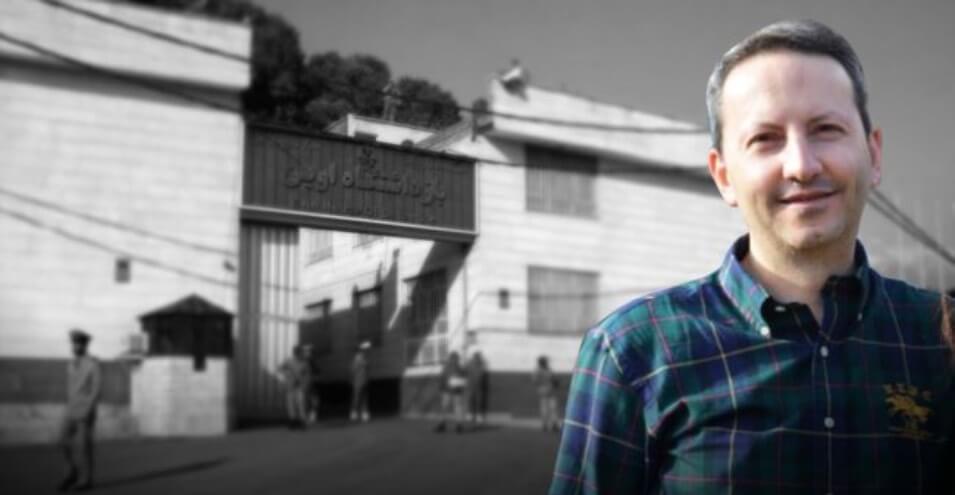
The wife of Ahmad Reza Jalali, an Iranian-Swedish doctor imprisoned in Iran, says that despite providing absolutely accurate and undeniable evidence of her husband's innocence, "unfortunately, no one is held accountable for the unjust sentence handed down to him and he remains at risk of execution."
Vida Mehrannia, the wife of Ahmad Reza Jalali, told Voice of America on Friday, June 29, that more than a year and a half has passed since the trial of this imprisoned doctor in Iran was resumed, but the status of the case and the verdict issued remain the same, and no official has given a clear answer to him or his lawyers.
Ms. Mehrannia says that the continued ignorance about the status of her husband's case occurs while the vast majority of judicial authorities and even security authorities are completely certain of his innocence and that the death sentence was wrong, but no one is willing to announce this mistake and make amends for the injustice.
Mr. Jalali was arrested in 2016 while visiting his family in Sweden and sentenced to death by the Iranian Revolutionary Court on charges of passing classified information to Mossad at the height of Iran's nuclear program. The Supreme Court rejected a request for a review of the sentence in less than an hour.
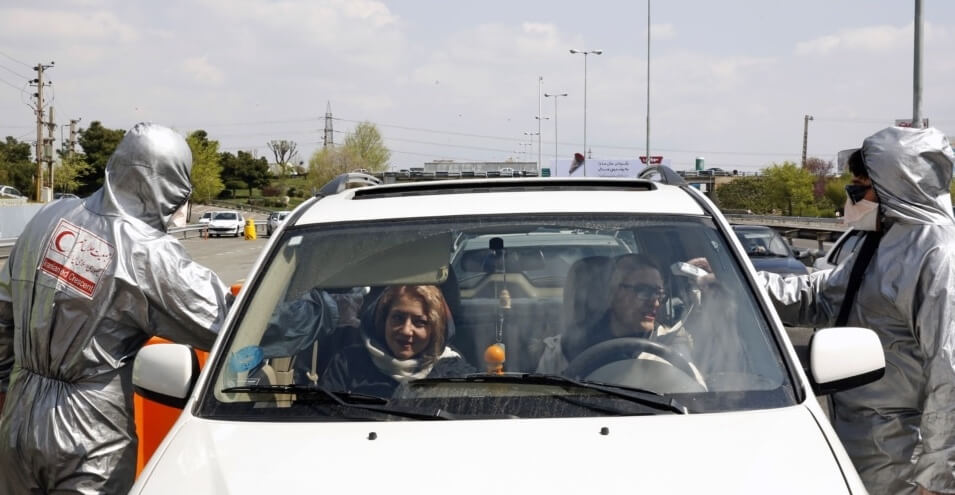
Expressing concern about Mr. Jalali's physical condition, Ms. Mehrannia told VOA that, given all the concerns about the spread of the coronavirus and COVID-19 and its spread in Iranian prisons, and despite Mr. Jalali's numerous illnesses, including weak immunity and digestive diseases, and a decrease in blood cells that greatly increases the risk of contracting the coronavirus, judicial authorities have not yet responded to the requests of Mr. Jalali and his lawyers, as well as the UN Human Rights Council, to send him on leave, and he remains in prison.
The imprisoned doctor's wife also declared the prison's health conditions to be very unsatisfactory, saying that the only chance for Ahmad Reza Jalali and his fellow prisoners in the face of the coronavirus outbreak is that they are being held in a high-security facility and are even deprived of basic services such as access to the library, which may help them in these circumstances.
Currently, in addition to Ahmadreza Jalali, several other American and non-American citizens, including Aras Amiri, Siamak, and Bagher Namazi, who are imprisoned in Iran, have not been sent on leave to date despite the outbreak of the Covid-19 virus and are at risk of contracting the virus.
The government authorities are preventing the release of these prisoners and some other political prisoners at a time when the spread of the coronavirus in Iran is not fully controlled and human rights news agencies are constantly publishing news about the spread of the virus in Iranian prisons. As of Friday, June 29, the Islamic Republic's authorities officially announced that 146,668 people have been infected with the virus and 7,677 have died from it.
However, the actual number is much higher than the figures announced by the Islamic Republic authorities, who do not provide information about the actual number of infected and dead. Earlier, a World Health Organization official said that the figures announced by Iranian authorities about the number of people infected with the coronavirus are only one-fifth of the actual number of infected.
US Secretary of State Mike Pompeo recently said in a press conference: "We have asked not only Syria, but also the Islamic Republic of Iran to release not only American citizens, but all those who have been unjustly imprisoned in these circumstances. This is a humanitarian act, and apart from the fact that these people have been illegally imprisoned, in these circumstances the principle of humanitarianism dictates that they be released from prison."
Source: Voice of America