February 30, 46th anniversary of the extrajudicial murder of Priest Parviz (Aristotle) Siyahsina
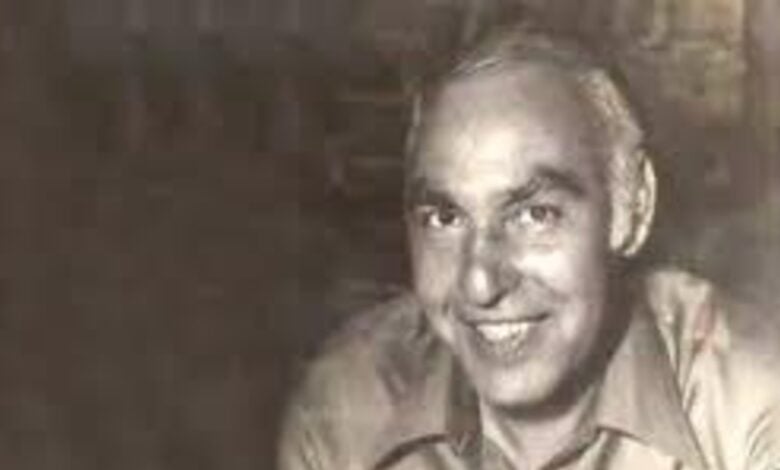
February 30 marks the 46th anniversary of the extrajudicial killing of Priest Parviz (Aristotle) Sayahsina.
Rev. Parviz Siyah-Sina, known as Aristotle, was born into a famous and cultured family in Shiraz. After completing high school, he went to Isfahan and worked as a laborer at the "Watan" textile factory. At the age of 36, after meeting "Hassan Dehghani-Tofti," the bishop of the Evangelical Church, he converted to Christianity and began studying Christian theology.
The priest then traveled to India and continued his theology studies at a university in the city of Punjab, after which he became assistant to the bishop of Dehghani-Tafti. According to his colleagues, the priest was a true Christian who had a great passion for introducing the Bible to others. He went to villages to preach Christianity, and he also took a medical team with him to help the villagers, and even created jobs for the unemployed.
Priest Aristotle Sayah returned to Shiraz at the age of 45 and served as a priest at the Evangelical Church of St. Simon. In Shiraz, he met an English nurse who worked at the Marcellin Hospital, and they later married and had two sons.
According to interviews with his neighbors and church members, he had a very warm voice that accompanied his sermons with old Persian hymns and traditional music. People of Muslims, Jews, and other religions respected him. However, according to one of the acquaintances of Pastor Sayah, before and after the 1979 revolution, Muslims who were active in the Islamic Propaganda Association went to church to preach Islam and ridiculed and harassed people who went to church.
According to available information, in the early days after the Islamic Republic of Iran revolution, two members of the Shiraz Islamic Propaganda Association showed interest in Christianity and contacted Pastor Sayah to learn about Christianity from him. Bishop Dehghani wrote in his memoirs: “On the day of Pastor Sayah’s murder, he entered his office in the Evangelical Church of Shiraz with two acquaintances who had been consulting with him for some time, which was a short distance from the other buildings in the complex. After a while, Aristotle’s son, who was his guest for lunch with his family, became worried about his father’s delay in returning home and went to his office, but found his father’s lifeless body in his office. Aristotle Sayah’s artery had been cut with a knife and a bullet and a note had been left next to his body.”
One of the neighbors of the traveling priest also said at the time: "When this happened, the police did not allow anyone to approach the murder site. But there was a rumor that he had been beheaded. This method of murder brought a lot of fear and terror to the locals. In fact, that was the purpose of this type of killing."
Priest Aristotle Sayah was the first church leader to be extrajudicially murdered, eight days after the 1979 revolution, on February 19, 1979. His tombstone, which his family was not allowed to erect for years, bears the date of his death as March 1, 1979.
"Kamran Sayah," the son of Priest Aristotle, told Kayhan newspaper about his father's murder: "Two people named Behrouz Kalai and Hassan Nesheh were in contact with my father until an hour before his murder." The connection of these people to the Islamic Propaganda Association was not clear, and after the news of Priest Sayah's murder was reported in official newspapers, the elements of the revolution attributed the murder to elements affiliated with the CIA. In this regard, a local ayatollah also attributed the murder of Priest Sayah to "counter-revolutionaries" during a conversation with Bishop Dehghani-Tofti.
An investigation into the murder of this priest, who was a true and compassionate Christian, was conducted by the investigator of Branch 2 of the Shiraz Prosecutor's Office, but his killers were never identified. According to Father Tafti, two people who were seen with Father Sayah on the day of the murder were questioned by the police but were not arrested.
Shortly after the murder of Pastor Sayah, the church-affiliated hospitals in Isfahan and Shiraz were also confiscated. The staff were fired and the church hospital was renamed “Revolutionary Hospital.” Foreign staff were also ordered to leave Iran, and all the property of the Shiraz church was then confiscated by the Revolutionary Court. Pastor Sayah’s family was also forced to leave the country after this extrajudicial killing and emigrated to Europe.
The Islamic Republic of Iran has a long history of politically motivated violence in Iran and even in the world. From minorities to politicians, civil activists, and even students and people who want freedom of thought, belief, and religion. Right from the 1978 revolution until now, both inside and outside the country, the regime's agents have attempted to kidnap, disappear, and murder many people whose activities were not favorable to the regime, and have executed them.
The number of victims of extrajudicial executions, such as that of priest Aristotle Sayyah, within the country is not known, but these types of murders began in February 1979 and have continued throughout the Islamic Republic's rule, both inside and outside Iran.
The Abdolrahman Boroumand Foundation has identified more than 540 murders outside Iran that are attributed to the Islamic Republic of Iran. It is an independent and non-political foundation that strives to provide justice and establish democracy through education and strengthening the culture of democracy and the dissemination of the idea of human rights. It is preparing a database and documents on human rights issues and violations that can be used by researchers of contemporary Iranian history.