Floods in Iran; Death Toll Reaches 70
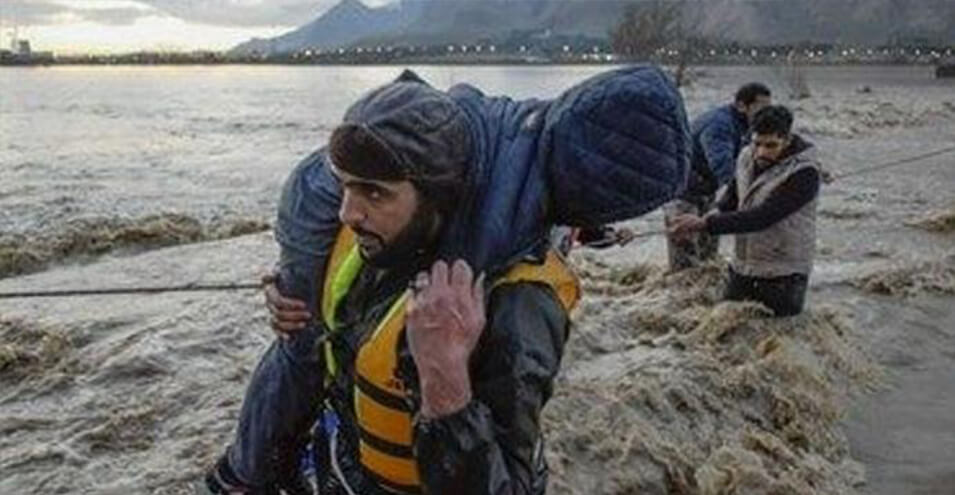
According to the Iranian Emergency Organization, flooding in Iran has claimed 70 lives so far. According to Iran’s meteorological service, a new rainfall system will be “active” throughout the country from next Saturday, except in Sistan and Baluchestan and Hormozgan provinces.
According to Iran’s Emergency Organization, the death toll from recent flooding in various parts of the country has reached 70 people, with 768 others injured.
Based on a table released by Iran’s Emergency Organization, from the total deaths from flooding and heavy rainfall from March 17 to 8 a.m. Thursday, April 4, 2019: 23 people in Fars province, 14 in Lorestan, 8 in Golestan, 5 in Mazandaran, 5 in Hamadan, 3 in North Khorasan, 3 in Kohgiluyeh and Boyer-Ahmad, 1 in Razavi Khorasan, 1 in Semnan, 1 in Khuzestan, 1 in Kermanshah, 1 in Zanjan, 1 in Qazvin, 1 in Isfahan, 1 in Qom, and 1 in Ilam have lost their lives.
Iran’s Emergency Organization statistics show that Lorestan province had the highest number of injured from the recent flooding with 256 people, while Qom, Zanjan, and North Khorasan provinces had no injuries. Previously, Iran’s coroner’s office had announced the death toll from the recent floods as 62 people, with the number of injured reported as 478.
Ahad Vazifeh, Director General of Forecasting and Early Warning at Iran’s Meteorological Organization, announced on Thursday that with the arrival of a new rainfall system from next Saturday, East Azerbaijan, western Kermanshah, Ilam, Kohgiluyeh and Boyer-Ahmad, northern parts of Khuzestan, Fars, Bushehr, and western Razavi Khorasan provinces, eastern Semnan, and southern North Khorasan will experience heavy rainfall.
According to ISNA, the Director General of Forecasting and Early Warning at Iran’s Meteorological Organization added: “From Friday afternoon with the arrival of a rainfall system to the western and southern strips of the country, rainfall will begin across the entire western strip, northern Persian Gulf, and Bushehr, Kohgiluyeh and Boyer-Ahmad, and Fars provinces, and by late Friday the rainfall will extend to the southern slopes of the Alborz range in Zanjan, Qazvin, areas of the southeast, east, and central parts of the country.”
Ahad Vazifeh emphasized that next Saturday the new rainfall system will be “active” throughout Iran except for Sistan and Baluchestan and Hormozgan provinces.
Iran’s Meteorological Organization announced yesterday that with the arrival of a new rainfall system from next Saturday, April 6, scattered rainfall is expected before this system arrives. The organization stated: “The rainfall system will enter the country from Friday afternoon, April 5, 2019, and will be active across the country during Saturday and Sunday of next week. It is expected that in the west and southwest of the country including Kermanshah, Ilam, northern and eastern Khuzestan, Kohgiluyeh and Boyer-Ahmad, Bushehr, and northern Fars provinces, rainfall between 25 to 35 millimeters will occur.”
It was also announced: “As this system moves toward the northeast of the country from Saturday afternoon to Sunday afternoon, rainfall in North Khorasan, northern Razavi Khorasan, Semnan highlands, Tehran and Alborz highlands is estimated between 20 to 35 millimeters.”
Iran’s Meteorological Organization also recommended that “considering the flooding and heavy rainfall of the previous system,” organizations responsible for water resources management “take necessary measures to maintain safety and reduce the risk of potential flood hazards.”
During the flooding and heavy rainfall in Iran, which at the beginning of the new solar year (2019) covered 25 provinces according to Hassan Rouhani, the Islamic Republic’s president, 70 people died and hundreds were injured. Other consequences of the recent floods included tens of thousands of Iranians becoming homeless and thousands of billions of tomans in damages.
Source: DW