Christmas Ban in Tehran: Government Crackdown on Christian Symbols Ahead of New Year
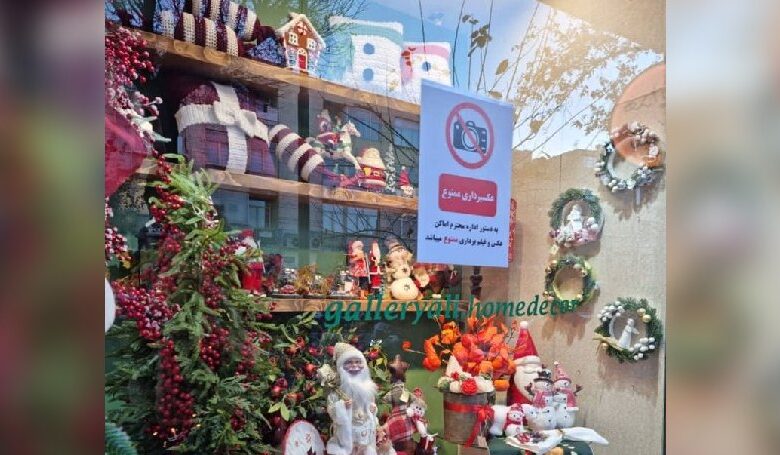
The ban on Christmas and government crackdown on the sale of goods related to this Christian tradition in Tehran has intensified as the new year approaches.
As the new year approaches, images released from Tehran show that government officials have imposed new restrictions on the display and sale of Christian symbols by placing “Photography Prohibited” stickers on the storefronts of shops selling Christmas-related goods. This action has once again drawn public attention to the state of religious freedoms, particularly for Christians in Iran.
Based on these images, shops selling items such as Christmas trees, New Year decorations, and symbols related to the birthday celebration of Jesus Christ have become targets of direct scrutiny and action by government officials. The placement of photography ban stickers is seen as an attempt to prevent documentation and public dissemination of these actions.
This is not the first time that trade authorities and government bodies in Iran have taken action against the sale of goods related to non-Islamic traditions. In recent years, official authorities have repeatedly emphasized the need to combat the sale and promotion of occasions such as Christmas and Halloween. In this regard, multiple reports of shop closures, confiscation of goods, and warnings to merchants have been published.
Critics of these policies argue that such actions go beyond trade supervision and have effectively led to restrictions on Christian religious symbols, even in private and commercial spaces. This is despite the fact that, according to the Constitution of the Islamic Republic, Christians are recognized as one of the official religious minorities. However, human rights activists believe that in practice, the religious freedoms of these minorities face extensive restrictions.
The crackdown on Christmas symbols has not been limited to shops alone. In recent years, holding religious services, operating house churches, and even publicly celebrating Christmas on social media have had security and legal consequences for some Christian citizens.
As the new year draws near, these measures have once again raised the question of why the birthday celebration of Jesus Christ and the start of the new year—who is also mentioned in Islamic texts as a great prophet—face such restrictions in Iran. International observers emphasize that the continuation of this trend could be a sign of increased pressure on religious minorities and a decline in religious tolerance in the country.