The Account of “Afshin Javed,” Former Basij Member: From an Ideology of Death to the Search for Freedom and Faith
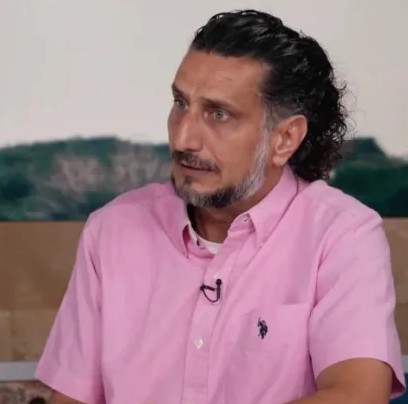
The striking account of “Afshin Javed,” a former member of the Basij, from within the system, lifts the veil on a reality in which an ideology of death, systematic repression, and continuous violations of human rights have trapped generations of Iranians in a cycle of violence.
Afshin Javed’s recent interview with the Jerusalem Post has once again drawn attention to the hidden dimensions of the repressive structure in the Islamic Republic of Iran; a structure that, according to him, not only targets opponents but also ensnares its own loyal forces in a cycle of violence, brainwashing, and the devaluation of human life.
Javed presents a bitter picture of the psychological condition of Iranian society in this conversation; a society that, in his view, faces three grim choices: “Direct death at the hands of the government, the gradual erosion of the soul under the shadow of repression, or being killed in foreign conflicts.” He attributes this situation to decades of policymaking based on fear, ideology, and repression.
He states in part of his remarks: “Witnessing the death of fellow countrymen is painful. I still consider myself Iranian and my heart aches at every report of a death. But for the first time, Iranians are saying: if death is inevitable, perhaps there is some light of freedom behind it; otherwise, the government will kill us anyway, with no light at the end of this dark tunnel whatsoever.”
These statements reflect a deep despair that has formed in recent years, especially after the suppression of popular protests, among segments of Iranian society.
One of the striking sections of Javed’s account goes back to his experience in childhood; a time when, under the influence of official propaganda following Iran’s 1979 revolution and amid the Iran-Iraq War, he was driven toward an ideology of martyrdom.
He states bluntly: “We had become completely insensitive to the value of life. In this ideology, life has little meaning; what is glorified is death, especially death in the cause of jihad and holy war.”
Multiple international reports have also confirmed in recent years that the use of adolescents in war has been one of the darkest chapters in Iran’s contemporary history; a phenomenon that remains alive in the collective memory of Iranians.
After returning from the front, Javed joined the Basij; an organization that plays a key role in social control, the imposition of ideological laws, and the suppression of opponents. He speaks of participation in street patrols and even witnessing execution scenes; experiences that, according to him, marked the beginning of deep doubts in his beliefs.
He describes one of these scenes: “It was far more brutal than Western accounts. When I witnessed that scene, I felt something die within me.”
Human rights organizations have repeatedly accused the Islamic Republic of carrying out non-transparent executions and instrumentally using capital punishment to instill fear.
Along this path, Javed was forced to leave Iran; a journey marked by detention, imprisonment, and instability. However, the turning point in his life was a spiritual experience in prison that changed his intellectual direction.
He describes this experience as follows: “I was praying in my room when I saw an image of Jesus Christ and experienced a radiant, sacred, and just presence. Suddenly, I felt a burden lifted from my shoulders and an inner voice told me that I was forgiven.”
This experience stood in complete contrast to the image he had formed of religion within the government’s formal structure; a religion based on fear, punishment, and coercion.
Javed’s account, beyond a personal story, reflects a broader critical perspective on Iran’s governmental structure; a structure that, according to critics, has kept society closed over decades through the suppression of individual freedoms, the restriction of religious minorities including converts from Islam, and the use of security tools.
Reports from organizations such as Amnesty International and Human Rights Watch have repeatedly pointed to widespread human rights violations in Iran, including arbitrary detention, torture, and executions.
Afshin Javed now continues his activities outside Iran and seeks to draw the attention of the international community to what he calls the “true nature of the system.” He believes that silence in the face of this situation contributes to the continuation of the cycle of violence.
His account, though controversial from some perspectives, aligns on one key point with many independent reports: that the Iranian people have faced extensive political, social, and religious pressures over the years and continue to seek a way to achieve freedom, human dignity, and a different future.
This report is not merely a story of personal transformation, but a reflection of a deeper crisis that continues to flow through Iranian society; a crisis whose resolution requires serious attention from the international community and solidarity with those who have paid a heavy price for the cause of freedom for years.