Execution in Darkness, Burial in Silence, and the Islamic Republic’s Fear of Handing Over Victims’ Bodies
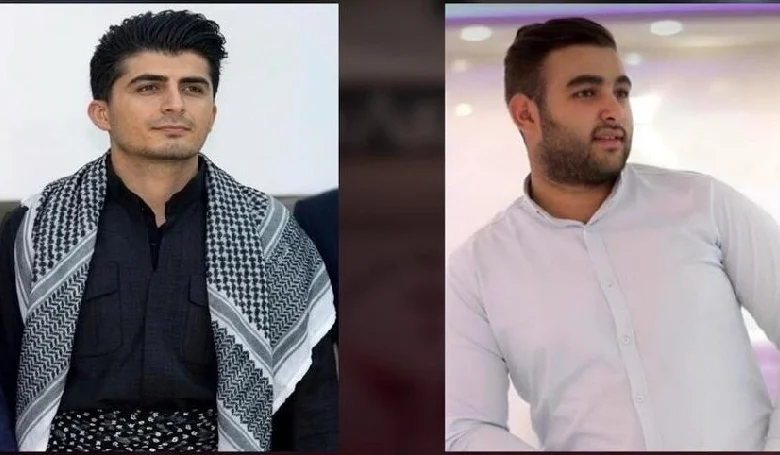
More than two weeks after the secret executions of “Naser Bakrzadeh” and “Mehrab Abdollahzadeh,” two Kurdish political prisoners in Urmia, not only has the Islamic Republic refused to hand over their bodies to their families, but through threats and security pressure, it has prevented the holding of public mourning ceremonies. Human rights activists consider this behavior a continuation of the policy of “enforced disappearance” and the systematic use of execution to create terror and silence the voices of protesters.
While the Islamic Republic has for years used capital punishment as a tool of political repression, the cases of Naser Bakrzadeh and Mehrab Abdollahzadeh have revealed a more horrifying picture of this repressive machinery: a government that, after taking the lives of its opponents, also refuses to hand over their bodies to their families and has transformed mourning into a security threat.
According to reports published by Kurdish human rights organizations, the authorities of Urmia Central Prison informed the families of these two political prisoners that “no body will be handed over.” The families were also placed under pressure and threats to prevent any public ceremonies from being held in the city of Urmia. In the end, mourning ceremonies were held in the villages where these two prisoners were born, with limited attendance.
Human rights organizations have considered this behavior a clear manifestation of “enforced disappearance,” a practice that is considered one of the most severe forms of human rights violations under international law and is typically associated with repressive governments and unaccountable security structures.
In one of the most shocking aspects of this case, an informed source stated that after executing Naser Bakrzadeh, security officials told his family: “We have executed your son and disposed of his body; go find him yourselves.”
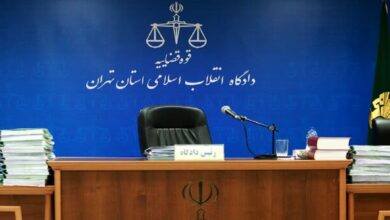
Naser Bakrzadeh, a 26-year-old political prisoner from Urmia, after several instances of his execution sentence being overturned by the Supreme Court, was finally condemned to death again by the Revolutionary Court. Despite numerous legal objections, the sentence was ultimately upheld and carried out. His lawyers had repeatedly emphasized that the case was based on forced confessions and lacked conclusive evidence.
“Amir Raissiyan,” one of the political prisoner’s lawyers, had previously announced that lawyers’ access to the file was suddenly restricted and no clear explanation was provided about the execution process. “Siyad Shirzad,” another lawyer in the case, had also warned that the Urmia Revolutionary Court had not even paid attention to explicit objections raised by the Supreme Court.
Following the execution, state media released a video of Naser Bakrzadeh’s confessions, images showing him in unspecified conditions in front of the camera, apparently reading a pre-written text. Human rights organizations have described this video as a clear example of the Islamic Republic’s use of confessions obtained under torture to legitimize execution sentences.
The case of Mehrab Abdollahzadeh was not significantly different. This 27-year-old political prisoner, arrested during “Woman, Life, Freedom” protests, had repeatedly claimed his confessions were extracted under torture. Nevertheless, without presenting independent and valid documents, the Islamic Republic’s judicial system condemned him to death on charges of “moharebeh” (armed rebellion) and “fasad fil-arz” (corruption on earth).
Human rights activists say his case was also based on “judge’s knowledge” and forced confessions, and repeated requests for technical review of videos and mobile phone data were ignored. Even after filing an appeal, the sentence was carried out without suspending the legal proceedings.
Following Mehrab Abdollahzadeh’s execution, state media also released ambiguous images without clear time or location and claimed he had played a role in killing a Basij member. According to critics, this video contains no valid judicial standards of proof and appears more like part of a security apparatus propaganda operation than a legal document.
The executions of these two political prisoners took place as Iran was experiencing regional tensions and security crises. According to observers, the Islamic Republic once again exploited this situation to intensify an atmosphere of terror, settle political scores, and silence the voices of protesters.
Critics say what happened in Urmia is not just a legal case but a naked display of a government that uses courts, torture, forced confessions, executions, and even denying families the right to mourn as tools of control and intimidation.