An Iranian researcher's 15-year project to rewrite the Bible in "pure Persian"
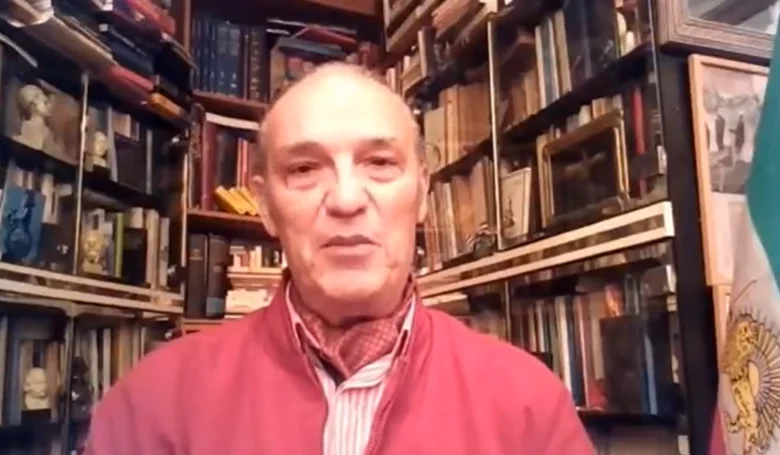
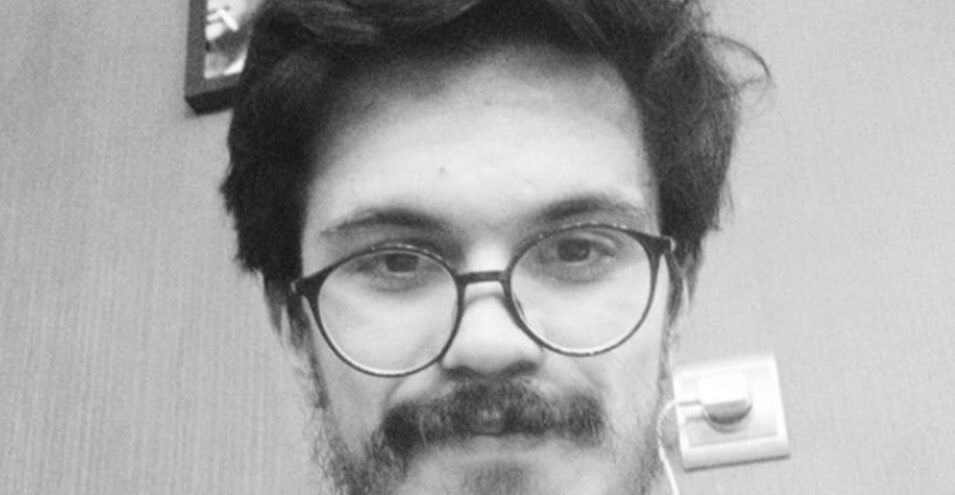
Dr. Daniel Dana, an Iranian writer and lawyer, has announced the completion of a project in which the text of the Bible was rewritten in "pure Persian" without the use of Arabic words; an action that, according to him, is an attempt to reconnect the Christian faith with Iran's linguistic and cultural roots, and at the same time has provoked different reactions among cultural activists, theologians, and Persian speakers abroad.
Dr. Daniel Dana, an Iranian researcher, writer, and translator, has announced that after about fifteen years of research and writing work, he has completed the project of translating and rewriting the "New Testament" into "pure Persian"; a text in which all Arabic words have been removed and replaced with Persian equivalents.
He describes this project as not merely a literary experiment, but part of a broader effort to revive the linguistic and cultural identity of Iranians; a topic that has received attention in recent years, especially among some Persian-speaking cultural and academic movements.
According to published information about his background, Dr. Daniel began his studies in law in Iran and then continued in the fields of theology, politics, and literature in Australia and France. Some Hebrew-language sources have also mentioned his cultural and research background and his connection to issues related to Iranian and Jewish identity.
He says the idea of writing religious texts in “pure Persian” had been in his mind for years, but the project entered a serious phase after a spiritual experience in the early 1990s. His main concern, he says, was to enable Persian speakers to read the text of the Bible in a format closer to the ancient roots of the Persian language.
One of the most important features of this translation is the replacement of common theological terms with Persian or Hebrew terms. For example, he uses the Hebrew phrase “Yeshua the Messiah” instead of the well-known title “Jesus Christ.” Dana believes that this approach brings the reader closer to the historical context and early origins of the sacred texts.
He also emphasized that in the process of compiling this work, he benefited from the consultation of some researchers and members of the English-speaking, French-speaking, and Hebrew-speaking churches. According to him, the project of translating the "Old Testament" is also currently underway.
The release of the translation has been met with mixed reactions. Some have described it as an innovative attempt to recreate religious language within the context of Iranian culture, while others believe that the complete removal of Arabic vocabulary from Persian theological literature could make it difficult for traditional Persian-speaking Christian audiences to understand.
However, Dr. Dana has spoken of the welcome he has received from some academic and cultural circles, particularly in Israel, and has stated that a number of academic centers have contacted him to give lectures and introduce the project. He sees this attention as a sign of the importance of the connection between language, identity, and sacred texts in the intellectual space of the Middle East.
This project comes at a time when, in recent years, the tendency to reread classical Persian texts and use non-Arabic vocabulary has increased in some parts of the Iranian cultural space, both inside and outside the country; a trend that some interpret as part of a renewed search for Iran's historical and cultural identity.
Daniel Dana concluded by announcing that the final version of this translation will soon be available to all Persian-speaking people.