Prisoners Whose Freedom Cost Them Their Lives
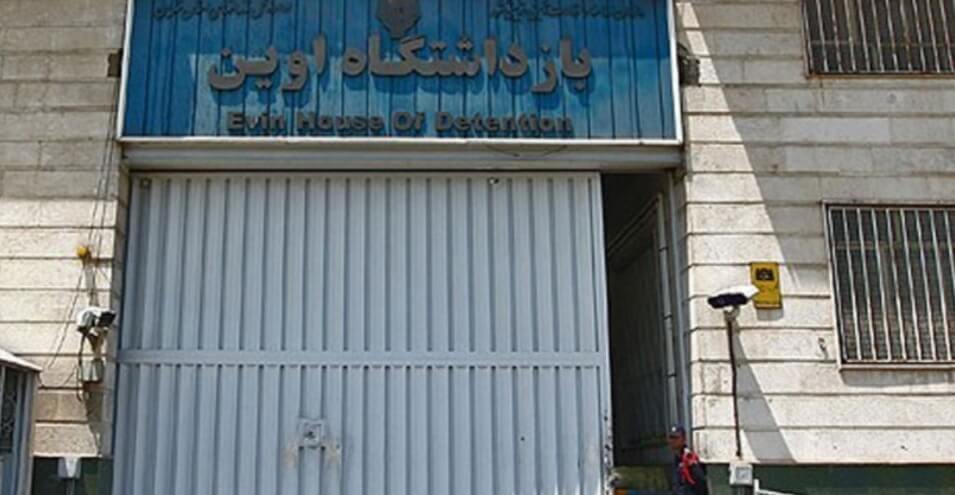
Behnam Mohajubi, a political prisoner, died six days after being transferred to the intensive care unit of Laqman Hospital. Saleha Hosseini, Behnam Mohajubi’s wife, told Radio Farda that disregard for doctors’ opinion regarding his inability to withstand imprisonment, failure to provide timely medical care, and delay in his hospital transfer worsened his physical condition and ultimately led to this political prisoner falling into a coma.
After participating in a gathering of Gonabadi Dervishes in February 2018 in Tehran, Mr. Mohajubi was sentenced to two years in prison, and his sentence was carried out on June 21, despite medical opinion stating he could not withstand imprisonment.
The process that claimed Behnam Mohajubi’s life within a few months has been repeated for many other political and ideological prisoners, and over the years, dozens of such prisoners have died in detention.
According to Islamic Republic laws, the judiciary and prison organization are responsible for prisoners’ health. However, officials of these institutions, along with security agencies, evade accountability and responsibility through cover-ups, falsification of accounts, and pressure on families of prisoners and the deceased.
From Ali-Akbar Saidi Sirjani, a writer who was abducted by Ministry of Intelligence agents on March 13, 1994, and was killed in prison on December 25, 1994, after nine months of no contact, whose death was ruled natural, to Behnam Mohajubi, whom the General Prison Administration claimed “of his own will and without consulting a doctor, arbitrarily consumed multiple drugs of his own and others simultaneously in prison.”
Saeed Emami, a high-ranking Ministry of Intelligence officer and the primary suspect in serial killings, revealed in a speech in Hamadan whose audio file was released, that Ali-Akbar Saidi Sirjani was given one of his favorite foods, barley, in prison, and because this food causes constipation and intestinal blockage, interrogators gave him “an enema made from potassium” instead of a laxative enema—an enema that stopped Saidi Sirjani’s heart and killed him.
His cause of death was announced as a heart attack. However, former President Ali Akbar Hashemi Rafsanjani wrote in his memoirs that “Mr. Mohammad Yazdi, head of the judiciary, reported the medical examiner’s findings regarding Saidi Sirjani’s death in prison to be natural.”
There is no precise statistic on the number of prisoners who have died in Islamic Republic prisons, but in the early years following the 1979 revolution and the establishment of the Islamic Republic government and in the 1980s, no explanation was given for prisoners’ deaths. Those who were tortured to death were only returned to their families’ bodies, without them having the right to ask about their children’s fate.
Over the past years, however, in many cases, Islamic Republic officials have claimed prisoners committed suicide or tried to present their deaths as natural. This is while families have repeatedly stated in media interviews about the systematic elimination of their children by the judicial and security system through torture or denial of access to medical facilities.
Akbar Mohammadi
During clashes at Tehran University in June 1999, Akbar Mohammadi, a student activist, was arrested along with his brother Manuchehr Mohammadi and initially sentenced to death. Although his death sentence was later changed to 15 years imprisonment, Mr. Mohammadi died in Evin Prison in 2006.
Goljahan Ashrafpour, his mother, explained the process of her son’s death in prison: “Akbar was severely tortured in prison. They had tortured him. He was devastated. He underwent three surgeries. The doctor said he should not return to prison and prison conditions were deadly for him. According to the doctor’s testimony, my son’s body had become infected in prison and should have been sent abroad for treatment. But they returned him to prison. No matter how much we protested, said he needed rest, needed treatment, and the doctor testified, they refused. When they took Akbar, I felt he would not return. When he returned to prison, he went on a hunger strike in protest. They paid no attention and would not let him be treated. Prison officials announced Akbar Mohammadi’s cause of death as a heart attack.”
Hadi Saber
In June 2011, Hadi Saber’s body was removed from Evin Prison. A religious national activist who had gone on a hunger strike in protest of events leading to Hale Sahabi’s death, died as a result of a heart attack caused by hunger strike. Farida Jamsidi, Mr. Saber’s wife, announced that “my husband died due to neglect and lack of attention from prison officials to his condition.”
Firoozeh Saber, Hadi Saber’s sister, explained: “My brother felt bad at four in the morning on Friday, had severe chest pain, and whatever he and his cellmates said, prison officials paid no attention. He suffered two heart attacks and they still paid no attention, and about six hours later they took him to Modares Hospital, but it was too late. They took him too late and this delay caused my brother to lose his life.”
64 political prisoners who were cellmates with Mr. Saber in Ward 350 testified in a letter that “Hadi Saber, on the eighth day of his hunger strike, was severely beaten by people believed to be security and intelligence officers in the clinic.” Mr. Saber’s family also filed a complaint with the judiciary stating “These gentlemen should explain how they take someone who is on hunger strike and sick to a clinic and instead of treating them, beat them? This is a tragedy and we will not let it pass.”
However, Gholam-Hossein Mohseni Eje’i, the former spokesperson of the judiciary, claimed on the eve of the first anniversary of Hadi Saber’s death that he died of natural causes and the latest forensic medical opinions had shown that no one was to blame in this regard.
Albarz Ghasemi-Shal
According to his family, Captain Albarz Ghasemi-Shal, a naval officer and deputy training commander of the special unit in Rasht, was in perfect health when he was arrested on May 13, 2008, but his body was removed from prison. Hamid Ghasemi-Shal, Albarz’s brother, who witnessed his brother going blind and then dying in prison, said: “At a visit, he told my sister his eyes were blurred. We said it was the effects of prison and his eyes had weakened. At dinner I asked Albarz what you’re doing? He said I can’t see anything. I said what do you mean? He said everything is darkness, I can’t see anything. We took Albarz to the prison clinic and brought an eye specialist, who looked and said there’s nothing wrong. I said he can’t see. He said he’s faking. From that day on, my brother’s health declined very rapidly, to the point that he couldn’t even bathe. He had completely lost his sight and had no bladder control. Prison clinic staff had taken him several times but could no longer find his vein. The doctor had written that he doesn’t have the capacity for prison and should be with his family. But they refused. They claimed he had cancer and needed chemotherapy. Davaloo-Abadi (the then prosecutor of Tehran) refused. They kept my brother in the clinic so long that he fell into a coma. Then they took him to the emergency room of Shahid Taleghani Hospital and he died. They said he had stomach cancer that spread to his brain and caused brain hemorrhage. We don’t know about this claim, we only know that if they had given him the opportunity and permission for treatment, he might still be alive today.”
The Ghasemi-Shal brothers had been accused of espionage and sentenced to death, but following a case review, they were acquitted of the charges and Hamid Ghasemi-Shal was released from prison.
Amirhossein Hashmataran
On March 7, 2009, Amirhossein Hashmataran, who had been imprisoned in Rajaishahr Prison in Karaj for more than four years, died in Rajaishahr Hospital.
Mohammad Reza Faghihi, Mr. Hashmataran’s lawyer, told Radio Farda that “the prison did not make serious efforts to treat the sick prisoner, and given that the prison is responsible for prisoners’ health, the prison officials’ negligence is clear.”
According to Mr. Hashmataran’s lawyer, this political prisoner had suffered from heart problems months earlier and “his condition had deteriorated many times.” Nevertheless, the Shahriar Revolutionary Prosecutor left the requests of Mr. Hashmataran’s wife, Elaheh Nazjoo, for treatment of this prisoner unanswered.
Amirhossein Hashmataran was tried in 2004 for allegedly founding a group called the “National Union Front of Iran” and was sentenced to eight years imprisonment by the Shahriar Revolutionary Court.
Mohsen Dogmeh-Chi
On April 28, 2011, a well-known bazaar merchant who had been sentenced to 10 years of tazir imprisonment died, and according to his wife, he had no problems when arrested and was completely healthy.
Maryam al-Langi, Mr. Dogmeh-Chi’s wife, said: “The illness started in September 2010, exactly one year after his arrest and in prison. They delayed taking him to a doctor for three months and it wasn’t addressed, and when they decided to take him to a specialist, it was too late. They took him to the hospital and performed abdominal surgery. They removed part of his tonsil and at that time diagnosed him with cancer. But the problem is that no one loses their life in such a short time, and with medication and medical care, the disease is controlled, but my husband was deprived of treatment and died 95 days after the onset of his illness. It was possible that with proper medical attention this tragedy would not have occurred.”
Mr. Dogmeh-Chi’s wife said: “I went many times and said that with whatever amount of bail you want, just give him a few days of leave. Medical leave on a hospital bed so he can receive treatment and then you can take him back to prison, but they didn’t even agree to that. My husband only had six months of chemotherapy treatment, if it had been completed, this would not have happened.”
Vahid Seyedi Nasiri
On December 12, 2018, Vahid Seyedi Nasiri, who had been sentenced to two and a half years in prison for his Facebook activities, for insulting sacred values and the leadership, and for propaganda against the system, died while his sister Elaheh Seyedi Nasiri told Radio Farda that he had been on hunger strike for several days.
Vahid Seyedi Nasiri had gone on hunger strike in protest of non-compliance with the implementation of the principle of separating prisoners according to their crimes.
Mansour Radpour
In June 2012, Mansour Radpour died in prison, and according to his wife, he had no history of illness but during his imprisonment, he suffered from stomach problems the entire time and complained about why he was not being transferred outside prison for treatment.
His daughter Mahsa Radpour, who had visited her father two weeks before, announced: “The coroner said the cause of death was a stroke, but when we saw my father’s body, it didn’t resemble someone who had died from a stroke at all. His entire body was wounded and bruised and signs of beating were visible on his body. I’m sure they killed him because someone who has a stroke doesn’t have their body and limbs so mutilated.”
Mr. Radpour was arrested in May 2007 and was sentenced by the Karaj Islamic Revolutionary Court to five years imprisonment for alleged cooperation with the Mujahedin-e Khalq Organization, which was later increased to eight years.
Shahrokh Zamani
Shahrokh Zamani, a house painter and labor activist who had been imprisoned since 2011 for allegedly attempting to form workers’ organizations including the painters’ union and was sentenced to 11 years of tazir imprisonment, died in Rajaishahr Prison on September 13, 2015.
Prison officials announced the cause of death as a stroke, but Nina Zamani, Mr. Zamani’s daughter, announced that her father “had no physical problems and was completely healthy.”
Afshin Asanlo
The cause of death of Afshin Asanlo on June 21, 2013, was announced by prison officials as a heart attack. However, Farshte Asanlo, his sister, announced that her brother had no history of heart disease and was healthy at their last visit.
Farshte Asanlo had told the International Campaign for Human Rights that hospital nurses said they brought him to the hospital around 8 p.m., but he had died long before reaching the hospital.
Afshin Asanlo, 42, was a labor activist and brother of Mansour Asanlo, a member of the Tehran and Suburban Bus Drivers Union, who was sentenced to five years of tazir imprisonment in 2009 for conspiracy and assembly to act against national security.
Talib Basati
A nursing student and emergency room employee in Malekshah, Ilam, arrested in connection with December 2017 protests, who died in prison. Jalal Mirzaei, the then-representative of Ilam in the Islamic Consultative Assembly, announced the cause of his death as a heart attack.
Mr. Basati was arrested at his home on February 19, 2018, and his body was handed over to his family on March 1 of the same year. BBC reported that on Mr. Basati’s death certificate it was noted that he died due to “brain trauma” and signs of injury were visible on the deceased’s body.
Mohammad Raji
In March 2018, Mohammad Raji’s daughter, one of the Gonabadi Dervishes, confirmed in an interview with Radio Farda that law enforcement officials announced that her father fell into a coma and died as a result of blows received.
Tayyibah Raji said that her father was severely beaten when arrested in early March of the same year and was in critical condition but moved his hand, and after that had no contact with the family.
The Light-Possessed website, which covered news about Gonabadi Dervishes, reported that Mr. Raji was killed as a result of blows received during interrogation at a police detention center.
Mohammad Raji was a former commander of the Islamic Revolutionary Guards Corps and had been chemically wounded in the Iran-Iraq War.
Alireza Shirrahammadi
On the evening of Monday, June 9, 2019, two prisoners attacked Alireza Shirrahammadi in Fashafuyeh Prison and killed him. Mr. Shirrahammadi had been arrested in the August 2018 protests and was sentenced to eight years in prison.
This political prisoner was killed in prison while he had mostly gone on hunger strike in protest of the lack of personal security and inhumane conditions in Fashafuyeh Prison.
Mohammad Hadi Erfanian Kasb, Alireza Shirrahammadi’s lawyer, told the ILNA news agency that there were two murderers in the same ward, held in solitary confinement, which was always locked, but it is unclear how that night those two people pulled Mr. Shirrahammadi into his cell and killed him.
Prisoners Said to Have Committed Suicide
Dozens of prisoners have died in Islamic Republic prisons over the years, and their deaths were attributed to suicide by officials and judicial and security authorities.
Amidreza Mir Seiyafi
A young blogger who was imprisoned on February 9, 2009, died 42 days later in Laqman Hospital, and prison officials announced the cause of death as drug poisoning.
Amidreza Mir Seiyafi had been sentenced to two and a half years of tazir imprisonment for propaganda against the system and insulting the founder and leader of the Islamic Republic.
Mohammad Ali Dadkhah, Mr. Mir Seiyafi’s lawyer, had told his family that in response to the autopsy, the cause of death was written as “ingestion of 30 to 40 propranolol tablets.”
Amir Parviz Mir Seiyafi, Amidreza’s brother, however, said in an interview: “I saw the body myself. His left ear had severe bleeding. His nose was full of blood clots. His face was bruised. His shoulders and lower back were bruised. His skull was fractured. So much so that the area below his head, the sheet in which the body was wrapped, was completely bloodied. They told us he took pills, his blood pressure dropped and he died. This cannot be true and I’m sure he was beaten. I know his condition worsened from the beating and was not treated and he died.”
Dr. Hossam Firouzi, Amidreza Mir Seiyafi’s cellmate, also testified that in the prison clinic, in the face of Amidreza’s insistence on treatment, he was “beaten and told he was faking.”
Kavous Seyedamami
On February 11, 2018, Ramin Seyedamami, son of Kavous Seyedamami, announced on his Twitter page that his father died in prison two weeks after his arrest and prison authorities announced the cause as “suicide.” Mr. Seyedamami’s family rejected this claim.
Kavous Seyedamami was a PhD in sociology and member of the faculty of the School of Islamic Education and Political Science at Imam Sadiq University. He was also the CEO of the “Parsiyan Heritage Wildlife” Foundation.
Ibrahim Loft-Allahi
On December 7, 2007, Ibrahim Loft-Allahi, a student at Payam Noor University in Sanandaj, was arrested in front of the university and died eight days later in the city’s detention center.
Saleh Nikbakht, the lawyer for Loft-Allahi’s family, said: “The court confirmed the investigator’s decision regarding suicide and announced that no murder had occurred. We objected and said that given that the forensic medical opinion mentioned signs of blows and nosebleeds, we again request further investigation and request to exhume the grave, but unfortunately neither the investigator nor the Sanandaj prosecutor agreed and said the forensic medical opinion had already been issued and grave exhumation has no legal basis. They said he hanged himself with a shower rod in the prison bathroom and committed suicide, while we believed the matter should be clarified and the family should also be reassured about what exactly happened, but unfortunately, we were not agreed to.”
Valallah Feiz Mahdieh
Valallah Feiz Mahdieh was arrested in August 2001 and on September 6, 2006, Evin Prison officials formally announced his death, claiming “he hanged himself in his cell and died after being transferred to the hospital.”
He was arrested for allegedly being a member of the Mujahedin-e Khalq Organization and was sentenced to death, and according to his cellmates, he had been on hunger strike in protest of the treatment of Gohardasht Prison officials and after he fell into a coma, was transferred to Shariati Hospital.
Mohammad Javad Parnedakh
Mohammad Javad Parnedakh was a chemical engineering student at Isfahan University of Technology who, after participating in a student gathering at the university during June 2009 protests, was summoned to Isfahan’s intelligence office and two days later his lifeless body was found.
Farhad Tajri, a parliament representative who was a member of the parliament’s follow-up committee, along with the head of intelligence in Gilan Gharb, visited Mr. Parnedakh’s home and asked them to announce that their son had died in a car accident. However, the state news agency IRNA claimed that Mohammad Javad Parnedakh was one of the main instigators of riots in Isfahan and had committed suicide.
The Parnedakh family, rejecting these claims, filed a complaint seeking clarification on the murder of their son; a complaint that was not accepted and the case was closed without reopening. Sadiq Parnedakh, his brother, said: “We are an ethnic minority, they don’t even hand over our bodies, they don’t even accept complaints. What can we do? How should we pursue it? My parents say there’s only you left and we fear something will happen to you. That’s why we left the case to God. God will judge.”
Vahid Heydari
Vahid Heydari, 22, a street vendor and protester from Arak, was arrested on December 10, 2017, and his body was buried on Saturday, December 16.
Judicial officials accused him of buying and selling narcotics and claimed he committed suicide in detention. An issue rejected by Vahid Heydari’s uncle and civil activists and lawyers in Arak.
Mohammad Najafi, a lawyer, was arrested for pursuing the case of Vahid Heydari’s murder in prison.
Sina Qanbari
Sina Qanbari, a 22-year-old and another detainee from the December 2017 protests, was arrested on December 10 of that year in Tehran and his body was handed over to his family on December 19.
Judicial authorities claimed he committed suicide in the prison bathroom, but the December 2017 arrests follow-up committee announced, quoting two “eyewitnesses,” that Sina Qanbari had been interrogated two days before his death and “after his arrest told his cellmates that they had been ‘housecleaning’ (beaten) to such an extent that some parts of his body were severely bruised.”
Mohammad Jafar Montazeri, then-prosecutor general, claimed on December 21 of that year that Sina Qanbari was an addict and had committed suicide. A project and scenario that was also implemented for other prisoners killed in prison that same year.
Naser Al-Bushookie Darfshan, Mohammad Kaabi and Reza Moghamsi
Naser Al-Bushookie Darfshan, Mohammad Kaabi and Reza Moghamsi, three young Arabs who were arrested in Ahvaz in February 2011 during unrest in the cities of Shush and Hamidiyeh.
Naser Al-Bushookie, a 19-year-old, according to his family, had no political activities or connection to the Shush and Hamidiyeh unrest: “They said he killed himself while there were signs of injury on Naser’s face, chest and body. His neck was bruised and appeared as if a rope had been around his neck before. Then they said you have no right to hold a funeral. My uncle objected and they did not hand over the body. Naser’s body was taken to Golestan Hospital morgue in Ahvaz and remained there for 11 days, then they handed over the body on condition that the family remain silent and say nothing and take it out of Ahvaz. They took the body to Ramshir (Khalfabad) and buried it there.”
Mohammad Kaabi, another Arab citizen, was 35 years old, and a single phone call from the intelligence office closed his file and his death in the judiciary and security system: “They only made one phone call and told the family that we buried his body ourselves, don’t pursue it, you have no right to hold any ceremony.”
Mohammad Kaabi was a law student and one of Arab activists in Khuzestan Province. According to his family: “They arrested Mohammad in his home along with his father and sister. They released his father and sister but took Mohammad and we had no news of him until about 20 days after his arrest, when an unknown call—whose number we couldn’t trace—came to the family. The person on the line said I’m calling from the intelligence office, Mohammad is dead and we’ve buried him somewhere, don’t pursue it. This person had said that you have no right to hold any ceremony and remain silent.”
Reza Moghamsi, another Arab citizen, lost his life in the Ahvaz Intelligence Detention Center; little information about him has been published since then and his family has remained silent.
Deaths Officially Recognized
Among prison deaths, only a small number were officially recognized by the government and the families’ complaint cases were brought to court, although according to the families, fair trials never occurred. The complaint cases of many families whose loved ones died in prisons were closed or remained dormant at the initial stages.
Zahra Kazemi
On June 23, 2003, while taking photographs of a gathering of families of political prisoners in front of Evin Prison, Iranian-Canadian photographer Zahra Kazemi was arrested and 18 days later on July 10 of the same year died in Baghiyatollah Aazam Hospital in Tehran.
Mohsen Armin, the then-deputy speaker of the sixth parliament and member of the National Security and Foreign Policy Commission, pointed the finger at Said Mortazavi from the official parliamentary platform and said: “Zahra Kazemi tells law enforcement interrogators that during interrogation at the prosecutor’s office, particularly on her head, she was beaten. On June 25 at midnight, she is transferred to the hospital, and at six in the morning on the sixth, her condition worsens due to brain hemorrhage, she falls into a coma and suffers brain death. The cause of the hemorrhage is identified as brain trauma and skull fracture. Zahra Kazemi is kept under artificial respiration until July 19 despite brain death, and after this date her death is announced. Judge Mortazavi, after her death, outside the scope of responsibility and without notifying the Minister of Culture and Islamic Guidance, summons the director general of foreign media of the ministry (Mohammad Hossein Khoshvaqt) and asks him to announce the cause of her death as a stroke in an interview.”
A special committee from the Presidency’s office announced the cause of Ms. Kazemi’s death as “skull fracture, brain hemorrhage and its complications due to impact of hard object to the head or head striking a hard object.”
According to Shirin Ebadi, lawyer for Zahra Kazemi’s family, however, “they finally announced that the killer cannot be identified. While we know that surveillance recording is conducted 24 hours in Evin Prison in solitary cells and Zahra Kazemi was also in solitary. While it was also reflected in the case that Mr. Mortazavi, as prosecutor, was engaged in interrogation in her cell until three in the morning.”
Ali Younes, a former intelligence minister, announced 14 years later on February 25, 2018, in an interview that Zahra Kazemi, apparently during the inspection process, handing over items and transfer to the detention center and not during interrogation, “due to resistance in handing over her belongings, was beaten and her head struck the street curb and caused her brain hemorrhage, and if she had been transferred to the hospital in time, she would certainly have been saved.”
Sattar Beheshti
Sattar Beheshti was arrested in 2012 by cyber police for publishing critical posts about the Islamic Republic on his blog and died as a result of injuries sustained from torture during detention.
The court found Sattar Beheshti’s death to be “semi-intentional murder” and sentenced his killer, a law enforcement officer, to three years in prison.
In the court’s final ruling, Akbar Taghizadeh, a law enforcement cyber police officer and main suspect in Sattar Beheshti’s murder case, was sentenced to three years imprisonment, 74 lashes and two years of mandatory residence in Bandar Abbas.
Sattar Beheshti’s mother and his defense lawyer, who believe this was an intentional murder, did not appear in court in protest of the “semi-intentional” classification of Sattar Beheshti’s murder.
After Sattar Beheshti’s death, 41 political prisoners in Evin Prison testified in a letter that he was in Ward 350 of Evin Prison on November 1-2, while he had been severely tortured and signs of various tortures were visible on his entire body.
Kahrizak Victims
Amir Javadi Far, Mohammad Kamrani and Mohsen Rohol-Amin are three of the Kahrizak detention center victims who died under torture and as a result of officers’ mistreatment. The Islamic Republic accepted responsibility for their deaths. Based on the court ruling in the Kahrizak case, two of the accused in the case of killing these three, who were arrested following the post-election protests, were sentenced to death.
Additionally, nine other accused were sentenced to imprisonment, payment of compensation, fines, temporary suspension from service and tazir lashes, and one other accused was acquitted for lack of evidence.
The families of Kahrizak victims, however, after waiving execution of two of the perpetrators, demanded accountability from the main perpetrators, namely Said Mortazavi, Hassan Zare Dehnavi (known as Judge Haddad) and Ali-Akbar Haidari Far. In the end, Said Mortazavi was sentenced to permanent dismissal from judicial services and five years suspension from government services and a fine of 200,000 tomans.
The Islamic Republic evaded accepting responsibility for the deaths of Ramin Aghazadeh Gahramani and Ahmad Najati Kargar, who died as a result of complications from mistreatment after their release from Kahrizak detention center.
Unknown Fates
What is common in all cases of detainees and prisoners who have died in Islamic Republic prisons is the failure of judicial and security officials to take responsibility for their fates and the efforts of government officials at various levels to cover up and falsify the accounts of what has befallen these prisoners.
In some cases, however, there is no trace of even falsification, and none of the government officials have been willing to provide any explanation about the fate of the detainees, to the extent that more than two decades later, no news has been obtained about the fate of Pirouz Davaani, Saeed Zeinali and Farshte Alizadeh.
Pirouz Davaani, a writer and translator and publisher of Pirouz magazine, has been missing for 22 years and his body has not been found. He left his home on September 24, 1998, and his brother Hossein Davaani says: “They did it so that no trace remained of my brother, to the extent that they didn’t even open a file for Pirouz’s abduction. In May 1998, four months before Pirouz Davaani disappeared, Mr. Razini told my brother to stop writing and in such a way that no trace of you will remain. They did exactly that. No trace of my brother remained.”
Saeed Zeinali, a computer graduate from Tehran University, was arrested at his home during the 1999 University Street protests and after 21 years, his family has no news of his fate. Akram Naghabi, Saeed Zeinali’s mother, announced: “Three armed officers came and said they would take Saeed for 10 minutes for questioning. Saeed was 22 years old at the time of his arrest. Two or three months after his arrest, he called from prison, said I’m fine and follow up on my matters, after that I have no news of my son.”
According to Saeed Zeinali’s mother, Farshte Alizadeh is another detainee from the 1999 University Street protests whose fate is unclear. Ms. Naghabi says that until a few years ago she saw Farshte Alizadeh’s mother, who was pursuing her daughter’s fate, but after her death, there is no information whether other family members are still pursuing the case.
Zahra Bani-Yaqub and Mehrdad Taleshi
But these are not the only political and ideological prisoners facing such fates. Zahra Bani-Yaqub and Mehrdad Taleshi are just two examples of non-political detainees who died in detention.
Zahra Bani-Yaqub, a medical student who had voluntarily gone to one of Iran’s remote villages to conduct a medical services project, was arrested on October 11, 2007, in one of Hamadan’s parks for what was called “committing a manifest crime” by morality police officers and transferred to the vice section. Two days later, prison officials claimed that she had committed suicide using a cloth poster in the second-floor hallway of the detention center.
Ms. Bani-Yaqub’s family and lawyers rejected this claim, but their inquiries and complaints ultimately led nowhere. According to her father, “they stole the case, destroyed evidence and artifacts including my daughter’s clothes.”
The family of Mehrdad Taleshi, a 21-year-old from Divandareh, whose body was handed over to his family in February 2021 several days after his arrest, called the law enforcement announcement about his death from cardiac arrest completely false. A relative of Mr. Taleshi told Radio Farda that his family received their son’s body with surgical wounds and stitches on his head.
These names are only those prisoners whose deaths in prison have been reported by the media. The names of many of the deceased have not reached the media due to security pressure on their families or lack of family access to media outlets. Families who have buried the bodies of their imprisoned children at night due to security pressure and have even been deprived of the right to mourn.
Source: Radio Farda