The Islamic Republic's Execution Machine: Continues to Issue Death Sentences to Dey Protesters and Political Prisoners

The Islamic Republic's execution machine has once again displayed a naked face of repression and injustice by issuing death sentences to protesters and political prisoners.
Continuing the increasing trend of repression in Iran, the Islamic Republic's judiciary has once again raised a wave of concern and anger among human rights organizations by issuing and confirming death sentences against protesters and political prisoners; a trend that many see not as the administration of justice, but as a tool to create fear and silence any dissenting voices.
According to published reports, three young men, Ehsan Hosseinipour Hesarloo, Matin Mohammadi, and Irfan Amiri, who were arrested during the popular protests, have been sentenced to death by the Tehran Revolutionary Court. These sentences have also been confirmed by the Supreme Court, and with the case being sent for execution, the risk of their imminent execution has seriously increased.
The charges against these individuals include “participation in the murder of two Basij soldiers,” “intentional arson of a religious place,” “destruction of public property,” and “assembly and collusion against national security.” However, human rights reports emphasize that a significant portion of the case was based on confessions obtained under pressure and torture, and that the defendants were deprived of their most basic rights, including access to an independent lawyer, during the trial process.
In this context, a human rights organization has stated that issuing such sentences is a clear example of "state murder" and that the government is using the death penalty as a tool to intimidate society.
This process is not limited to this case. In another example, after a controversial and ambiguous process, the Supreme Court has confirmed the death sentence of Kurdish political prisoner Nasser Bekerzadeh for the third time; this was in a situation where the sentence had previously been overturned twice due to serious deficiencies in the documentation and legal objections.
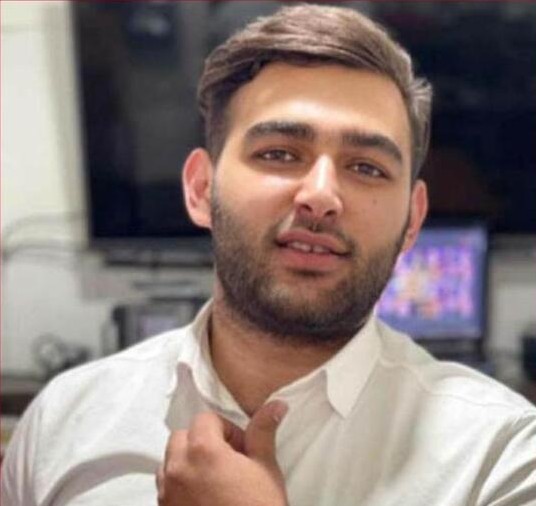
Reports indicate that the prisoner, after being summoned to serve the sentences and receiving the final verdict, was subjected to violence and beatings for protesting the case process. Informed sources emphasize that during his detention, he was under severe pressure to make a forced confession and was denied access to a lawyer and contact with his family.
The charge brought against him is "spying for Israel," an accusation that has been brought against activists and political prisoners by security agencies many times in recent years, and according to observers, in many cases has fallen far short of transparency and fair trial standards.
Human rights groups have warned that the acceleration of the confirmation and execution of these sentences, especially in times of political tension, could be a sign of the use of the death penalty as a tool to send security messages to society. Especially since the process of handling these cases has been fraught with serious ambiguities, including reliance on forced confessions and disregard for legal objections.
Critics believe that what is happening in the Islamic Republic's judicial structure today is deeply alien to the concept of justice, where courts act not as a body for the enforcement of rights, but as a tool at the service of security institutions. In such circumstances, issuing harsh sentences such as the death penalty is more a reflection of the political will to suppress than the result of a fair trial.
As the wave of executions in Iran continues, human rights activists have called on the international community to break its silence and take immediate and effective measures to stop what they call the "cycle of organized death," because they believe that continuing this trend will not only threaten the lives of more people, but will also deepen the atmosphere of fear and distrust in society.