Mass arrests of Christian citizens resume in various cities
The widespread arrest of Christian citizens in various cities in Iran began again on July 23 and continues.
The widespread arrest of Christian citizens began one day after the declaration of a ceasefire between Israel and the Islamic Republic, on July 23. According to published reports, 54 Christian citizens have been arrested and interrogated since that date.
Some of them, during the interrogation process, faced charges that were included in a recent resolution of the Islamic Consultative Assembly. The title of this resolution is “Intensifying the punishment of spies and collaborators with the Zionist regime and hostile countries.” A law that legal experts have called a “great disaster” for the Iranian legal and judicial system due to its many ambiguities and lack of transparency.
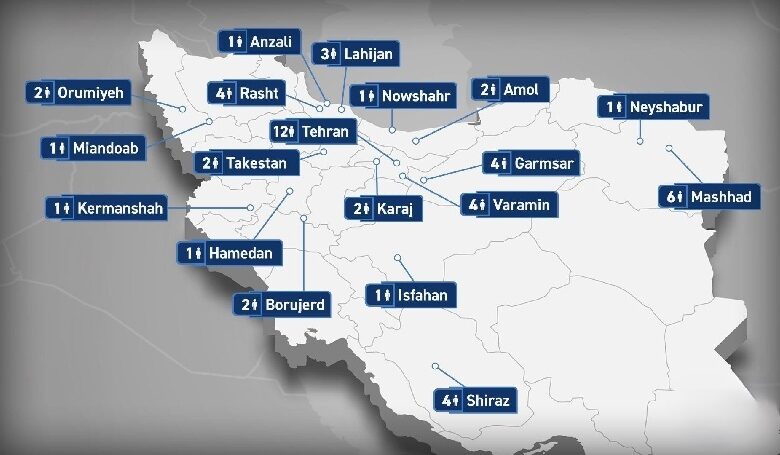
Between June 11 and July 20 of this year, Christians have been arrested in the cities of Kerman, Kermanshah, Bushehr, Rasht, Lahijan, Amol, Urmia, Shiraz, Mashhad, Tehran, Hamedan, Garmsar, Isfahan, Miandoab, Karaj, Varamin, and Takestan. In addition to these arrests, many other Christians and former prisoners of conscience awaiting verdicts in the Revolutionary Courts have also received threatening calls from the Ministry of Intelligence and the IRGC Intelligence Organization.
In addition to threatening and intimidating citizens, the aforementioned calls also ask them what their opinion is on recent events and the war with Israel. The aforementioned questions and threats to Christian citizens have been made while the constitution of the Islamic Republic prohibits inquisitions, but to a large extent, Christians have been questioned and threatened even in court because of their beliefs and opinions.
Following the escalation of military clashes between Israel and Iran and after the ceasefire, concerns about the situation of prisoners of conscience and political prisoners have also increased. Some prisoners of conscience and political prisoners in Evin had written a letter to the head of the judiciary requesting their temporary release on bail or guaranty at the time of the military attack on the prison. In this letter, they warned that Evin prison has no shelter, and asked for the prisoners to be released; but their request was rejected by security and judicial authorities. It should be noted that at least eleven Christian citizens were imprisoned in the prison at the time of the military attack on Evin prison.
Amnesty International, while expressing concern about these arrests and detainees, issued a statement on July 21, stating: “Prisons and detention centers are not considered military objectives under international law. There is no credible evidence to suggest that Evin Prison has become a military objective. Deliberately attacking such places constitutes a ‘war crime.’”
According to reports published by Christian organizations, more than 94 Christian citizens have been arrested across Iran since the beginning of this year. Many of their homes have been raided by agents of the Ministry of Intelligence and IRGC intelligence officers, who have intimidated and insulted them, and confiscated their personal belongings, including Persian Bibles and other Christian books. In many cases, the possession of Persian Bibles has been used as evidence against these citizens.
The authorities of the Islamic Republic and its affiliates have increased their hatred against Christian citizens, especially those who have converted from Islam to Christianity, by arresting them and using the term “Zionist” to describe them. Without providing any documentary evidence, the authorities of the regime consider Persian-speaking Christian citizens and Armenian and Assyrian Christians who are in contact with Persian-speaking people to be Zionist Christians.
A propaganda message published by the regime stated: "After the Evin Prison incident, the Zionist organization Article 18 is concerned about the nutritional and medical conditions of the evangelical prisoners, who are in complete safety and health. By creating a crisis, this organization has demanded long-term leave for Christian prisoners, while no damage has been done to their detention facility!"
Other hateful messages in which the regime is trying to spread hatred against Christianity state that Christianity is a historical threat to Islam. In one of these messages, Ahmad Alam-ul-Huda, the Friday prayer leader of Mashhad, referred to the fall of Andalusia and said: “The fall of Andalusia was the result of the cultural sedition of Christianity, which was accompanied by corruption and the collapse of the Islamic family.”
The website “Rahpoyan Hedayat,” which cited Ali Khamenei’s statements against house churches as the reason for its activity, claims that their main goal is “to focus on the activities of the Zionist Christian movement to raise awareness and combat it.” On June 18 of this year, the website also published an article titled “Encouraging the Evangelical Movement to the Infamous Regime’s Brutal Attacks on the Iranian Nation,” and wrote: “In these historical circumstances, the Persian-speaking evangelical Christian movement, by taking a stand against hostile and subversive movements, is constantly trying to create a false dichotomy between the people and the Islamic Republic system.”
In fact, the Islamic Republic claims that churches, both in Iran and in neighboring countries, are operating with the aim of “cultural influence and soft subversion,” which should be closely monitored by security agencies. The Article 18 organization writes in this regard: “The regime’s claim about cultural influence and soft subversion by Christians is absurd, despite the fact that Christianity, contrary to government propaganda, is not a religion imported from the West, but has been present in Iran since the Parthian period, and during the Sasanian period, Iranian missionaries even went as far as China and India.”