US sanctions Iran's steel and mining sectors
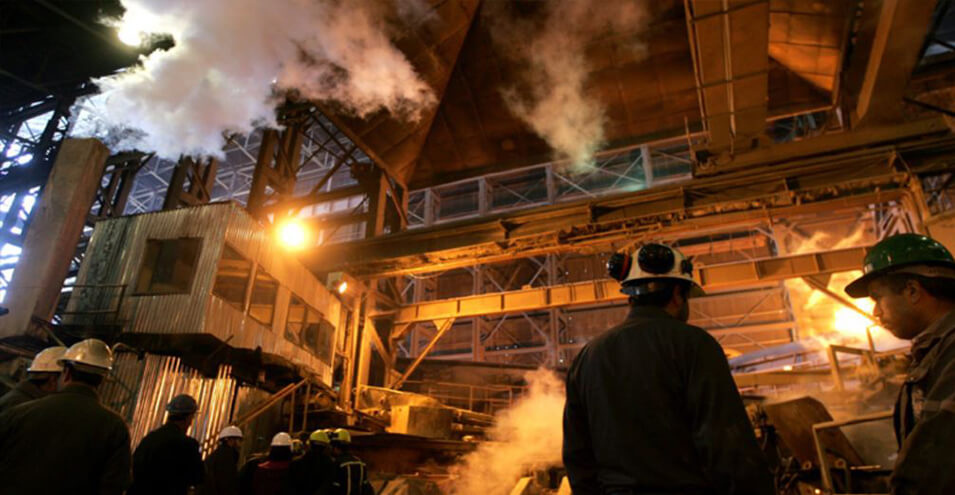
On Wednesday, May 8, the US President issued an executive order imposing sanctions on Iran's steel and mining sectors.
In this order, Donald Trump said that the United States would impose sanctions on Iran's iron, steel, aluminum, and copper industries, which are the country's largest source of non-oil revenue.
He stressed that Iran should expect further action unless it fundamentally changes its behavior.
The imposition of these sanctions comes hours after Tim Morrison, special assistant to the US President and senior director for weapons of mass destruction and biological defense, said at a conference that Washington's work with Iran sanctions is "not done" and that more sanctions will be imposed on Iran "very soon."
In his order, Mr. Trump, referring to the United States' withdrawal from what he called the "horrible" nuclear deal with Iran on May 8 last year, stated that Iran had the space under the aforementioned agreement to engage in or support terrorist networks and develop its missile force.
The US president added that the deal had also allowed Iran to fuel regional conflicts, unjustly arrest US citizens, and brutally treat its own people.
Referring to the United States' decisions regarding Iran over the past year, which were made in the interests of "American national security," he said that as a result of these actions, the Iranian regime has faced the problem of financing its campaign of violent actions, its economy is experiencing an unprecedented recession, government revenue has decreased, and inflation has gotten out of control.
Washington has imposed two rounds of financial, banking, and oil sanctions on the Islamic Republic in the past year. Withdrawal from the Amity Treaty in October last year, the cancellation of exemptions for buyers of Iranian oil, the creation of new nuclear restrictions, and the designation of the IRGC as a "foreign terrorist organization" are among other measures that the Trump administration has implemented as part of its "maximum pressure" campaign against Tehran.
The US President's executive order adds, "We have successfully conducted the most powerful maximum pressure campaign we have ever seen, which today's sanctions reinforce."
The order, referring to the IRGC's inclusion on the US terrorist list and the revocation of exemptions for Iranian oil buyers last month, states that today's (Wednesday) sanctions target Iran's income from the export of industrial metals - 10 percent of its exports - and warns other countries that granting permits for the entry of Iranian steel and other exported metals into their ports will no longer be tolerated.
The US President added in his decree that after withdrawing from the nuclear agreement with Iran, which cannot be restored, Washington has put forward 12 conditions that could form the basis for a comprehensive agreement with Iran.
In late May of last year, US Secretary of State Mike Pompeo presented 12 conditions for negotiations with Iran in order to reach a new agreement, including "halting uranium enrichment," "halting the development of Iran's ballistic missile program," "freeing all citizens of the United States and Washington's friendly and allied countries," "withdrawing from Syria," and "ceasing support for Shiite militias in Iraq and the Houthis in Yemen."
In the final paragraph of his executive order, Mr. Trump stated: “I look forward to the day when we can meet with Iranian leaders to reach an agreement and—much more importantly—take steps to give Iran the future it deserves.”
The new US sanctions were announced on the day Iran announced it would suspend some of its commitments under the JCPOA.
President Hassan Rouhani said on Wednesday in this regard: "As of today, we will stop the sale of heavy water and enriched uranium; this announcement is for 60 days; if five countries come to the negotiating table and we achieve our interests, especially oil and banking, we will return to square one."
This decision provoked a reaction from the three countries that remained in the JCPOA, France, Germany, and Britain, who expressed deep concern about Iran's actions.
Iran's steel and mineral product export statistics
According to the Trade and Development Organization of Iran, the amount of exports of iron and its alloys (cast iron and steel) during the last solar year amounted to about $3.9 billion, and exports of copper and copper products amounted to about $700 million. Iran also exported more than $840 million in iron ore.
The total of the aforementioned items accounts for 14 percent of the country's total non-oil exports, but the government's revenue from domestic and foreign sales of these products is impressive overall.
According to the Ministry of Industry website, Iran's copper production last year was approximately 143 million tons and Iran's iron ore production was more than 35 million tons.
Iran's aluminum production and exports are not very impressive.
The important point in the steel sector is that Iran increased its steel production by about 18 percent last year compared to 2017, reaching 25 million tons. Iran had extensive plans to increase steel production and exports.
Source: Radio Farda