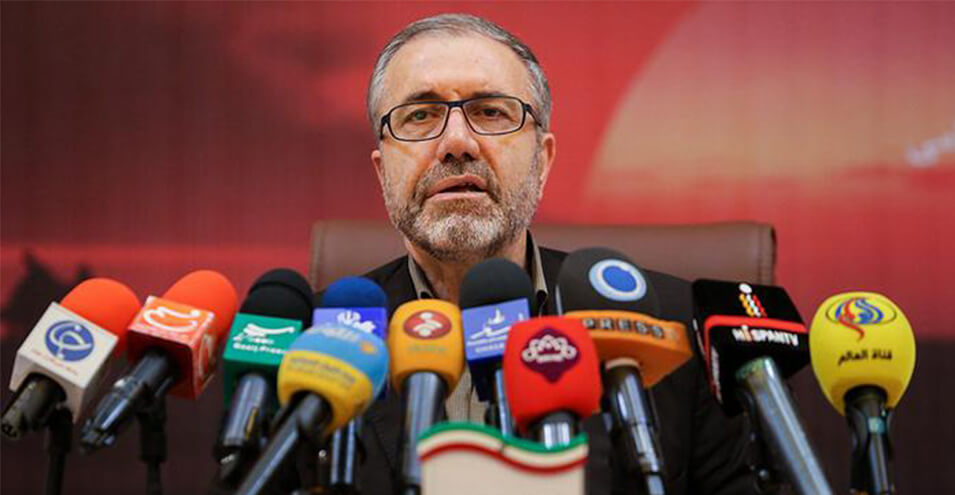
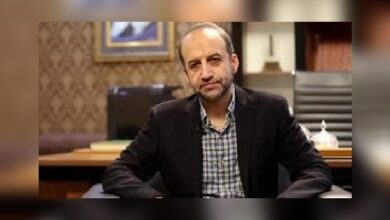
Ebrahim Raisi: We will not retreat from the leadership's red lines in nuclear negotiations

The President of the Islamic Republic of Iran says he will not back down from the "red lines" set by Supreme Leader Ali Khamenei in the nuclear talks.
On Tuesday, March 8, Ebrahim Raisi also emphasized the government's "serious" pursuit of "neutralizing" the sanctions.
Iran's insistence on not backing down from its positions comes despite the European Union's coordinator, Enrique Moura, announcing on Monday that negotiations would no longer be held at the "expert level" and "official meetings," and that now is the time to make political decisions and end the JCPOA negotiations "within the next few days."
Iran wants all nuclear, human rights, terrorism and missile sanctions lifted and says the US must guarantee that it will not withdraw from the JCPOA in the future. Washington officials have repeatedly said that the Joe Biden administration does not have the authority to provide such guarantees on behalf of future administrations and that only nuclear sanctions against Iran will be lifted.
Meanwhile, Russia imposed new conditions on the JCPOA negotiations on Friday and tied sanctions against Russia to the nuclear agreement.
Mikhail Ulyanov, Russia's representative in the JCPOA negotiations, also claimed on Monday that "Iran has gained much more from the nuclear negotiations than it expected."
Reuters reported, citing diplomats, that several issues still remain in the nuclear negotiations, and that Russia's new conditions added to the problems at the last minute.
Meanwhile, the Islamic Revolutionary Guard Corps also launched a satellite carrier rocket on Tuesday in a controversial and controversial move, saying that "the three-stage Qased satellite carrier placed the Noor-2 satellite in an orbit 500 kilometers above the Earth."
On March 4, coinciding with the visit of the Director General of the International Atomic Energy Agency to Tehran for consultations on Iran's nuclear activities, the Revolutionary Guard Corps also unveiled two missile and drone bases.
Ulyanov announced in a tweet on Tuesday that a meeting of the International Energy Agency's Board of Governors on Iran's nuclear program is currently underway.
Iran has blocked the IAEA's access to information from cameras installed at nuclear facilities and reduced cooperation with the international body, while still not providing an explanation for the origin of uranium at its undeclared sites, saying the IAEA "should close the file on this matter."
Following the recent visit of Rafael Grossi, Director General of the International Atomic Energy Agency, to Tehran, the Iranian government and he issued a statement on March 4th, stating that Iran must provide "written explanations" "by March 19th at the latest" regarding three locations suspected of covert nuclear activities.
Iran also says it will only allow the IAEA access to camera data after a JCPOA agreement is reached.
Source: Radio Farda