Ten people arrested in connection with Chabahar attack and new plans for border residents
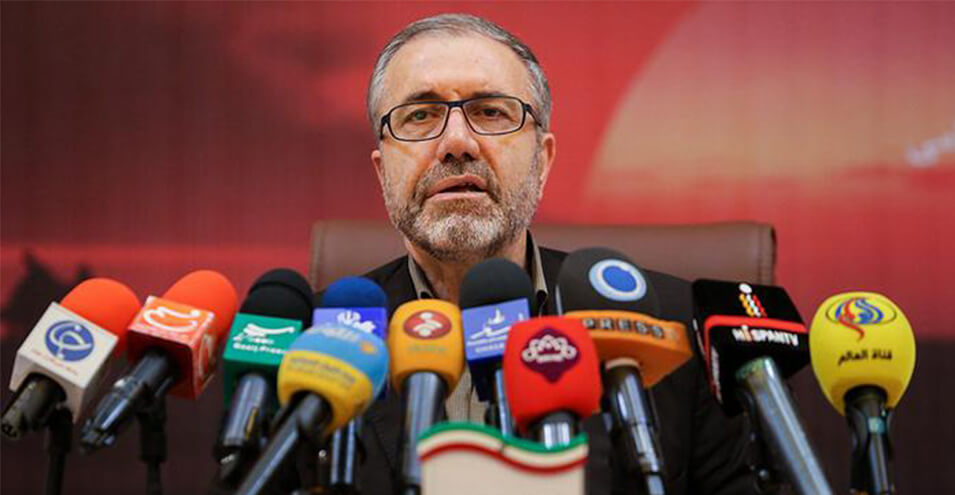
An Interior Ministry official said the identity of the perpetrator of the Chabahar suicide attack has been determined. He also announced that “exemptions” were being considered for border residents. According to the commander of the police force, 10 people have been arrested in connection with the Chabahar attack.
Hossein Zolfaghari, deputy minister of security and law enforcement at the Iranian Ministry of Interior, announced on Sunday, December 9, that "one of the groups" had claimed responsibility for the recent suicide attack in Chabahar, adding: "The identity of the person who carried out this attack has been determined."
A car bomb exploded outside the entrance to the police headquarters in Chabahar city in Sistan and Baluchestan province on Thursday, killing two people and wounding at least 43. Iranian officials said the attacker had intended to enter the police headquarters but was forced to detonate the car in front of the building due to resistance from police officers.
Earlier, some news agencies had announced that the Ansar al-Furqan group, a branch of Jundallah, had claimed responsibility for the suicide attack. According to Iranian officials, Jalil Qanbarzahi, the leader of this group, was killed by the military forces of the Islamic Republic in June of last year (2017).
Arrest of 10 people
The deputy minister of security and law enforcement at the Iranian Interior Ministry said, without further explanation about the identity of the perpetrator of the operation: “The vehicle in which the bomb was planted also belongs to a person who died about a year ago, and the vehicle was in the possession of another person.” Zolfaghari noted: “Security and judicial officials in the region are following up on the matter.”
At the same time, Hossein Ashtari, commander of the Islamic Republic's police force, also said about the number of people arrested in connection with the recent suicide operations in Chabahar: "The statistics that have been given to us so far are that 10 people have been arrested by the police force and other agencies, and a number of other people who are related to these people have been identified and will be arrested at a specific time."
Officials in the Islamic Republic have claimed that regional countries were "involved" in the attack, specifically naming Saudi Arabia, the United Arab Emirates, and Israel.
Iranian Foreign Minister Mohammad Javad Zarif threatened retaliation against the perpetrators and “masters” of the Chabahar suicide attack, writing on Twitter: “We have shown in the past that such crimes will not go unpunished: In 2010, our security services tracked down and arrested extremists coming from the UAE. Mark my words: Iran will bring the terrorists and their masters to justice.”
Some interpreted Zarif's tweet as a reference to the arrest of Abdulmalek Rigi, the leader of the Jundallah group, who, according to Islamic Republic officials, was captured over Iranian skies in early March 2009.
Ramadan Sharif, a spokesman for the Iranian Revolutionary Guard Corps, also said last Thursday: "Terrorist groups are mainly linked to foreign security services such as Saudi Arabia and are always trying to create insecurity in our border areas."
Last Saturday, Iranian Intelligence Minister Mahmoud Alavi claimed that "security currents and services in the region" were involved in the Chabahar incident, and referring to the involvement of Israeli "policies and strategies" in this suicide attack, he said: "America also unfortunately supports this terrorist movement."
Internal root or external factor?
The security of the “strategic port” of Chabahar, as the closest port to international waters, could be jeopardized, potentially having serious consequences for the Islamic Republic. Regarding the possible reasons for choosing Chabahar as a target for suicide attacks, Islamic Republic officials have increasingly emphasized the “conspiracy” of countries such as Saudi Arabia, the UAE, and Israel to further destabilize Iran’s economic situation, escalate tensions, and deepen social divisions.
From their perspective, the terrorist attack in Ahvaz two months ago, which left 24 dead, was carried out with the same goal. On the other hand, some critics of the Islamic Republic believe that the root cause of insecurity in provinces such as Sistan and Baluchestan and Khuzestan is ethnic discrimination and widespread dissatisfaction among the people of these deprived areas.
The “Af” website, attributed to Ahmad Tavakoli, a fundamentalist member of the Expediency Discernment Council, has written, referring to various hypotheses regarding why Chabahar was targeted: “The important point is that in addition to the economic sanctions imposed by the Americans, complex conspiracies are being implemented to create and instill insecurity, which target social cohesion, economic conditions, and Iranian ethnic groups. Although the enemies’ movements have so far failed, this doubles the need for vigilance, preparation, and dealing with such conspiracies.”
The Deputy Minister of Security and Law Enforcement of the Iranian Ministry of Interior also said in part of his speech today: "These terrorist incidents affect issues related to the country's security and economy, and we must consider both security and people's livelihoods, and we cannot give importance to one and abandon the other. Both of these are meaningful together."
"Providing livelihoods" to defend security
Referring to the establishment of 15 border markets in four border provinces of Iran and “exemptions provided for border residents,” Hossein Zolfaghari said: “Over the course of two years, with the cooperation of all ministries, it was decided that for people in border areas, in addition to the exemptions provided for in the law, an exemption of up to 2.8 million tomans per month would be provided for each family.”
The Deputy Minister of Interior for Security and Law Enforcement stated that “many exempted goods faced import bans in some way,” and reminded: “We held meetings again with the relevant ministries, including the Ministry of Economy and Finance and the Ministry of Security, as well as the Anti-Smuggling Headquarters, and 132 items of goods were reviewed so that we would not have any problems in terms of the country’s general policies regarding economic issues in the post-JCPOA period, considering the US’s withdrawal from the JCPOA. Finally, we identified these 132 items of goods and sent them to the government; the government’s economic commission also agreed with these 132 items of goods and we are waiting for the government to approve them.”
The Iranian Interior Ministry official emphasized that if the livelihoods of border residents are secured, they will be "the best border defenders and suppliers of border areas."
Source: DW