Possibility of a "bread crisis" following a sudden increase in flour prices
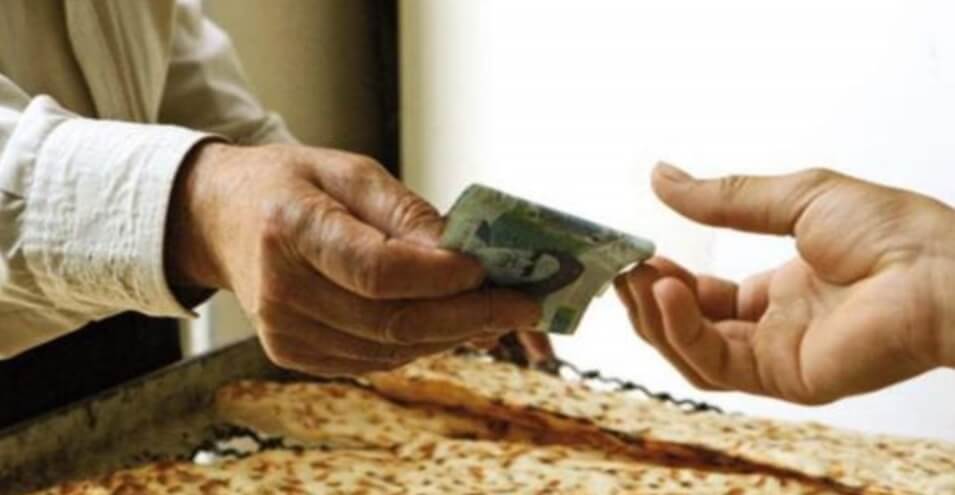
The announcement of the new price for "industrial and artisanal flour" at the request of the Ministry of Agricultural Jihad of the Islamic Republic and the approval of the State Organization for the Protection of Consumers and Producers has created a wave of concerns about the emergence of a "bread crisis" and other food products made from flour.
After several months of whispers of an "astronomical increase in the price of flour in 1401", Iranian government agencies finally announced today that the price of flour per kilogram will be 16,000 Tomans.
Accordingly, each kilo of 18% debred flour is set at 15,700 Tomans, each kilo of 21% debred flour is set at 16,000 Tomans, and each kilo of 27% debred flour is set at 16,900 Tomans.
The vice president of the National Wheat Farmers Foundation had warned a little earlier, on May 23, about the increase in wheat purchase prices and its impact on guilds and related industries.
In this regard, the Tehran-based newspaper "Hamshahri" on May 1, quoting experts, predicted that this new rate for wheat would lead to a doubling of the price of "pasta" and a quadrupling of the price of "bread."
Meanwhile, the Tehran-based newspaper "Kayhan," which is run under the direct supervision of Ayatollah Ali Khamenei, the leader of the Islamic Republic, and is a strong supporter of Ebrahim Raisi's government, has also reacted to this "sudden increase in the price of flour."
In its Tuesday issue, the newspaper expressed concern about this decision by the "Government Economic Headquarters," noting that, based on the instructions issued to pasta, cake, cookie, starch, and noodle factories, the price of flour delivered to these companies will increase "fivefold."
This comes after Mohsen Afsharchi, the governor of Zanjan, announced in mid-April that preparations were underway to implement a pilot project called “Providing Bread with a Subsidy Card.” He said that bakeries “will no longer receive subsidized flour,” but rather, “people will purchase their bread from bakeries at a low price and draw a card, and then the bread subsidy will be paid to the bakers based on sales.”
According to the latest official report released by the Iranian Ministry of Cooperatives, Labor and Social Welfare in August of last year on the poverty situation in 2020, one in three Iranians is "below the poverty line."
The deputy's report on Tuesday, May 25, also indicates that of the total of about 25 million Iranian households receiving subsidies, 38 percent are poor, 55 percent are middle-class, and only 7 percent are "enriched."
Based on research conducted by the government-run Higher Institute for Social Security Research, the population "below the poverty line" in Iran has "more than doubled" in the three-year period from 2017 to 2019.
Last year, "flour shortages" and "rationed bread baking" led to long lines in several Iranian cities, including various western, southern, and eastern provinces of the country.
According to Iranian media reports, in 1400, flour had "three prices" and guilds and industries received this product at different prices. Subsidized bakeries received 665 tomans per kilo, fancy bakeries received 900 tomans, and industries received 2700 tomans per kilo from the government, while each kilo of wheat was purchased from farmers for 5,000 tomans.
"Bread" is an important item in the daily grocery basket of many Iranian families, especially since in recent years the prices of other items in this basket, such as meat and rice, have experienced large jumps, and according to published official statistics, their consumption has decreased by 50 percent compared to the past.