12 Baha'i citizens summoned to court and three Baha'i citizens sentenced to pay fines
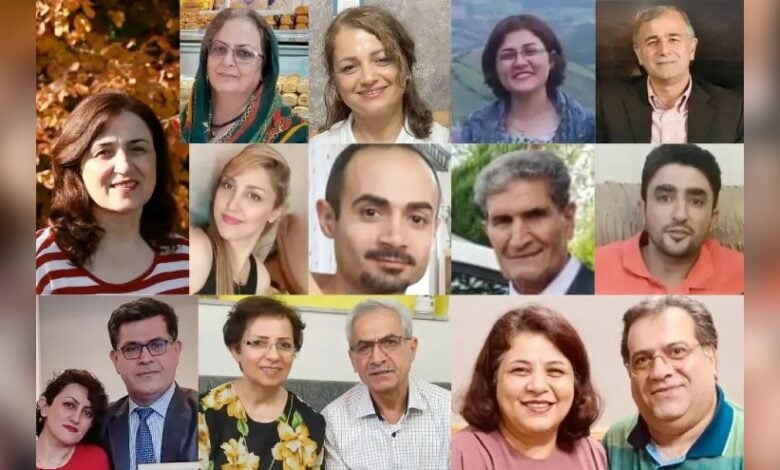
The Sari Revolutionary Court summoned 12 Baha'i citizens to court and sentenced three citizens to pay a fine.
The Sari Revolutionary Court will hold a hearing on the charges against 12 Baha'i citizens living in Qamshahr from April 18 to May 8. In addition, three other cases that had been under investigation since March of last year were sentenced to pay fines of 30 to 40 million Tomans.
The 12 citizens named Sohrab Leghai, Zahra Galabian, Fawad Leghai, Emilia Fanaian, Hossein Fanaian, Nasim Samimi, Soheil Haqdoost, Raquel Ataian, Banafsheh Asadian, Kiomars Akbari, Anahita Koushkbaghi, Melodie Samimi were summoned to Branch 1 of the Sari Revolutionary Court after receiving separate notices for trial. The charges against these individuals are “deviant educational and propaganda activities that are contrary to or disruptive to Islamic law,” and they are scheduled to be tried by Judge Zoghi.
Three other Baha'i citizens, Fars Fanaian, Hooman Taif, and Shirin Kasheri, who were tried in March 1402 by Judge Mirqoli Nasab in the Second Branch of the Sari Revolutionary Court, were sentenced to pay a fine of 30 million tomans, Hooman Taif to 40 million tomans, and Shirin Kasheri to 30 million tomans, respectively.
The final defense hearings of these 15 Baha'i citizens were held separately from February 17 to 19 of last year at the 6th Investigation Branch of the Qaemshahr Prosecutor's Office, and then their case was referred to the Sari Revolutionary Court. The relevant judge had cited their participation in a dinner ceremony that coincided with the birthdays of "Seyyid Ali Muhammad Bab" and "Mirza Hossein Ali Nouri", nicknamed "Bahá'u'lláh", the founders of the Baha'i faith, as evidence of the charges.
According to an informed source, in the raids carried out by the intelligence ministry agents on the homes of these citizens, a total of 37 mobile phones, three tablets, two laptops, several real estate documents, land documents, documents related to a personal car, and a number of valuables were also seized. The Islamic Republic government has not only confiscated the property of Baha'is, but in the past, it has also confiscated and auctioned off many of the properties of Christians.
According to the report by Human Rights Watch on April 4, titled "Boot on My Neck: The Crime of Iranian Authorities in Persecuting Baha'is," the Islamic Republic's actions against Baha'is, as the largest unrecognized religious minority in Iran, are a crime against humanity.
The Islamic Republic not only persecutes unrecognized religious minorities, but also oppresses and deprives recognized minorities, especially citizens who have converted to Christianity.
Last year, the US Commission on International Religious Freedom, in its annual report, called on the country's government to refer the issue of the repression of religious minorities in Iran to the International Criminal Court and to demand that the Islamic Republic's officials be prosecuted for human rights violations and crimes against humanity.