Exclusive to Radio Farda: ‘Qassem Soleimani Case is the Last Obstacle to JCPOA Revival’
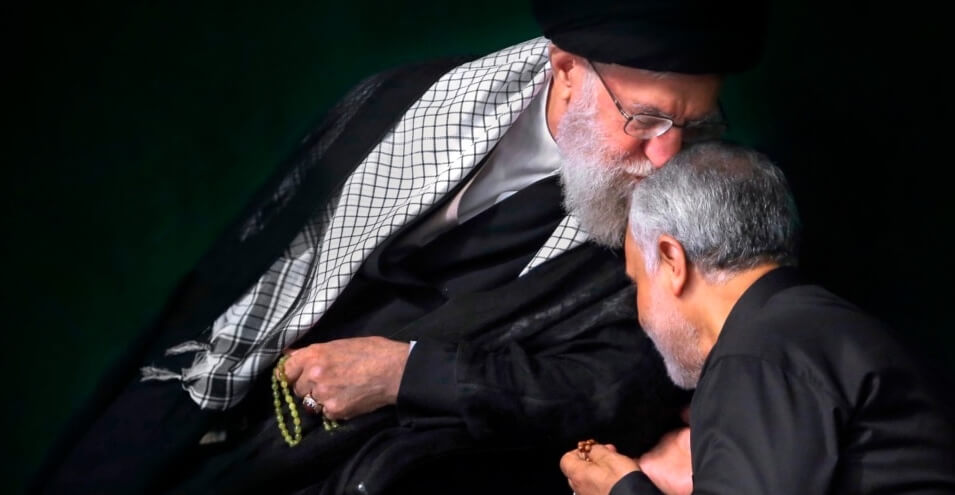
An informed source close to JCPOA revival negotiations in Vienna told Radio Farda that the Islamic Republic’s commitment to halting operational pursuit of the Qassem Soleimani killing case is one of the main conditions for removing the Islamic Revolutionary Guard Corps from the U.S. State Department’s terrorist list.
Referencing Iran’s insistence on delisting the IRGC, which has become the final obstacle in nuclear negotiations, the source said American security agencies have detailed information about Tehran’s planning for action against certain former U.S. government officials accused of involvement in Soleimani’s killing, and under such circumstances, Washington has no ability to agree to the Islamic Republic’s request.
Iranian officials have raised IRGC delisting as a last-minute demand during negotiations. Josep Borrell, the European Union’s foreign policy chief, said on April 28 that this issue “has nothing to do with the JCPOA” and accused Iran of complicating JCPOA revival negotiations by requesting “guarantees about the Islamic Revolutionary Guard Corps.”
In recent months, multiple reports have been published about increased threats against Mike Pompeo, former Trump administration secretary of state, and Brian Hook, former special U.S. envoy for Iran affairs, and the Biden administration has increased protective measures, particularly for Pompeo.
The Associated Press reported on March 12 of last year that documents obtained show the U.S. government spends “two million dollars monthly” for 24-hour protection of Pompeo and Hook.
Previously, it had been reported that the U.S. requested that the Islamic Republic commit to reducing tension in the region, but an informed source close to negotiations told Radio Farda that the American condition has specific parameters and includes not attacking or harming Americans and U.S. facilities in the region, as well as not harming former U.S. officials.
Referencing a recent interview by Iranian Foreign Minister Hossein Amirabdollahian with Islamic Republic Television in which he emphasized the necessity of removing the IRGC from the U.S. terrorist list, the source said that in this interview, the Iranian foreign minister said “when we say IRGC, we mean Commander Hajj Qassem Soleimani,” which was a reference to the American condition for halting operational pursuit of the Soleimani killing case.
American website Axios also reported on April 23 citing “two informed American sources” and an Israeli official that the Islamic Republic has not accepted the U.S. condition for removing the IRGC from the terrorist organizations list.
According to this report, Iranian officials, instead of providing a public commitment, have proposed submitting a private implicit letter to the U.S. government on this matter.
The killing of Qassem Soleimani, former commander of the Quds Force of the Islamic Revolutionary Guard Corps, and Abu Mahdi al-Muhandis, former deputy commander of the Popular Mobilization Forces, occurred during U.S. drone strikes on January 3, 2020, near Baghdad airport, amid escalating political and military tensions between Iran and the United States.
Iranian government officials have repeatedly emphasized over the past two years the necessity of pursuing this case, trying those involved in the operation that led to Soleimani’s killing, and taking “severe revenge.”
American media outlets have reported in recent days that failure to reach a compromise with Iran over the IRGC could cause the Vienna talks to collapse.
In 2019, Donald Trump placed the entire Islamic Revolutionary Guard Corps on the terrorist organizations list, arguing that this military force “actively participates in financing and promoting terrorism as an instrument of governance” and is “the primary instrument of the Iranian government in directing and executing an international terrorism campaign.”
However, Biden administration officials say the “current situation has not made America safer in any way” and conversely, the IRGC “has been strengthened” during this period.
In recent days, domestic opposition in the United States to reaching a JCPOA revival agreement at the cost of removing the IRGC from the terrorist organizations list has intensified.
More than 40 Republican representatives in Congress warned the State Department in a letter about the consequences of delisting the IRGC.
Israeli Prime Minister Naftali Bennett and Foreign Minister Yair Lapid are also openly opposed to a potential Biden administration decision on the IRGC.
This possibility has also had repercussions among Iranians, and two members of the families of victims of the Ukrainian aircraft downing by the IRGC asked the U.S. president in a letter not to remove this Islamic Republic military institution from the terrorist list.
Source: Radio Farda