Student protests in Iran: From officials' indifference to students being beaten
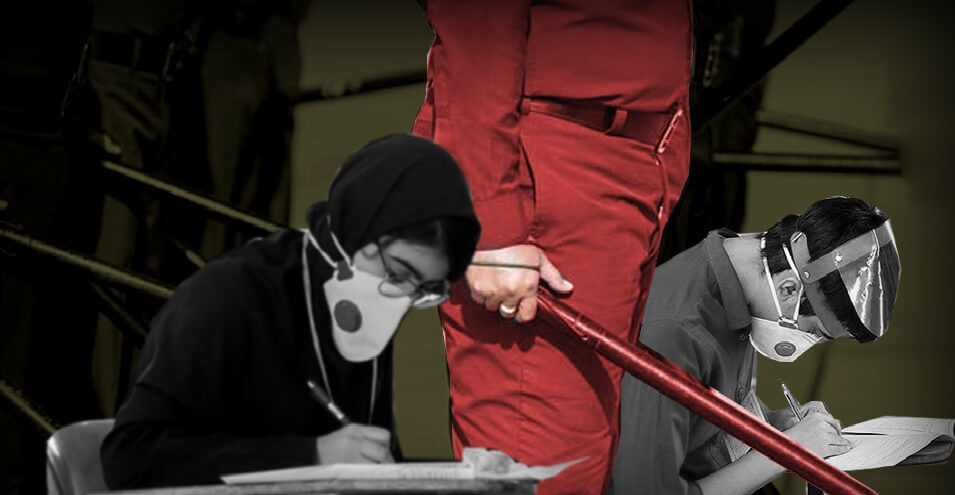
The continued severity of the coronavirus pandemic in Iran and the approaching student exam season have presented education authorities with a new challenge: nationwide student rallies protesting the in-person holding of final exams in the ninth and twelfth grades.
Student protests spread to more than 20 cities across the country; protests that were violently suppressed by law enforcement and police forces in some cities. The inhumane and police treatment of students who were only shouting their protest and concern about the education system in rallies is a clear sign of the government’s inability to criticize various executive branches, such as the education system in the country. On the other hand, the reaction of police and military officials to these protests indicates the government’s insistence on portraying any form of civil protest as “security.”
What do students want in protest rallies?
The students of the ninth and twelfth grades are protesting the Ministry of Education's decision to hold final exams in person amid the increasing spread of the COVID-19 disease in most cities of the country. A decision that the Ministry of Education insists on implementing; in his latest statement regarding the holding of exams, Mohsen Haji Mirzaei, the Minister of Education, claimed that holding the final exams in person for the ninth and twelfth grades in person is "for the sake of the students themselves" because "the exams of these two grades have an impact on the students' career and educational future, and if they are held in person, there is a possibility of losing their rights."
However, students protested the insistence of education authorities in their rallies, which lasted for nearly a week from Monday, May 13, to Monday, May 10, 1401, by chanting slogans such as: "In-person exams are not possible with Corona" or "We don't want in-person exams, we don't want them."
These protests were followed in more than 20 cities in the country, including Tehran, Karaj, Tabriz, Shahrekord, Borujerd, Khorramabad, Shiraz, Qazvin, Zanjan, Semnan, Ahvaz, Yazd, Birjand, Ardabil, Foladshahr, Dezful, Izeh, Masjed Soleiman, etc., and students gathered in front of the education building in their cities.
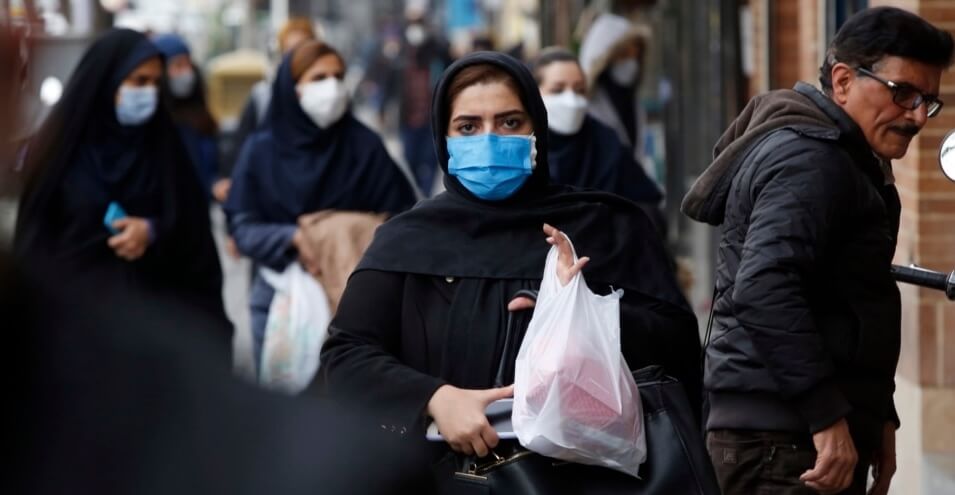
Students' protest against holding exams amid the coronavirus pandemic in most parts of Iran comes at a time when official statistics from the Iranian Ministry of Health indicate that the number of people infected with the coronavirus is increasing daily and the number of people who are dying from the virus is increasing. According to the latest statistics, the total number of COVID-19 patients in Iran has reached more than two million and 700 thousand people, and the total number of deaths from the disease has been announced to be more than 76 thousand people. Currently, 46 cities in the country are in red status, 263 cities in orange status, and 139 cities in yellow status in terms of the severity of the coronavirus outbreak.
The policies of the Iranian education authorities during the coronavirus pandemic have drawn much criticism; the lack of equal access for students across the country to the "Shad" virtual education network, the increasing difficulty of continuing their education virtually, and the natural increase in dropout rates, as well as the increasing visibility of educational discrimination among students in different regions of Iran, were among the consequences of these policies. Perhaps the most obvious destructive impact of these policies was demonstrated in the tragic suicide of an 11-year-old student in Bushehr, who decided to commit suicide due to his family's inability to provide him with a tablet or smartphone to continue his education. Other reports were also published from some deprived areas, indicating that a number of other Iranian students had committed suicide due to their inability to continue their education during the coronavirus pandemic.
The recent student protests in Iran, in terms of the speed with which they spread to different cities and the continuity of these protests, can be an unprecedented image of the Iranian student community's efforts to achieve their rights. This is while the government is obliged, in addition to responding to the civil and legal demands of students during the protest rallies, which are recognized in Article 27 of the Constitution, to fully restore its legal obligation to provide free education (Article 30 of the Constitution) and to make the right to health of students the main focus of its decisions when holding exams, because education and the right to health and public hygiene are related and complementary issues.
What is the government's response to student protests?
During the widespread student protests in various cities of Iran, scattered reports were published about the severity of the police and security forces' treatment of students; according to some of these reports, the security forces have resorted to force in dealing with most of these gatherings and have beaten students.
On Sunday, May 9, the Iranian Teachers' Union issued a statement strongly condemning the "violent confrontation between law enforcement and plainclothes forces" during student gatherings and calling for the identification and consolation of the injured students and the provision of medical services to them. Part of the statement emphasized that law enforcement forces used pepper spray and batons in dealing with the student gathering, and also committed "astonishing and uncivilized" actions by instilling fear and threatening to arrest students.
The astonishment of activists and teachers' cultural and trade unions in various cities of Iran at the naked violence of the law enforcement forces in dealing with student protests is evident in many statements of these independent centers; the North Khorasan Teachers' Trade Union Association wrote in part of its statement: "What right do the law enforcement forces have to treat the teenage children of the homeland, who are at the peak of their pride and emotion, in such a callous and violent manner?"
Despite the strong reactions of several teachers' unions in different cities of Iran, many civil rights activists in Iran, and social media users to the violent treatment of students by law enforcement forces, forces close to the government are trying to impose their own narrative of these protests; a narrative in which these protests are quickly turning into protests that are so-called "undermining national security" and therefore justify the violent treatment of protesters by law enforcement and security forces.
The future of student protests in Iran
In recent years, the majority of union and group protests in the field of education in the country have been related to protests by teachers and educational staff; protests that have a long history in the civil and political struggles of Iranian activists. However, in recent years, there has not been much news of student protest rallies.
The spread and continuation of student protests across the country has revealed a new and perhaps surprising way for decision-makers and policymakers in the country to confront this generation with its problems. This point can be seen in the analysis of some decision-makers at the top of the system; not long ago, the weekly Sobh Sadegh, which is close to the Islamic Revolutionary Guard Corps and the Supreme Leader’s Office, warned in an article about the importance of the Iranian Generation Z (those born in the 1980s and 1990s) in Iran’s political and social future. In part of this article, it is emphasized that “this generation, unlike the generations before it, is mainly protesting against the status quo,” and that “ruling this generation will not be as easy as previous generations.”
It seems that the violent police behavior towards student protests in Iran is the result of some officials' concern about the new generation, many of whom are today's students in the country.
Source: Iran Human Rights Campaign