Anonymous and extrajudicial executions: New revelations about secret executions of protesters in Iran
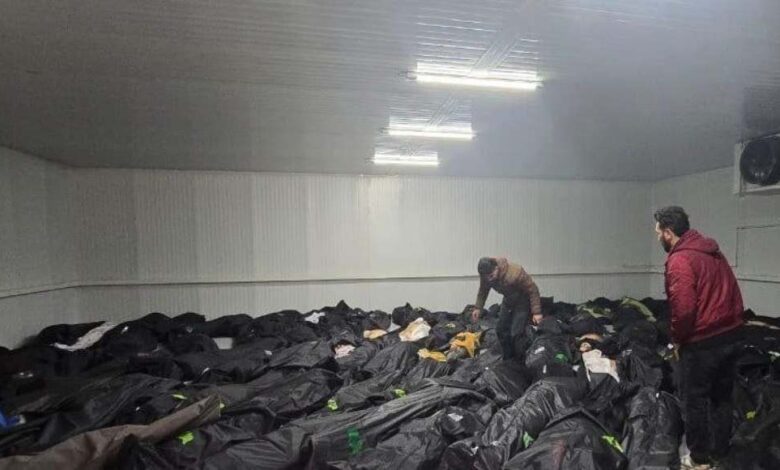
New revelations reveal secret executions of protesters, executions that are anonymous and extrajudicial, which has intensified pressure for action against Tehran.
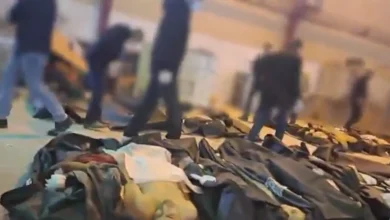
While Islamic Republic officials continue to speak of "observance of the law" and "due process," new reports from inside Iran, as well as information provided by foreign intelligence agencies, paint an even darker picture: "Killing of detained protesters in secret, without trial, without official warrant, and without being recorded in execution statistics."
A number of Iranian citizens say that, in order to circumvent international sensitivities, the government executes protest detainees in silence and behind closed doors so that it is not called an "execution"; a method that, from the perspective of human rights activists, is a clear example of extrajudicial killing.
The Israel Hayom newspaper, in a report published yesterday, January 24, announced that the Israeli intelligence service has provided the US government with conclusive evidence showing that the Islamic Republic has carried out widespread executions of protesters in recent weeks.
This report comes after US President Donald Trump had previously said that one of the reasons for postponing a military strike on Iran was receiving messages indicating that the execution of more than 800 detainees related to the protests had been halted; however, Israel Hayom writes that new information shows that these executions have not only not stopped, but have continued in various ways.
According to published reports, the Islamic Republic has denied the existence of such messages and claimed that there was no list of 800 people to be executed in the first place. However, intelligence sources cited by Israel Hayom report direct shooting of protesters in the streets and the execution of some detainees after arrest. Many videos have also been released in this regard, showing the firing of "lethal shots" at the wounded lying on the side of the street.
These narratives are consistent with previous reports by human rights organizations, which had previously warned that the Iranian government was using non-transparent methods to eliminate protesters by intensifying repression.
The secret executions case has not only remained in the media, but has also entered diplomatic circles. According to Israel Hayom, Israeli Prime Minister Benjamin Netanyahu's team raised the issue in a meeting with Steve Witkoff, the US special envoy for negotiations with Iran, and Jared Kushner, Donald Trump's son-in-law, during their visit to Israel.
Also, a large part of Trump's security and political team, including Vice President J.D. Vance, Secretary of State Marco Rubio, and Secretary of Defense Pete Hegsett, believe that dealing a serious blow to the Iranian regime is not only morally justified, but also strategically beneficial to American interests in the Middle East.
In this regard, Israel, the United Arab Emirates, and a number of European countries, including Britain, support the military option against Iran and are prepared to provide the United States with intelligence, logistical, and air defense support in the event of an attack, including intercepting missiles and drones that may be launched by Iran.
At the same time, the visit of General Bradley Cooper, commander of US Central Command (CENTCOM), to Israel has been described as indicating an unprecedented increase in military coordination between the two sides.
According to an Israeli security official quoted by Israel Hayom, the joint objectives bank was developed based on information exchange and the experience of the 12-day war.
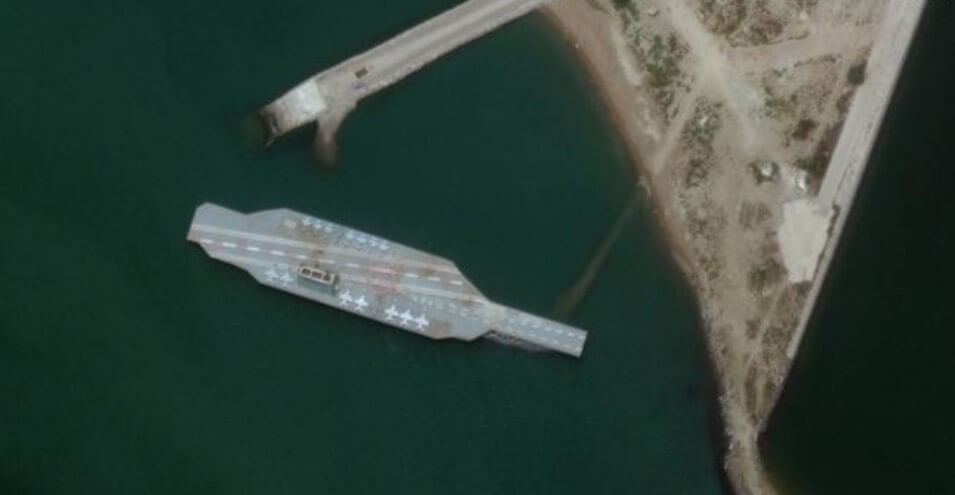
According to the report, in addition to the deployment of aircraft carriers and destroyers carrying Tomahawk missiles in the region, the Abraham Lincoln aircraft carrier group is also on the verge of approaching the operational range. Now all eyes are on Donald Trump's final decision; a decision that could determine the fate of a direct confrontation with the Islamic Republic.
While the Iranian government attempts to conceal the extent of the repression through denial and silence, a body of domestic and foreign evidence reveals a systematic pattern of physical elimination of protesters. Executions that are not called “executions,” but their message is clear: “The cost of protest is death in silence.”