Iran Elections: Political Prisoners Die Under Presidential Candidate Ebrahim Raisi's Watch
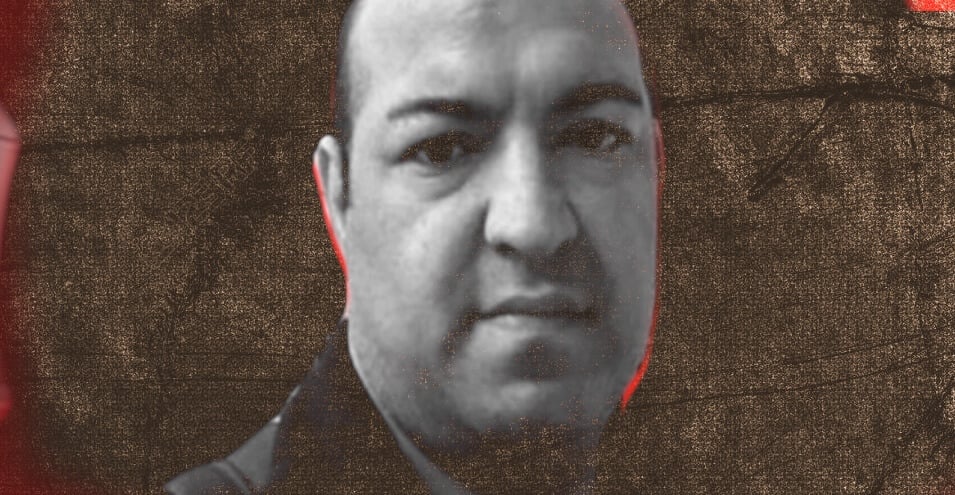
Another political prisoner has died in the custody of the Islamic Republic of Iran, two weeks before the presidential election in which the head of Iran's judiciary, Ebrahim Raisi, who has ultimate responsibility for the care of prisoners, is a candidate.
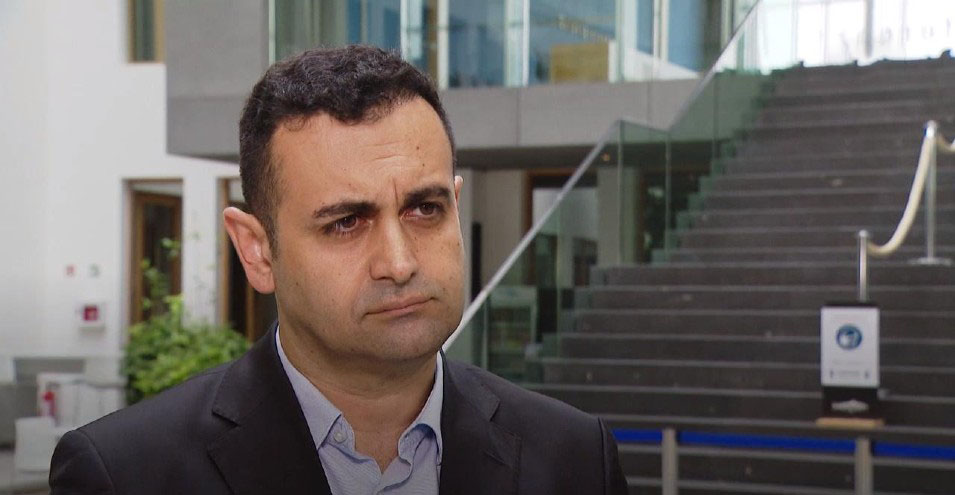
Hadi Ghaemi, director of the Human Rights Campaign in Iran, said: “The death of Sasan Niknafs in the Central Penitentiary of Greater Tehran is indicative of the increasing human cost that the judiciary of the Islamic Republic of Iran imposes on citizens by imprisoning individuals for criticizing the government.”
According to Hadi Ghaemi, "Despite the fact that prisoners who were not meant to be in prison from the beginning are dying in the country's prisons and detention centers, Ebrahim Raisi's concern and sorrow is to gain the presidency in line with his desire for power."
Sasan Niknafs' death was reported just four months after another political prisoner, Behnam Mahjoubi, died in government custody, despite Iranian forensic doctors having previously determined that he would not be able to withstand imprisonment.
Since Ebrahim Raisi was appointed head of the judiciary in March 2018 by Supreme Leader Ali Khamenei, at least three political prisoners—Sasan Niknafs, Alireza Shirmohammadali, and Behnam Mahjoubi—have died in government custody; however, this number of prisoners includes only reported deaths and does not include the much higher number of deaths by execution or deaths of non-political prisoners.
According to a statement from the Tehran Prisons Organization published by the Iranian Students News Agency (ISNA) on June 8, Sasan Niknafs – who was imprisoned despite having multiple physical and mental health problems – died on June 5 at Firouzabadi Hospital after “losing consciousness.” This was while prison medical personnel were busy examining Niknafs.
After the news of Sasan Niknafs' death was published, human rights lawyer Saeed Dehghan wrote on his Twitter page, "The death of Sasan Niknafs could be premeditated murder due to the authorities' indifference to his impunity."
Saeed Dehghan wrote: "Document: 290 AH. Punishment: If the perpetrator intentionally does something that typically results in a crime, even though he did not intend to commit that crime, but was aware and aware that that action typically results in a crime; it is intentional murder."
According to Article 502 of the Iranian Code of Criminal Procedure, if a prison sentence worsens the condition of a prisoner suffering from a physical or mental illness, the judge may, after obtaining the opinion of a forensic physician, suspend the sentence until the prisoner recovers.
Niknafs was imprisoned despite his serious physical condition.
Sasan Niknafs has been serving a five-year prison sentence since December 2019 on charges of “gathering and colluding against national security,” “propaganda against the system,” and “insulting the founder of the Islamic Republic and the Leader.” According to a statement from the Tehran Prisons Organization, judicial authorities sent Niknafs to prison despite his history of attempted suicide and his need to receive “daily medication” during his imprisonment, as well as the need for dozens of doctor’s appointments during his detention.
Ali Sharifzadeh, Niknafs' lawyer, told BBC Persian: "They have not informed his family, but sources from inside the prison say they have announced the news on loudspeakers inside the prison and expressed condolences to the prisoners."
Political prisoners in Iran are particularly subject to severe ill-treatment, often including denial of medical attention. The United Nations has expressed serious concerns about the continued denial of medical treatment to detainees, which violates the United Nations Standard Minimum Rules and Standards for the Treatment of Prisoners.
Dozens of prisoners have died since 2003; three since Raisi headed the judiciary.
The Iranian Prisons Organization and the judiciary are primarily responsible for ensuring the lives and well-being of all prisoners. According to research by the Campaign for Human Rights in Iran, at least 32 political prisoners have died in government custody since 2003, all of whom were imprisoned after being accused of criticizing government policies in Iran.
These deaths occurred due to beatings during detention, denial of necessary medical treatment, or other cases of flagrant negligence or mistreatment by authorities.
The lack of prosecution of high-ranking officials for deaths in government custody reflects a judicial system that allows intelligence and prison officials to commit a variety of gross violations of prisoners’ rights with impunity; a system that also often keeps the path to autopsies or public medical examiner reports in the event of deaths in government custody uneven, in the absence of required investigations.
At the same time, there is no effective mechanism for families to complain.
Concerns rise over the situation of political prisoner Mohammad Nourizad and others
A large number of political prisoners, including Mohammad Nourizad, are in need of urgent medical attention. “Furthermore, his continued detention despite the opinion of medical experts that he cannot remain in prison due to his deteriorating condition, and consequently depriving him of appropriate health care, amounts to torture and other forms of cruel, inhuman and degrading treatment,” UN human rights experts said in a statement dated May 2021.
“His case is emblematic of the situation faced by many detained Iranian political activists. He should be released immediately,” the experts added.
A month after political prisoner Alireza Shirmohammad Ali was murdered in the Central Penitentiary of Greater Tehran in July 2019 after being illegally held in a section for prisoners convicted of violent crimes, a parliamentary faction announced a proposal aimed at helping to address what it called the “serious problem” of prisoner deaths in detention centers—yet no serious action has been taken to prevent these deaths.
According to Hadi Ghaemi: "This increasing death toll of political prisoners in Iran is the result of decades of inhumane treatment of government critics; the result of the head of the judiciary's refusal to guarantee the prisoners' legal rights or hold those who mistreat them accountable."
Hadi Ghaemi says: "Raisi has shown disregard for human life throughout his responsibilities; from serving on the committee that paved the way for the extrajudicial execution of thousands of political prisoners in 1988 to the increasing number of political prisoners who are currently dying due to lack of care and treatment."
According to Hadi Ghaemi, "This is the situation that political prisoners are forced to endure when a president heads the judiciary. Now imagine what the Iranian people will see when he takes the presidency."
Source: Iran Human Rights Campaign