Iran's Hidden Revolution
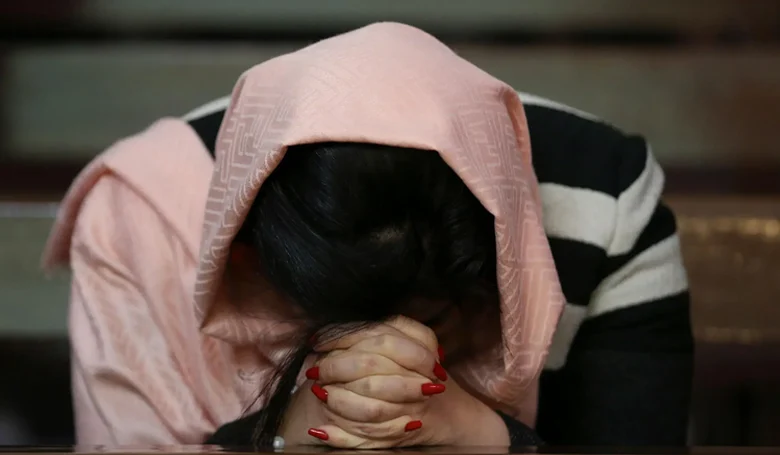
Moroccan political analyst Amin Ayoub wrote an article about Iran's hidden revolution.
Moroccan political analyst Amin Ayoub has an article about Iran's hidden revolution titled "In the Heart of the Most Strict Islamic Regime, Two Thousand People Convert to Christianity Every Day."
In this article, he discusses the growth of Christianity in Iran despite the Islamic Republic’s repression. Amin Ayoub writes in this article: “While the world’s attention is focused on nuclear threats, anti-Israel rhetoric, and rising tensions in the Middle East, a silent revolution is taking shape in Iran. Not through politics or protest, but through a wave of faith that stands in complete contradiction to everything the Islamic Republic stands for.
Under the iron grip of clerical rule and state repression, more than 2,000 Iranians are converting to Christianity every day, a religion that is banned, criminalized, and punishable by prison or worse in Iran. This spiritual explosion, unseen in international headlines but very real inside the country, is rewriting the identity of a nation once considered an impenetrable bastion of radical Islamism. What is happening is not a passing trend, but a lasting transformation that has its roots in nearly a decade.
He continues about the rapid growth of Christianity in Iran: “Since 2016, Iran has been recognized as the country with the fastest growing evangelical movement in the world. Today, missionary groups and researchers estimate that more than two million Iranians have come to faith in Jesus, while under constant threat of surveillance, torture, and execution.”
Disappointment with official religion
Behind these numbers lies a deep despair that has hollowed out Iran’s official religion. For more than 40 years, the Islamic Republic has used Shia not as spiritual guidance but as a tool of totalitarian control. Promises of justice and divine rule have led to economic collapse, the repression of women, violence against protesters, and crushing isolation.
The Iranian people, especially the youth, no longer believe not only in the government but also in its ideology. Mosques are empty, clerics privately fear that the younger generations will abandon religion. Even the children of Iran’s most senior religious and political leaders have secretly abandoned Islam and converted to Christianity, not because of external pressure, but because they have seen with their own eyes how religion has become a tool for oppression, division, and destruction.
Paranormal experiences
The extraordinary growth of Christianity in Iran is not due to street propaganda or public speeches (which are impossible in Iran) but rather begins through personal and profound experiences; experiences such as dreams, revelations, or inner voices that are inexplicable.
New Christians report seeing Jesus in their dreams, hearing his voice, or feeling peace in moments of despair. A woman named Simin cried and prayed for hours after watching a film about the crucifixion of Jesus. Her home later became a home church. She was arrested, imprisoned with her two-year-old daughter, interrogated, and threatened, but she never gave up her faith. She eventually fled Iran and now lives in freedom, continuing to help others find faith.
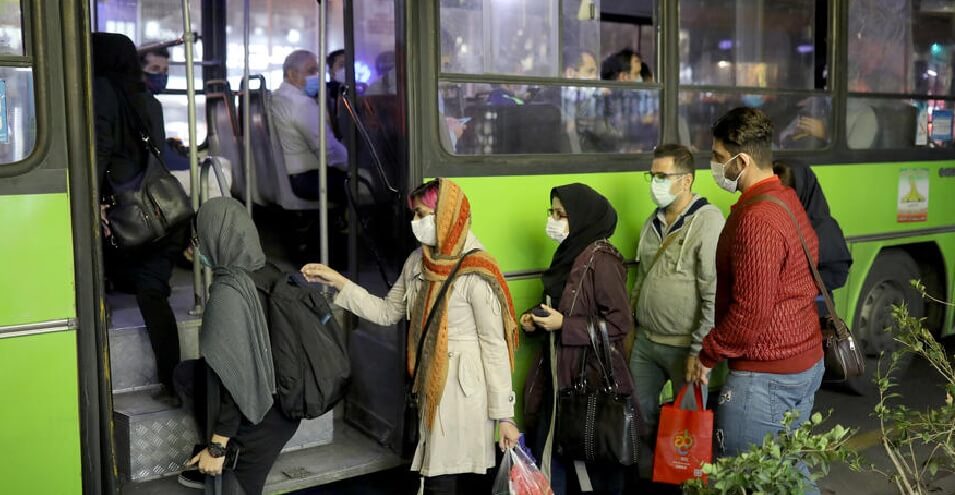
Another 92-year-old woman carries a small copy of the New Testament on buses and asks others to read it to her, claiming she can't read very well, and in fact, she secretly introduces them to the Bible. Often, the same passenger takes a copy of the book home with her.
These stories may seem small, but they reflect a larger truth. This awakening is real, personal, and growing even in the most oppressive of circumstances, because the Iranian people have a deep thirst for hope, truth, and transformation.
Expensive, digital, and transformative faith
The price of this faith is heavy. Iran is one of the most dangerous countries in the world for Christians, especially those who convert from Islam. Last year, 96 believers were sentenced to a total of 263 years in prison, six times more than in 2023. They are charged with charges such as “acting against national security” or “propaganda against the system,” for things like praying, reading the Bible, or gathering in their homes.
Torture, solitary confinement, and drug deprivation are common tools used against new Christians. But these pressures do not break the church, they make it stronger. There is no half-hearted Christianity in Iran. Anyone who believes in Jesus knows that it may cost them everything. This pressure has produced a church that has not only survived but flourished, resilient, courageous, and unstoppable.
Internet against censorship
In the absence of physical churches and public worship, this awakening is spreading through encrypted apps, satellite television, and digital discipleship. Ministries like Transform Iran and Mohabat TV feed tens of thousands of Iranians each month with online church broadcasts, prayer rooms, and Bible study tools, all bypassing regime censorship.
In secret homes, Iranians gather in small groups, risking their freedom to read the Bible, worship, and support one another. The internet, which the regime intended to use for control and espionage, has now become the main avenue for spreading the gospel in Iran, a movement that no force can stop.
From "Death to Israel" to prayers for peace
Perhaps the most surprising development of this awakening is the change in the political outlook of the new Christians. For decades, Iranians have been raised on anti-Israel propaganda. But now, with faith in the Jewish Messiah, many of them have also had a change of heart toward the Jewish people.
Those who once chanted “Death to Israel” now pray for peace between the two nations. They see Israel not as a threat, but as a beacon of hope and a spiritual family. This quiet shift in direction is one of the most profound aspects of this awakening: not just a transformation of faith, but a fundamental shift in worldview that challenges the regime’s main narrative and the foundations of hatred.
Invitation to support
These events do not happen in a vacuum. The awakening in Iran, though Iranian, has survived with the prayers and support of the international community. Underground churches depend on the courage of their members, but also on the practical help of ministries that smuggle Bibles, train underground leaders, and support prisoners and exiles. The needs are urgent. The opportunities are historic. And the call is clear: Stand with Iran’s underground believers.
Their faith, tested by fire, is not only transforming lives within Iran, but may also be the catalyst for a spiritual awakening across the Middle East. Behind the headlines of war and tyranny, another Iran is dawning, where light defeats darkness. One soul, one heart, one faith at all times.”