The destruction of the B1 bridge in Karaj; when the target is not just the military and the destruction of Iran is on the agenda
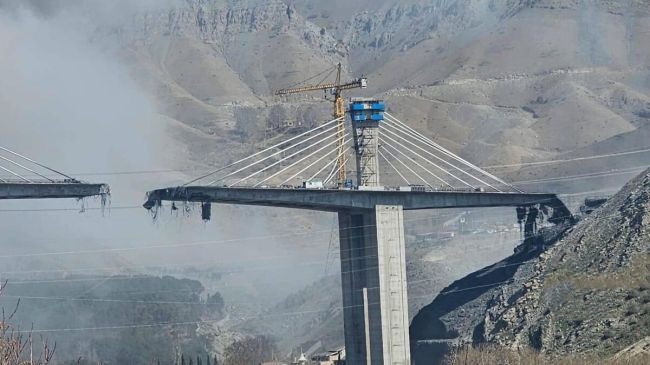
The destruction of the B1 bridge in Karaj shows that the goal is not just military objectives, but rather the destruction of Iran's infrastructure and a comprehensive blow to the country is on the agenda.
The attack on the B1 Bridge in Karaj was not just a limited military operation, but a clear sign of the changing nature of the objectives in a war that is increasingly tied to civilian infrastructure. The bridge, built in the Azimieh region, was one of the largest construction projects in the Middle East in recent years and was supposed to reduce traffic congestion in the region by connecting important routes such as Chalus Road to the Tehran-North Freeway.
A project of this size (more than a kilometer long and a considerable height) had not yet been put into operation after years of work and spending several thousand billion tomans when it was targeted twice during airstrikes and parts of it collapsed. This is despite the fact that, according to city officials, this project was primarily for civilian use and was never known as a place for the deployment or gathering of military forces.
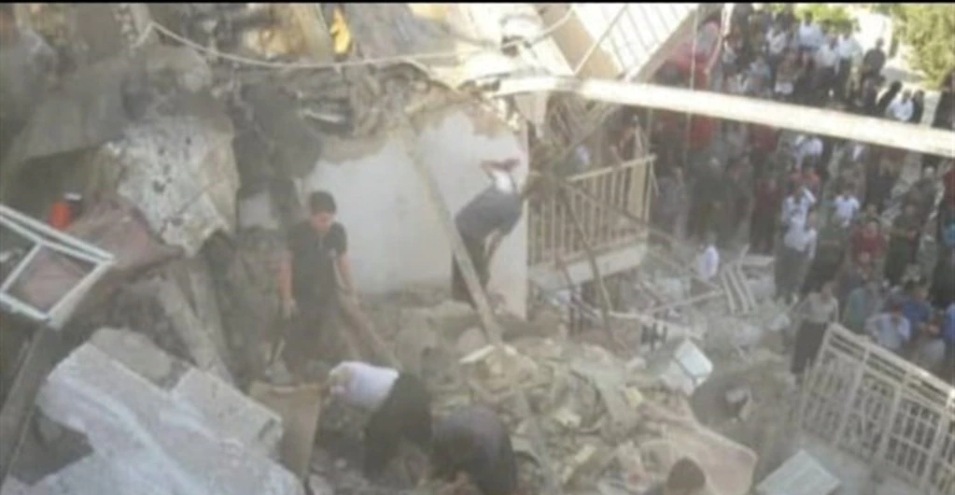
Even more shocking was the timing of the attack. It took place on the 13th of Badr, when many citizens were spending their holidays in the green spaces surrounding the bridge. Reports indicate that eight people were killed and dozens were injured; people who were neither military nor involved in the fighting.
Hours after the attack, Donald Trump posted images of the attack on his social media, writing: “The largest bridge in Iran has collapsed and will never be used again. More to come!” He also warned: “It is time for Iran to come to an agreement before it is too late and there is nothing left of what could have been a great country.”
This tone, beyond a military threat, carries a clear message about targeting the entire infrastructure of a country. Trump then reiterated: "We're going to hit them hard in the next two to three weeks. We're going to take them back to the Stone Age, where they belong."
Such statements, when combined with the choice of a target such as a civilian bridge, raise the serious question of whether the goal is simply to weaken military capability or to destroy the vital foundations of a country?
On the other hand, the reaction of Iranian officials also emphasized the civilian nature of this target. In response to this attack, Abbas Araghchi stated: "Targeting civilian infrastructure, including half-built bridges, will never force the Iranians to surrender. Every bridge and every building will be rebuilt, this time stronger; but what will never be repaired is the damage done to the status, reputation, and trust in America."
However, beyond the official positions, the reality on the ground shows something else. Attacking a bridge that was neither in use nor had any military use, on a day when ordinary people were present around it, can hardly be justified in the context of "military objectives."
From the perspective of analysts, this action should be viewed within the framework of the "maximum pressure" strategy, but in its militarized form; a strategy that targets not only military centers but also critical infrastructure, from bridges and roads to the power grid, in order to disrupt people's daily lives and increase internal pressure.
There were also reports of power outages in surrounding areas and disruption to residents’ lives following the attack, another sign that the consequences of the attack went beyond a single target. The destruction of such infrastructure, especially in a fragile economic climate, can set back development for years.
The attack has also sparked widespread reactions in the social media. Some have seen it as an act against ordinary people and have warned of its long-term consequences. Others, within the framework of opposition to the Islamic Republic, have a different view; but even among these views, there is concern about the future of a country with damaged infrastructure.
Ultimately, what the attack on the B1 bridge in Karaj reveals is the crossing of an important line: when civilian targets are directly attacked, it is no longer possible to speak of a purely military war. Here, the issue goes beyond confrontation with a government; there are signs of a strategy that could lead to the overall weakening of a country and harm to the lives of millions of citizens.