Iran: We are in no hurry to conclude the Vienna talks
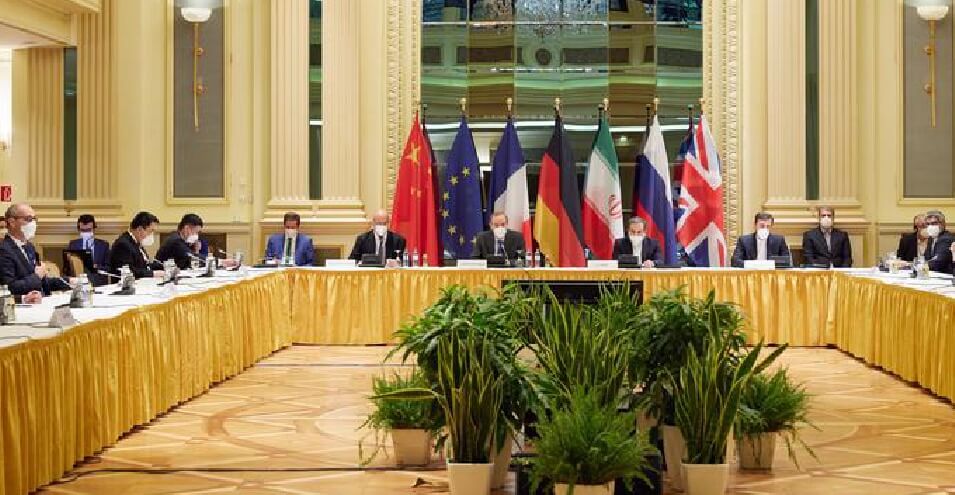
The Foreign Ministry spokesman says Iran is in no hurry to reach a conclusion to the Vienna talks, but it will not allow them to erode, either. He added that the United States has agreed to do most of what Iran considers necessary.
The spokesman for the Islamic Republic's Ministry of Foreign Affairs said in a press conference on Monday, May 10, that the Vienna talks to revive the JCPOA have entered the "writing phase in the nuclear field and lifting sanctions," but because he is faced with different details and results every day, he cannot provide information about all of them.
According to ILNA news agency, Saeed Khatibzadeh said at the meeting: "The United States has accepted, within the framework of its commitments, a large part of the work it must do, and we consider them necessary."
The fourth round of negotiations of the Joint Commission on the JCPOA began on May 8. Abbas Araqchi, Iran's chief negotiator in Vienna, said in an interview with the Islamic Republic's state television after the end of the first day of negotiations that the US had agreed to lift a large part of the sanctions, but that Tehran believed this was not enough.
According to the Islamic Consultative Assembly's resolution known as the "Strategic Action Law to Lift Sanctions and Protect the Interests of the Nation," Iran suspended voluntary implementation of the Additional Protocol to the Treaty on the Non-Proliferation of Nuclear Weapons on March 25, continuing to reduce its commitments under the JCPOA.
A few days before this action, an agreement was signed during the visit of Rafael Grossi, the Director General of the International Atomic Energy Agency, to Tehran, according to which CCTV cameras and monitoring equipment would continue to record activities at the Islamic Republic's nuclear facilities for three months, but the recorded data would only be made available to the Agency on the condition that an agreement was reached on the lifting of sanctions.
The Islamic Republic has threatened to erase the information recorded about its activities during this period if negotiations with the agency to lift sanctions are not concluded within the three-month period agreed upon.
Possibility of extending the Iran-IIA agreement
In an interview with Bloomberg TV, Rafael Grossi recently expressed hope that this would not happen and announced his readiness to travel to Tehran again to reach a new compromise if the Vienna talks do not reach a conclusion by that date.
Abbas Araqchi said on Friday on the sidelines of the Vienna talks that Iran hopes to make significant progress in these consultations by the end of the three-month agreement with the Agency (May 22/June 1), but Tehran is ready to consider extending the agreement if necessary.
Previously, some news sources reported, citing European diplomats, that the negotiators of the Joint Commission on the JCPOA are trying to revive the JCPOA by the end of the three-month agreement between Iran and the IAEA.
However, a person close to US State Department officials told Bloomberg that setting a goal of reviving the JCPOA before May 22 is ambitious, and it is more likely that this will take until mid-June (June 15).
“We are in no hurry, but let there be no erosion”
Araqchi's announcement of his readiness to consider extending the agreement with the IAEA strengthens this possibility. Khatibzadeh also said today that Iran is in no hurry to conclude the negotiations, while also not allowing them to erode.
In a virtual ceremony in late April, the Leader of the Islamic Republic said that Iran's policy regarding the JCPOA and sanctions is clear, and that officials' view was that negotiations should be held to implement these measures.
According to Fars News Agency, Ali Khamenei said: "We have no discussion in this regard, but care must be taken that the negotiations are not erosive and that the parties do not drag out the negotiations, because this is harmful to the country."
All parties involved in the Vienna talks believe that the talks on the revival of the JCPOA, which are being held for the first time with the indirect participation of the United States, have entered a critical stage.
German Foreign Minister Heiko Maas told reporters on Monday ahead of a meeting of EU foreign ministers that the Vienna talks were difficult and challenging, but all parties were continuing to hold consultations in a constructive atmosphere.
In a video message on his personal Twitter page, he said that he, along with his French counterpart and Josep Borrell, the EU's foreign policy coordinator, would update the EU's foreign ministers on the latest developments in the Vienna talks.
Warning about losing time
The German Foreign Minister says that time is running out and we want the full restoration of the nuclear agreement because it is the only tool necessary to prevent the Islamic Republic from obtaining nuclear weapons, and this must be prevented at all costs.
According to Reuters, Borrell emphasized on Monday that negotiations between Iranian representatives and world powers have entered a decisive phase and the coming weeks will be decisive.
The EU's foreign policy chief says he is optimistic that the talks will be fruitful, but there are only a few more weeks left, time is limited, and there is still much work to be done.
According to the report, Borrell expressed hope that the Vienna talks would enter a phase of "non-stop talks" until a conclusion is reached within the remaining time.
Saeed Khatibzadeh says that if negotiations do not reach a conclusion by the end of the three-month agreement with the Agency, and if "both sides are on the right track," one of the options is for Tehran to agree to extend the agreement with the Agency.
He added, "Of course, it is natural that the negotiating team is not the decision-maker, and all decisions are made in Tehran."
Ali Khamenei clearly stated this issue in a speech on May 3 on the occasion of Labor Day and Teacher's Day, saying that the Ministry of Foreign Affairs is the executive and that foreign policy is determined by "high-ranking officials beyond the Ministry of Foreign Affairs."
Source: DW