Iran on the verge of change and Reza Pahlavi's name in power equations and Washington's doubts
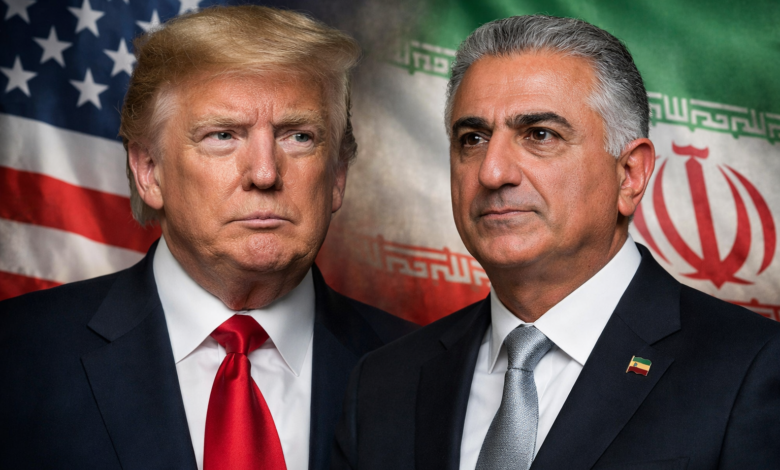
Iran is on the verge of change, the name of Reza Pahlavi for the leadership of Iran and the simultaneous nationwide protests with America's caution regarding the country's political future indicate the victory of the Iranian nation.
As nationwide protests in Iran enter their critical weeks and the violent crackdown on protesters continues, political developments abroad have also caught the attention of observers. The recent statements by the US President about Reza Pahlavi, along with the actions of senior US senators, have once again brought the future of Iran's political leadership back to the forefront of international analysis.
US President Donald Trump announced in an interview with Reuters on Thursday, January 15, that he had not yet spoken to Reza Pahlavi and expressed doubts about his status within Iran. Trump said in the interview: "I don't know if his country would accept his leadership, and of course if they did, that would be fine with me."
He added cautiously, "He seems very good, but I don't know how he'll be received in his own country. We're really not there yet and we're looking at a lot of things. It's too early to make a definitive statement. I don't know what his relationship with his country is like."
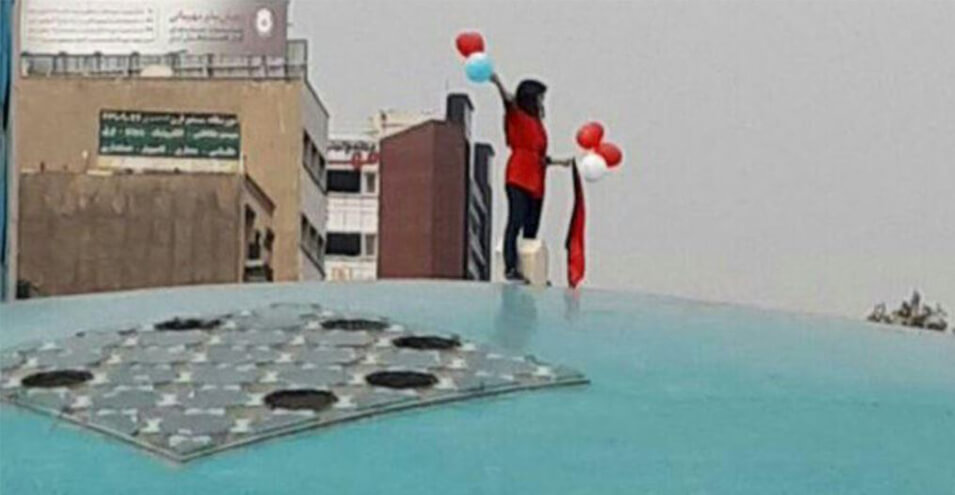
These statements are made in a situation where during the widespread protests that began on January 27 in various cities of Iran, slogans such as "Javed Shah" and "This is not the last battle, Pahlavi is returning" have been widely heard alongside anti-government slogans and slogans against Ali Khamenei. The presence of these slogans indicates the return of the name Pahlavi to the Iranian protest atmosphere, although the level of political organization of this movement is still a matter of debate.
In its analysis of this situation, the news agency wrote that Reza Pahlavi has become one of the prominent voices in the protest space, but the Iranian opposition remains fragmented and suffers from ideological and political divisions; a division that has limited the ability to create a coherent alternative within the country.
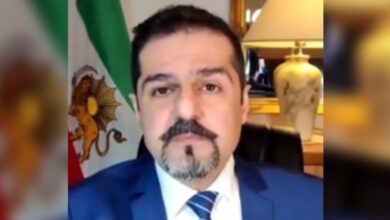
At the same time as Trump's remarks, senior Republican Senator Lindsey Graham announced his meeting with Reza Pahlavi. He posted a video of the meeting on the social media platform X, in which he said to Pahlavi: "It is the Iranian people who will choose their next leader, and I look forward to the day when they have that opportunity. But you have really come out on top at this point and presented a compelling narrative for the suffering people of Iran. I believe with all my heart that help is on the way."
This meeting shows that in some American political circles, the conversation about Iran's future has gone beyond the level of analysis and entered into direct interaction with figures opposing the government.
Inside Iran, protests have been met with widespread and bloody repression. Human rights sources report that thousands of people have been killed by direct fire from government forces. The complete internet shutdown since the evening of January 8 has also severely limited access to accurate information about the extent of the repression, and an atmosphere of uncertainty prevails in the country.
In such an atmosphere, Trump raised the possibility of the fall of the Iranian regime in his speeches, but at the same time said: "In fact, any regime can fall. Whether it falls or not, it will be an interesting period."
Hours before the Trump interview was released, he announced that based on information he had received, the killings in Iran had decreased and that there were currently no plans for mass executions. He had stated last Wednesday evening: “The killings in Iran are stopping. They have stopped and there are no plans for executions.” When asked what the source of this information was, he replied that the data had been provided to him by “very important sources on the other side of the story.”
Despite these statements, the US president did not completely rule out the possibility of military action, saying: "We'll see how things go."
At the same time, reports of a no-fly zone warning over Iran and growing speculation about possible US military action emerged. Two European officials said such an intervention could happen within 24 hours, and an Israeli official said there were signs that Trump was considering intervention, although the timing and scope were unclear.
In contrast, a Western military official also emphasized: "All signs point to an imminent American attack, but this administration usually behaves like this to keep everyone on alert. Unpredictability is part of the strategy."
The simultaneous developments on the streets of Iran and in the decision-making rooms of Washington indicate that the Iranian crisis has entered a new phase. On the one hand, popular protests have challenged the legitimacy of the regime, and on the other, names like Reza Pahlavi have resurfaced in the international equation. However, Trump's caution in commenting on the future of Iran's leadership shows that the United States is still weighing options; options that could change Iran's political fate for years.