"Iran destroys evidence of executions from the 1960s"
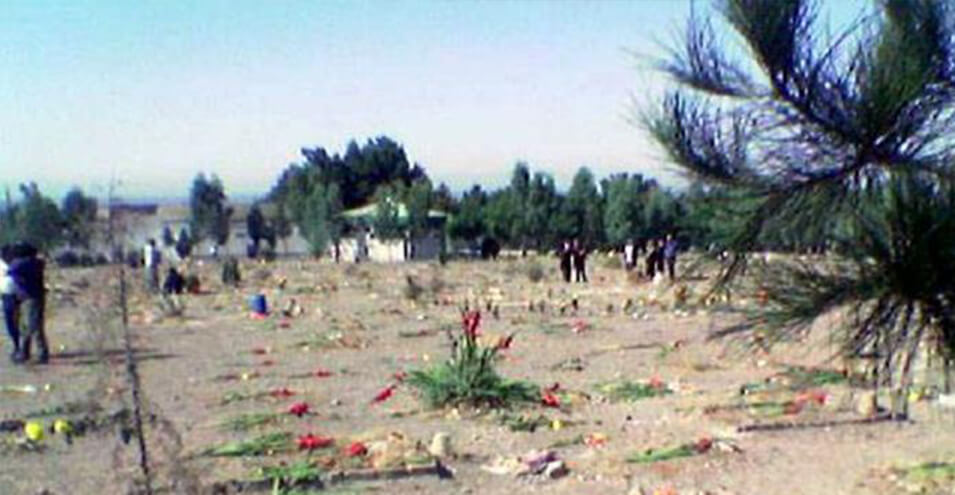
Amnesty International and Justice for Iran have accused the Iranian government of deliberately destroying mass graves of prisoners executed in the 1960s. The two organizations say that by doing so, Iran is making an independent investigation into the events of the summer of 1988 impossible.
Thirty years have passed since the mass killing of political prisoners in the prisons of the Islamic Republic. Two human rights organizations, Amnesty International and Justice for Iran, issued a statement on Monday morning (April 30) strongly criticizing the destruction of mass graves of victims of the "Summer of 1967 Massacre."
These two human rights organizations say that between 2003 and 2017, the Iranian government destroyed the burial sites of thousands of prisoners executed in the 1960s by building roads, constructing new cemeteries, and setting up garbage collection sites.
Amnesty International and Justice for Iran estimate the number of victims of the summer 2018 executions at around five thousand, and point out that the deliberate destruction of mass graves of executed prisoners eliminates the possibility of investigating this crime and holding those responsible accountable before the courts.
Killing of prisoners on the orders of Khomeini
The killing of political prisoners in 2018 was carried out on the direct orders of the then leader of the Islamic Republic, Ayatollah Ruhollah Khomeini. Dieter Karg, an Iran expert at Amnesty International Germany, says that the Iranian government has not allowed any independent investigation into the killing of political prisoners in the past three decades.
"The destruction of mass graves, the destruction of which Amnesty International has documented, has forever destroyed the possibility of a comprehensive investigation and exposure of this crime," Amnesty International's Dieter Karg told AFP.
Amnesty International and Justice for Iran have called on the Islamic Republic's authorities to stop the continued destruction of the burial site of political prisoners and to allow independent investigations into extrajudicial executions so that the perpetrators of this crime can finally be brought to justice.
In the past three decades, almost none of the senior officials of the Islamic Republic have officially confirmed the mass execution of political prisoners in the summer of 2018.
Montazeri's protest, dismissal and house arrest
Ayatollah Hossein Ali Montazeri is the only senior government official to speak out about the incident. In his memoirs, published in 2000, he criticized the massacre and exposed Khomeini's direct role in it.
Protests against the execution of prisoners serving their sentences were one of the main reasons for Montazeri's removal from his position as deputy leader of the Islamic Republic. He had been under house arrest for many years.
In an interview with the four-member team responsible for issuing death sentences for prisoners, Ayatollah Montazeri called the act “the greatest crime” in the Islamic Republic. An audio file of this interview was recently widely circulated on social media.
There are different statistics regarding the number of victims of executions in the 1980s. Ayatollah Montazeri has stated the number of victims to be between 2,800 and 3,800, Amnesty International has reported around 5,000, and Iranian human rights activists have reported the figure as high as 30,000.
One of the members of the “death squad” of the 1988 executions is Ebrahim Raisi, who was appointed as the custodian of the Astan Quds Razavi two years ago by the current leader of the Islamic Republic, Ali Khamenei. He was one of the candidates in the 12th presidential election, but suffered a heavy defeat against Hassan Rouhani.
Over the past three decades, the Islamic Republic has ignored the demands of all domestic and international human rights organizations to provide an independent investigation into the executions of the 1960s. During this time, those like Raisi, who were the executors of Khomeini's decree, have increasingly shared power with the support of the government leadership.