Iran turns off 27 IAEA cameras; Grossi: Continuing this process is a fatal blow to the JCPOA
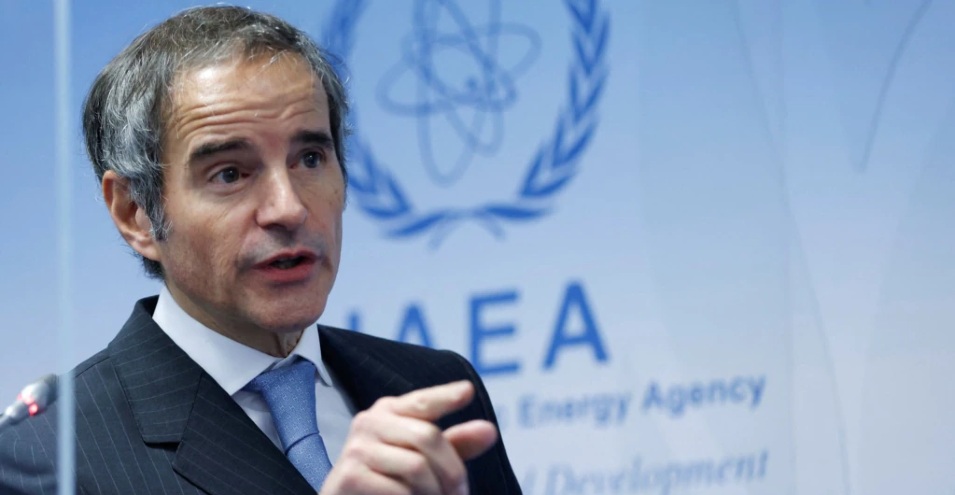
On Thursday, June 9, the Director General of the International Atomic Energy Agency announced Iran's decision to turn off 27 cameras at its nuclear facilities, describing the continuation of this process as a "fatal blow" to the JCPOA.
Speaking at a press conference, Rafael Grossi, in response to a question from Radio Farda, stated that Iran's new actions, which appear to be a reaction to the new resolution of the Board of Governors, will reduce the Agency's oversight, and this is "regrettable."
On June 8, the Atomic Energy Organization of Iran announced in a statement that two International Atomic Energy Agency (IAEA) "supervision" cameras at an Iranian nuclear facility were deliberately disconnected.
The organization's official announcement also stated that "the operation of the online level and flowmeter (OLEM) device belonging to this international organization will also be stopped."
Rafael Grossi also said on Thursday that the number of cameras to be "removed" is not two, but 27.
According to the Agency's Director General, by removing these cameras, which are located in various locations in Iran, including Tehran, Natanz, and Isfahan, "somewhere around 40 cameras" belonging to the Agency will remain in Iran to record Iran's nuclear activities.
According to him, if the agency is unable to continue monitoring with the "accuracy and precision" that it has always done, this process could be a "fatal blow" to the body of the JCPOA.
Mr. Grossi further emphasized that such actions by Iran pose a "major challenge" to verifying Iran's activities and continuing cooperation between this international organization and Tehran.
Behrouz Kamalvandi, spokesman for the Atomic Energy Organization of Iran, said on Wednesday, referring to the removal of two cameras from the Atomic Energy Agency's surveillance cameras in Iran: "Some cooperation that went beyond safeguards and was purely based on goodwill and was not part of the obligations was stopped."
He clarified that through these two cameras, "information was recorded that could later be used by the Agency," but Iran no longer provides this information to the Agency.
This is a point that Rafael Grossi also expressed ignorance about on Thursday, saying he did not know what would happen to the films that have been recorded so far and have not yet been made available to the agency.
According to Mr. Grossi, such measures only narrow the "window of opportunity" much more, and in this situation, "tension" only causes "less transparency and more uncertainty."
On June 6, on the eve of the meeting of the International Atomic Energy Agency's Board of Governors, Rafael Grossi said: Iran continues to enrich uranium continuously and its acquisition of significant resources that would cross the red line is "very close and not more than a few weeks away."
In response to Radio Farda's question about this period of several weeks, he referred to "three to four weeks" and emphasized that beyond this time, the Agency will no longer be able to monitor Iran's activities.
On Wednesday evening, June 8, the Board of Governors of the International Atomic Energy Agency (IAEA) passed a resolution against Iran by a majority vote, criticizing Tehran's lack of cooperation with the organization.
Iran is accused of failing to respond to the agency's questions about uranium particles found at three of its undeclared nuclear sites.
Source: Radio Farda