The arrest of Kamran Hekmati, a family trip that turned into a human rights case
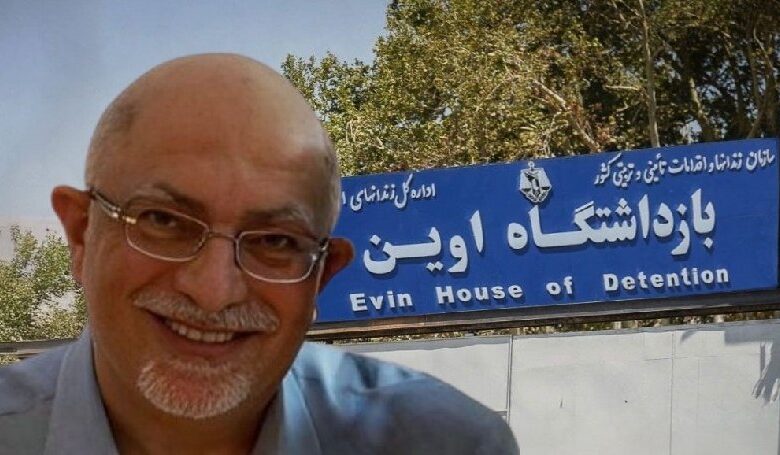
Kamran Hekmati, an Iranian-Jewish American citizen, was arrested and sentenced to prison in Iran following his trip to Israel thirteen years ago.
According to the family of Kamran Hekmati, a 70-year-old Iranian Jew from New York, he was arrested and sentenced to prison in Iran for a trip he made to Israel 13 years ago. His family says the trip was to attend his son's Bar Mitzvah (religious coming of age) and was not politically motivated.
Hekmati, who holds dual Iranian-American citizenship, traveled to Iran for a brief visit in May of this year. He has been held in Tehran's Evin Prison since July, following the end of the 12-day conflict between Israel and the Islamic Republic.
His family said that the Revolutionary Court sentenced him to four years in prison in late August under a law that bans Iranians from traveling to Israel. However, according to published reports, Hekmati’s prison sentence was first reduced to two years and then to one year.
Kamran Hekmati was born in Iran but immigrated to the United States at the age of 13, traveling to visit his family on an Iranian passport because Iran does not recognize dual citizenship and requires its citizens to use Iranian passports when traveling. Family members, who declined to be named, say they are concerned about the potential repercussions of the case.
Hekmati’s family lawyer has filed an appeal against the verdict, but the date for the appeals court hearing is not yet known. His family has expressed hope that Iranian authorities will consider his release on humanitarian grounds, given his physical condition. They have said that Hekmati suffers from “invasive bladder cancer,” has no political activity, and was traveling for personal reasons.
It should be noted that the Islamic Republic of Iran's mission to the United Nations has declined to comment on this case.
According to human rights organizations, at least four American citizens are currently being held in Iran: Kamran Hekmati, Reza Valizadeh (a journalist), and two other women whose names have not been disclosed. In response to this news, the US State Department declined to comment directly on the details of the case, citing security and privacy concerns, but stressed in a statement that Washington remains in contact with its allies to pursue the issue of “unjust detentions in Iran.”
The statement said: "The Iranian regime has a long history of unjust and unlawful detention of citizens of other countries. Iran must immediately release these individuals."
Human rights analysts say Hekmati's arrest is a reminder of the Islamic Republic's use of dual citizens as political leverage in negotiations or prisoner swaps. However, according to the New York Times, this is the first known case in recent years where a prison sentence has been issued solely for personal travel to Israel.
Siamak Namazi, an Iranian-American citizen and former prisoner who was released last year as part of an agreement between Tehran and Washington, said in an interview: “By illegally detaining Hekmati and others, Tehran is once again unnecessarily fueling tensions with the United States and Israel.”
Kamran Hekmati owns a jewelry workshop in New York's Diamond District and lives in the Great Neck area of Long Island, which has a significant Iranian Jewish population. His family says he was a quiet, family-oriented man who was committed to Iranian and Jewish traditions.
"Shohra Nofar," one of his relatives in California, said of him: "Kamran was always the one who brought the family together. He was always there for everyone; for his wife, his children, his relatives, and everyone he met in Iran. It is strange and painful that the same country that he loved and helped has now imprisoned him."
According to his family, Kamran Hekmati was detained by security forces in May as he was leaving Tehran International Airport and his passport was confiscated. The officers then demanded to examine his cell phone and social media accounts. According to the New York Times, he was interrogated several times from May to early July, and was finally formally arrested in early July, following a ceasefire between Iran and Israel.
He was initially tried without a lawyer, and his family was only able to hire one after the verdict was issued. While government officials have declined to comment on the case, human rights groups say Hekmati's arrest and conviction do not meet fair trial standards.
In recent years, Iranian authorities have repeatedly urged Iranians living abroad, including religious minorities, to return home with confidence. But Kamran Hekmati’s case, as the New York Times noted, has raised new questions about travel security for dual-national Iranians and religious freedom in Iran.
The case has now become a symbol of the tension between human rights obligations and domestic politics and is still awaiting a decision from the Court of Appeal.