Detaining children in the dark; a new wave of repression of adolescents in Ilam and Kurdistan
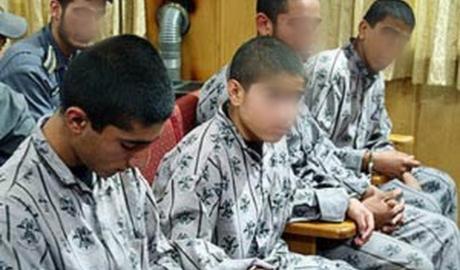
The Islamic Republic has once again violated the rights of the child by detaining teenagers without a judicial warrant; rights that it has been violating in various ways for years.
While the Islamic Republic of Iran is a signatory to the UN Convention on the Rights of the Child, new reports from the provinces of Ilam, Kurdistan, and North Khorasan indicate that the arrest of juveniles, some as young as 15, continues to be part of a pattern of security repression in the country.
The names that have been published these days following the January protests are not just statistics; they are children who, according to international standards, should receive special protection, not be arrested and transferred to unknown locations in night raids by security forces.
According to published reports, "Amirali Lotfi", "Hossein Maghsoudi" and "Zanyar Kanani", three 15-year-old teenagers, "Alireza Nazari", 17, and another teenager named "Saman Soleimani", along with several other citizens, have been arrested by security forces in the cities of Darehshahr, Sanandaj, Asemanabad, Abdanan, Chavar, Ilam and Bojnourd.
According to the published report, the arrest of these citizens was carried out by security forces without a judicial warrant, and as of the time of publication of this news, the reasons for the arrest and the location of each of them have not been disclosed.
In the case of 15-year-old Zanyar Kanani, a resident of Sanandaj, it was reported that she was also arrested by security forces at her home in the Baharan neighborhood of the city without a court order. This pattern (arrest without a warrant, transfer to an unknown location, and failure to inform her family) is one of the cases that has been recorded in numerous human rights documents about the Islamic Republic.
During the arrest of Saman Soleimani in the village of Haft Cheshmeh in Abdanan, reports indicate direct clashes between security forces and the public.
The report on him states: "It should be noted that during the arrest of Saman Soleimani, security forces clashed with the villagers and destroyed several private cars. The officers also fired bullets and threw tear gas to disperse the people."
The use of firearms and tear gas in residential settings and in the presence of adolescents raises serious questions about the proportionality and legitimacy of these measures.
In addition to the arrested teenagers, the names of other adult citizens have also been published, including "Hamid Maleki", "Pouria Soltanian", "Amir Saeed Chahartareh", "Adib Nazari", "Behzad Sefidkhani", "Mojtaba Mohammadvali", and "Reza Ferdows".
In all cases, it has been emphasized that the arrests were made without a judicial warrant and no clear information has been released about the charges or where the detainees are being held.
A separate report states that 18-year-old Sina Ghiasi was also arrested by security forces at her home without a warrant and taken to an unknown location, and no information is yet available on the reasons for her arrest.
Amir Mohammad Piroozi, a member of the national judo team and a native of Bojnourd, has also been arrested at his home; this arrest was also carried out without a judicial warrant.
The detention of persons under the age of 18, especially without a judicial warrant and without immediate access to family and lawyers, is a clear violation of Iran's international obligations regarding children's rights.
The Convention on the Rights of the Child, which Iran has ratified, allows the detention of children as a “last resort” and for the “shortest possible period.” However, numerous reports in recent years have shown that the Islamic Republic not only falls far short of this standard, but has in some cases tried minors on security charges and even subjected them to severe punishments.
Critics say the detention of juveniles in the border provinces is part of a policy of intimidation and social control, a policy aimed at silencing any protest or civil disobedience.
Human rights experts have repeatedly warned that the securitization of everyday life in Iran has blurred the line between children and adults in the face of the repressive apparatus. House arrest, intimidation among families, lack of information about where they are being held, and lack of judicial transparency not only violate the rights of the accused, but also pose a direct threat to the psychological safety of children and society.
As the Islamic Republic faces widespread economic and social crises, the increase in juvenile detention raises the question: "Is the government even using children as a tool of control and intimidation?" As of the publication of this report, no official has provided a clear explanation for the reasons for the detention of these juveniles.