Review of human rights in Iran and Saudi Arabia; a meeting with the presence of Ahmad Shaheed
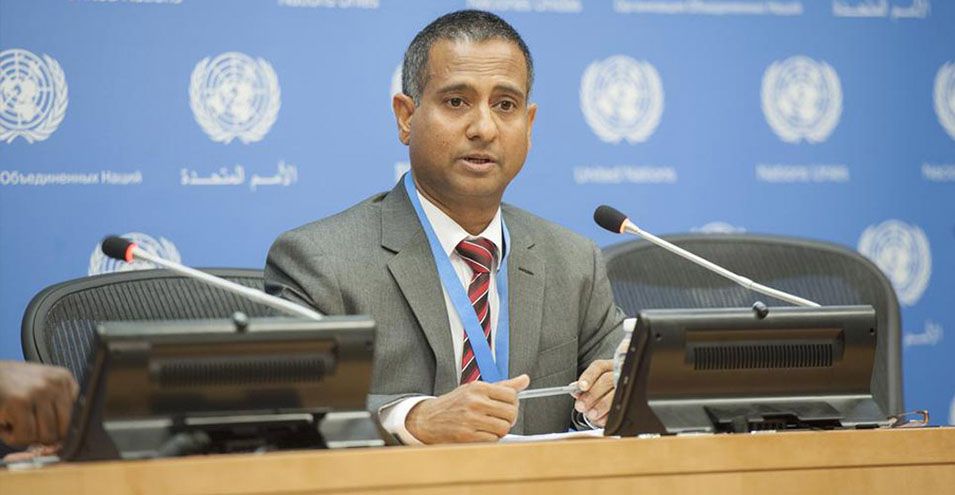
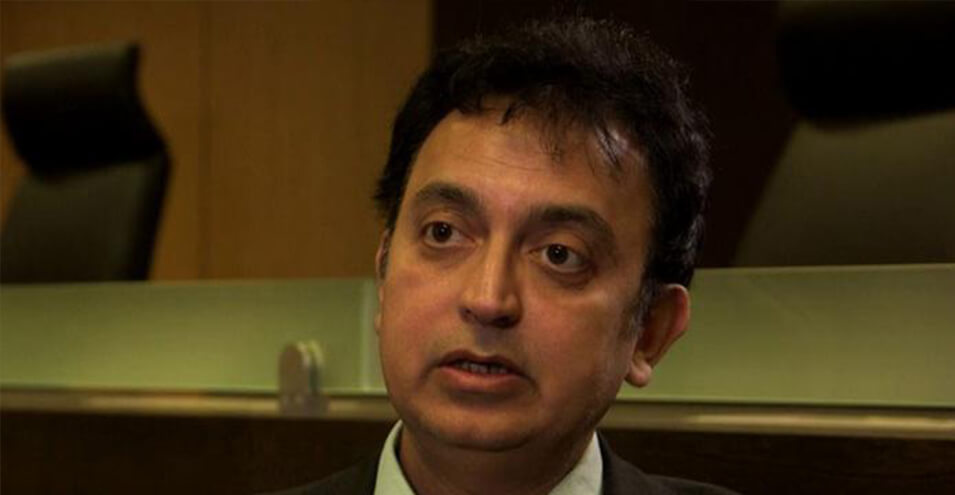
Ahmad Shaheed, the UN Special Rapporteur on human rights in Iran, welcomed the discussion about human rights issues related to Saudi Arabia, saying, “If human rights issues in other countries are taken seriously, others will think more about their performance.”
Mr. Shahid, who had participated in a meeting on human rights in Iran and neighboring countries, told BBC Persian: “If there are clear policies for everyone that show that human rights are taken seriously, then we can say that everyone has gotten the message.”
Referring to his title and mission, he said that it is not his job to look at the human rights situation in Iran's neighboring countries, but he said that in his opinion, if the issue of human rights is addressed throughout the region, everyone will benefit from it.
The meeting "Human Rights in Iran: In the Context of the Region and Constructive Criticism" was held in Washington, D.C., hosted by the Atlantic Council think tank.
In response to the question of why, despite numerous cases of human rights violations in Saudi Arabia or Turkey, the UN has not appointed a special rapporteur for these countries, Ahmed Shaheed said that these countries have acted "smartly" and allowed the UN to go to those countries to investigate, and that there is cooperation between them.
He said that Iran had not responded to UN questions on human rights issues for years and was only now starting to respond: “When there is no communication with a country and when they do not provide any information, concerns arise, especially when the Iranian people themselves are asking the UN to establish a mechanism to respond to these issues.”
The meeting discussed issues such as "heavy sentences for journalists" as well as the arrest of Iranians with dual nationality, and asked questions about the rights of ethnic and linguistic minorities.
'Human rights are not comparable'
“Iranians always complain that when it comes to human rights, American allies like Saudi Arabia and Egypt, Israel and Turkey get left out,” said Barbara Slavin, director of the Iran program at the Atlantic Council. “That’s why we asked Sarah Lee to be here to talk about the entire region.”
Sarah Lee Whitson, Middle East and North Africa director at Human Rights Watch, said at the meeting that sanctions against human rights violators are more effective when they are not limited to a specific country.
Ms. Whitson also said that, like in Iran, critics and their lawyers are tried and punished in Saudi Arabia, and this practice is not unique to Iran.
In addition to Saudi Arabia's domestic human rights issues, she also mentioned the country's attacks on Yemen, saying the bombings in Yemen have been a "disaster": "Saudi airstrikes have caused 60 percent of the killings in Yemen in the past year. About 3,500 people." According to Ms. Whitson, Saudi Arabia is using "illegal" weapons such as "cluster bombs" in urban areas of Yemen, in places like the market.
However, Ms. Whitson said she disagreed with comparing countries on human rights: “If 10,000 people are being tortured in one country, it doesn’t make 100 people being tortured in another country feel any better.”
He said that human rights are not relative and cannot be measured quantitatively.
Saudi Arabia and Iran 'should both be held accountable'
Ms. Whitson said that a meeting like this is good for providing a picture of the human rights situation in a region, but no comparisons are made.
Hadi Ghaemi, from the International Campaign for Human Rights in Iran, another participant in the meeting, said that when talking about a country in a region like the Middle East, “we cannot examine that country completely in isolation from its regional conditions.”
Regarding the reaction of Iranian officials to human rights reports, Mr. Ghaemi said: “The Iranian Foreign Ministry always dismisses human rights concerns and says why don’t you pay attention to Saudi Arabia?”
He said that one of the features of this meeting is that the Iranian government will see that if we are talking about Iran, there are also organizations that are working on Saudi Arabia and Yemen.
Mr. Ghaemi said that Saudi Arabia and Iran each have their own place and both must respond to human rights concerns.
Source: BBC Persian