Joseph Shahbazian's continued detention and absence from his mother's funeral
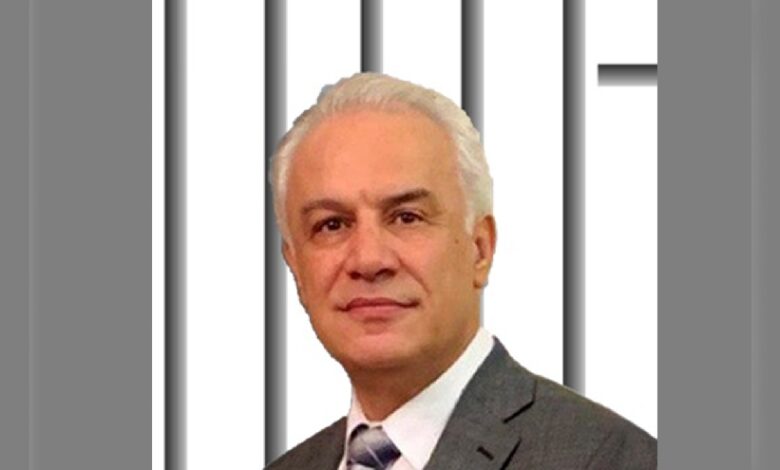
The arrest of Joseph Shahbazian, a Christian citizen, continues after two months, preventing him from attending his mother's funeral.
According to published reports, Joseph Shahbazian's mother died of illness on Wednesday, April 10. Joseph Shahbazian, who was taking care of his mother, was suddenly arrested at his home on February 18, 1403 by agents of the Ministry of Intelligence. Not only did he lose his duty to take care of his mother, but now that he has lost her, he was unable to attend his mother's funeral due to the prison authorities' refusal to grant him leave.
Mr. Shahbazian is a former prisoner of conscience who was previously arrested for peaceful religious activities and sentenced to 10 years in prison. His prison sentence was overturned by the Supreme Court in March 1401 and reduced to two years in June 1402 by Branch 21 of the Tehran Court of Appeals. He was therefore released from Evin Prison on September 13, 1402, but the prison authorities had declared his release subject to amnesty.
The charge against him at the time was “acting against national security by establishing and running a house church of evangelical Christianity.” Just a few months after his release, Joseph Shahbazian was arrested again by intelligence agents and transferred to Evin Prison. Now, two months after his arrest, he remains in detention without charge.
"Hossein Ahmadiniaz," a lawyer living in the Netherlands, says in this regard: "According to Articles 193 and 195 of the Criminal Procedure Code, the explanation of the charges is necessary for the legal protection of the accused, and the prosecution is obliged to comply with them. Ignoring these articles can lead to disciplinary prosecution of the relevant officials. The explanation of the charges and respect for the rights of the accused are considered mandatory rules, and the judicial authorities are obliged to implement them. As a result, detention without observing these provisions is considered illegal."
For many years, despite being a signatory to Article 18 of the International Covenant on Freedom of Religion or Belief, the Islamic Republic of Iran has subjected religious minorities, especially Christians, to repression, persecution, torture, and long-term detention without any valid documents or evidence, depriving them of their citizenship rights, and in many cases, deporting them.