Protests in Sanandaj, Mahabad and Karaj in Protest Against Mahsa Amini’s Death; Widespread Reactions Continue
Iranian media reported on Sunday, September 27 that Ibrahim Raisi, President of the Islamic Republic, contacted the family of Mahsa (Zhina) Amini, who died in police custody while under arrest by the Guidance Patrol, and promised to follow up on the circumstances of their daughter’s death.
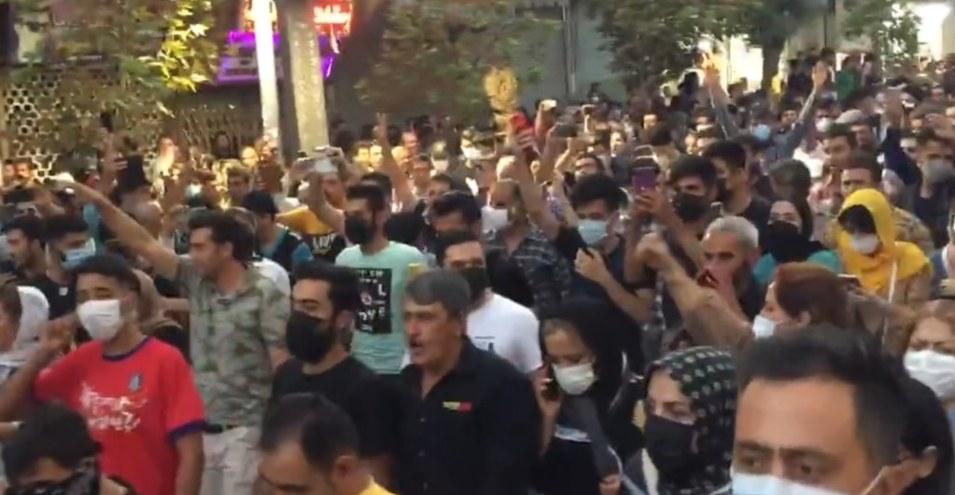
Meanwhile, reports indicate that people in Sanandaj again took to the streets Sunday night to protest Mahsa Amini’s death, chanting slogans such as “Death to the dictator,” “Shame on us, shame on us / Our leader is a tyrant,” “Death to Khamenei,” and “From Kurdistan to Tehran / Stop oppression against women.”
In videos circulated on social media, a group of women also removed their headscarves.
The Twitter account “KurdishNews” reported that with the intervention of special guard and security forces, the civil protest of Sanandaj residents against the state killing of Zhina Amini turned violent.
According to the report, security forces fired tear gas at the crowd, opened fire, and in the late hours of the night used water cannons to disperse the protesters.
According to the Hengaw website, so far 9 protesters in Sanandaj have been injured.
Fars News Agency, close to the Revolutionary Guards, referring to the Sanandaj protests, claimed that the number of protesters was only “500 people” and added: “The Farsi reporter’s conversation with some protesters shows that many of them believe Mahsa Amini died under torture. These people either have not heard police explanations or are not convinced by them.”
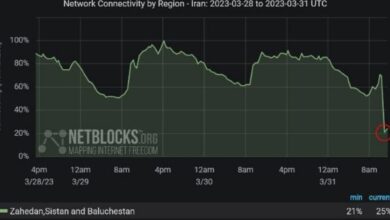
Simultaneously with the shooting by security forces, internet speed in the city also experienced a disruption.
Behzad Rahimi, representative of Saghez in the Islamic Consultative Assembly, also confirmed the report of mobile internet outage in Saghez and promised that internet would be restored within hours.
Based on reports and videos circulated on social media, the scope of the protests has expanded to other cities including Mahabad and Karaj.
Reports also indicate a security atmosphere in Kermanshah with widespread presence of special forces throughout the city. According to Hengaw’s report, most shopkeepers in Kermanshah have been threatened by security institutions that they should not participate in the general strike on Monday.
Meanwhile, the Islamic Republic News Agency, IRNA, says that in a phone call between Ibrahim Raisi and Mahsa Amini’s family, he said: “Your daughter is like my own daughter, and I feel as though this incident has happened to one of my own loved ones. Know that I share in your misfortune and sympathize with your grief and sorrow.”
The President of the Islamic Republic added: “I became aware of this incident during my trip to Uzbekistan, and I immediately instructed my colleagues to place the investigation of this matter on the agenda as a priority. Be assured that I will demand accountability from the responsible agencies to clarify all aspects of this matter.”
In the report, it stated that Ms. Amini’s family “thanked” the president and “requested follow-up on the issue until all aspects of the matter were clarified.”
Ibrahim Raisi had previously instructed the Interior Minister on September 25 to investigate the death of Mahsa Amini.
He gave this instruction to his Interior Minister while Ahmad Vahidi had previously claimed that Mahsa Amini had a pre-existing medical condition.
Iran’s Interior Minister also said Saturday evening on a television program that “a number of female personnel are official members of the Guidance Patrol who handle these cases, and there is fundamentally no instrument for beating.”
However, Amjad Amini, Mahsa Amini’s father, in an interview with the “Emtedad” news site said that based on many conversations with girls who were arrested with Mahsa that day, he is certain that “she was beaten.”
Mr. Amini added: After his daughter was transferred to the station, it took two hours to transfer her to the hospital.
According to him, there was no escort present during the transfer of his daughter to the hospital, and only when Mahsa was transferred to the coroner, the officers took her away and did not allow the family to enter.
Amjad Amini later reported pressures for a hasty burial of his daughter, saying: “They wanted no one to know.”
Mahsa Amini, who traveled from Saghez to Tehran with her brother to visit relatives, fell into a coma on September 22 shortly after being detained by Guidance Patrol officers and died after three days in the hospital.
Reports indicate that she died as a result of being beaten by Guidance Patrol officers of the Islamic Republic Police Force, although Iranian police claim she suffered a heart attack during orientation training.
Mahsa Amini’s death has provoked widespread domestic and international reactions, and many prominent figures, as well as governments and international organizations, have condemned the violent conduct of the Islamic Republic’s security forces in enforcing mandatory hijab on women.
Since Saturday and following Mahsa Amini’s burial, her hometown of Saghez and the city of Sanandaj have been scenes of widespread protest gatherings.
These gatherings from the early hours were accompanied by violence from police and security forces, and based on videos circulated on social media and public reports, these forces used live ammunition and tear gas to disperse citizens.
According to the latest report from the human rights website “Hengaw,” by Sunday noon, at least 38 people in Saghez and Sanandaj were wounded by direct shooting from special guard forces and baton strikes, and 13 people were arrested.
According to the report, of the 33 people who were targets of direct fire from special guard forces, five were transferred to medical centers in Tabriz due to serious physical conditions.
On the other hand, reports indicate a severe security atmosphere in Saghez and Sanandaj. Following calls for a “general strike from Kurdistan to Tehran on Monday, September 28,” pressure on political and civil activists in Kurdish-populated cities is said to have increased. Among them, the “Kurdspa” website reported that security forces, while summoning Zhina Modares Gorji, a women’s rights activist from Sanandaj, to Sepah intelligence headquarters, threatened her and said that if she participated in protest gatherings in Sanandaj, “you will not see the sun again.”
Reactions to Mahsa Amini’s Death
Alongside widespread reactions from citizens and opponents and critics of the Islamic Republic inside and outside the country, a number of parliament members, current and former officials, and figures and groups close to the Islamic Republic government have also reacted to this matter and criticized the conduct of the “Guidance Patrol.”
Jalil Rahimi Jahanbadi, member of the National Security Commission of the Islamic Consultative Assembly, on Sunday, while warning about “the high security consequences of the Guidance Patrol’s conduct,” called Mahsa Amini’s death “only one example of detentions leading to tragic consequences” and added: “We receive dozens of reports daily that the Guidance Patrol arrests people with disrespect, violating their dignity with severe psychological effects on families, and their argument is that we are doing our job, you fix the law.”
Mr. Rahimi Jahanbadi added: “If people have not been convinced over four decades to accompany society on religious, Sharia, and hijab matters, certainly a 20-minute arrest by police with force and beating and mistreatment and transfer to educational centers will by no means be effective.”
Moein al-Din Saidi, representative of Chabahar in parliament, also said: “The Guidance Patrol and visits to the cursed building on Wazara Street cause great stress to our children, and for a girl who has never had any idea of a police station, precinct, or court, can create considerable psychological burden.”
Mr. Saidi further called for “settling the issue of the Guidance Patrol once and for all.”
Regarding international reactions, Elif Shafak, Turkish-British writer and human rights activist, by posting on her Instagram account, while expressing regret over Mahsa Amini’s death, addressed her as a “sister” and said: “We come from similar lands, geographies and cultures.”
Ms. Shafak added that after learning of Mahsa’s death, she became very upset and angry, her heart ached, and throughout the day she did not know what to write.
Meanwhile, a number of Iranian women, in protest of mandatory hijab, cut their hair short and published videos of this protest action on social media.
Katayoun Riahi, cinema and television actress, also posted a bareheaded photo of herself on Instagram and wrote: “In mourning for the women of Iran.”
Other Iranian women also posted videos on this matter.