Request to retry Haidar Ghorbani's death sentence rejected; ominous shadow of execution over another prisoner
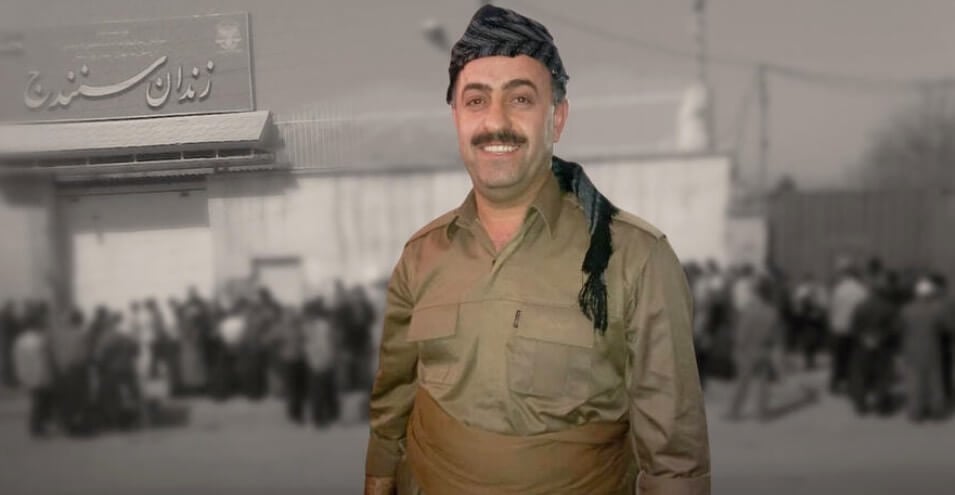
The Supreme Court rejected the request for a retrial by the defense lawyer of Haidar Ghorbani, a political prisoner sentenced to death, and this political prisoner is also at risk of execution.
Saleh Nikbakht, the political prisoner's lawyer, spoke to Voice of America on Monday, September 14, protesting the process of pursuing the case in the judicial system, calling the issued verdict "illegal" and "un-Islamic." He said, "If the laws that we ourselves have approved are not implemented, then who should we turn to for help? This verdict is neither in accordance with the law nor with Islamic principles, and the death sentence is not applicable to Haidar Ghorbani."
Haidar Ghorbani's lawyer explained: "We submitted the request for a retrial to the Supreme Court in late August of this year; but unfortunately, this request was rejected on September 5 by Branch 27 of the Supreme Court, and on Sunday, September 13, the ruling was served on Haidar Ghorbani in Sanandaj Central Prison. This is while the judiciary has not requested the judicial case from Branch 1 of the Kurdistan Provincial Revolutionary Court."
The lawyer says that the issued judgment states that the lawyer's request for a retrial regarding the "assistance in murder" verdict was rejected; however, the subject of the retrial request was the death sentence issued by the First Branch of the Islamic Revolutionary Court on the charge of "rebel" that sentenced Mr. Ghorbani to death, and the charge of aiding and abetting murder is related to another case in the First Branch of the Criminal Court of Sanandaj Province.
According to Mr. Nikbakht, the first branch of the Criminal Court of Sanandaj Province had previously sentenced this political prisoner to three counts of 30 years in prison as "an accessory to the murder of three people, and currently this political prisoner is sentenced to death on charges of rebellion; a charge that was a religious crime."
Explaining this, Mr. Nikbakht said: "In Islamic jurisprudence, the condition for conviction is that the rebel was armed and had taken up arms. While in all stages of the investigation into Mr. Ghorbani's case, it was not stated anywhere that he was armed."
The lawyer also says that in all his court hearings, Heydar Ghorbani has denied any cooperation with any Kurdish party before the investigating judges and previously denied any cooperation with the Kurdistan Revolutionary Guards during interrogations. He adds: "Based on the verdict issued by Branch 1 of Criminal Court 1 in Sanandaj, this political prisoner has neither taken up arms nor been armed. As a result, he cannot be tried and sentenced to death as a rebel."
On the other hand, the lawyer says: "On Saturday, September 12, a request to apply Article 477 was sent to the office of Ebrahim Raisi, the head of the judiciary, through Mr. Ghorbani's family. The ruling issued... is against Islamic law, and even if it is proven that Mr. Ghorbani was a member of a political party, he still cannot be sentenced to death because he did not take up arms. If the request to apply Article 477 is not accepted, the execution of the ruling is against the law."
Article 477 of the Criminal Procedure Code of the Islamic Republic gives the Chief Justice the authority to prevent the execution of "unlawful" rulings.
According to information published by some human rights media outlets, Heydar Ghorbani was arrested by the Intelligence Department along with his brother-in-law, Mahmoud Sadeghi, in October 2016. During interrogation, he was forced to confess under severe torture to “cooperating and assisting in the murder of several members of the Revolutionary Guard.” In February of last year, Mr. Ghorbani was sentenced to death by Branch 1 of the Sanandaj Revolutionary Court, headed by Hossein Saeedi, on charges of “rebellion” and “cooperating and being a member of the Kurdistan Democratic Party of Iran.” The sentence was officially served on him in early February 2019 in Sanandaj Central Prison. On Thursday, August 6, this sentence was confirmed by Branch 27 of the Supreme Court and sent for execution.
What does his family say?
One of the brothers of this political prisoner also expressed concern about the situation of Haidar Ghorbani in an interview with VOA, telling VOA: "All family members are in shock after hearing the news of the Supreme Court's rejection of the retrial and cannot do anything. My brother does not have the right to be executed, and there is no one to answer us, and we do not know where to take our case."
Mr. Ghorbani says that Heydar Ghorbani had no political activity before this arrest and had never spent a single day in prison. He says: "Even in the forced confessions that were broadcast on Iranian television, my brother did not confess to murder or any other charges. He only confessed to having moved several people in a car."
The political prisoner's brother told VOA that his family was able to visit him in Kamyaran Prison for at least a year and a half after he was arrested by Intelligence Agency security agents in October 2016. However, according to Mr. Ghorbani, during that visit, the political prisoner was unable to talk to his family due to the torture and psychological pressure he had been subjected to during his detention.
Forced confession
Forced and violent confessions by Iranian security forces have been reported many times before. This method of obtaining confessions, which has been repeatedly criticized by human rights groups, continues to be used by the Islamic Republic’s judiciary. Some of these forced confessions from detainees, such as those of Maziar Bahari, Maziar Ebrahimi, Sepideh Gholian, Ebrahim Bakhshi, Saeed Malekpour, and dozens of others, have been broadcast on official Iranian television channels.
Mr. Ghorbani, referring to the fact that the father of this political prisoner, Ali Ghorbani, who was a member of the Democratic Party of Kurdistan of Iran, was killed by agents of the Islamic Republic in the villages around Kamyaran in 1988, says: "We are under the sharp knife of the Islamic Republic. We have followed up on this case many times. We have referred to the Supreme Court, the Kamyaran Court, and Ebrahim Raisi's office several times. But no one is accountable and they do not even look at the case. There is no one who will even listen to the lawyer in the case so that a fair trial can be held."
At the end of his interview, the brother of this political prisoner told VOA: "We ask all people in the world to do everything they can, not only for Haidar Ghorbani, but also for all the young people who are innocently hanging, so that the execution of these loved ones does not make their families' lives bitter."
The US State Department has repeatedly and on various occasions condemned the violent confrontations and widespread repression of protesters, as well as the repeated and persistent violations of the rights of Iranian citizens by the ruling regime in that country.
Source: Voice of America