Inflation in Iran: Flying Back Again Toward Double-Digit Rates
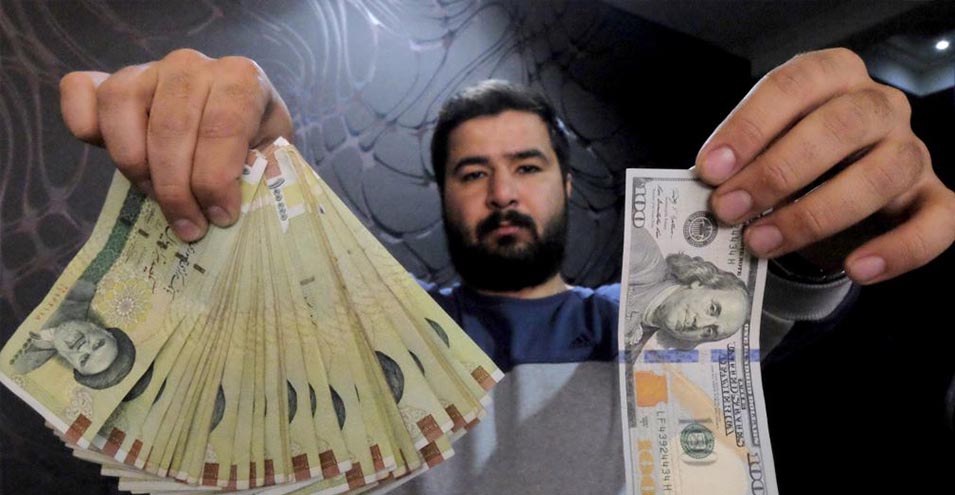
In early Farvardin of the current year, the Central Bank of the Islamic Republic announced that Iran’s inflation rate in 1395 had decreased to nine (9) percent, and thus, according to the same institution, “Iran has returned to the ranks of countries with single-digit inflation rates after twenty-six years.”
The announcement of the decrease in Iran’s inflation rate from the range of forty percent in 1392 to below ten percent in 1395 became one of Hassan Rouhani’s most important trump cards in the electoral battle for his second term of leadership.
An Unstable Achievement
Despite this announcement, a considerable portion of expert circles, relying on a series of alarming signs, warned that the return of inflation below ten percent might not be long-lasting. In early Ordibehesht, when the Central Bank announced that the inflation rate in the first month of the year had risen from 9 percent to 9.5 percent, it became clear that concerns about the fragility of the process of achieving single-digit inflation were not unfounded.
The validity of these concerns was confirmed again by the statement of the Central Bank of the Islamic Republic dated the fourth of Khordad of the current year. In this statement, we read that the country’s inflation rate in Ordibehesht, based on an annual trend (twelve months ending in Ordibehesht 1396 compared to twelve months ending in Ordibehesht 1395), had increased to 9.8 percent.
In current circumstances, it can be said with confidence that the single-digit inflation rate in Iran, following a very prolonged period, has not been a sustainable process, and this index will very likely return above ten percent again in Khordad or Tir of the coming year.
Before addressing the high probability of Iran rejoining the group of countries with double-digit inflation, emphasis on two essential points seems necessary:
One) Iran’s inflation rate, even at the eight to nine percent range, remains at a very high level compared to the majority of countries in the world.
Based on World Bank statistics, the average inflation rate globally in 2016 was 1.6 percent. That same year, this index was 1.3 percent in the United States, 0.2 percent in the Eurozone, and 1.3 percent in East Asia. Even in the Middle East and North Africa region, which serves as the basis for comparing Iran’s economic indicators, the inflation rate was 2.9 percent. This comparison shows that the Central Bank’s use of the phrase “in the ranks of countries with single-digit inflation rates” is not entirely accurate, because in the current global situation there is a considerable difference between 9 percent inflation and 2 percent inflation, although both are naturally in the single-digit inflation category. In other words, Iran still has a long way to go in fighting inflation.
Two) Nevertheless, there is no doubt that Hassan Rouhani’s government’s achievement in fighting inflation cannot be ignored. Various factors, from greater discipline in managing expenditures and revenues to the reduction of crushing pressures resulting from sanctions following the conclusion of the “JCPOA” and the government’s gaining more control over the foreign exchange market and the diminishing of inflationary expectations, played a major role in the transition of the consumer price index from the forty percent range to below ten percent. If these factors had not worked together, the probability of Iran’s inflation rate reaching several hundred percent would have been quite serious.
Of course, in several groups of goods that are the most consumed by people, the inflation rate remains at a high level, including the food and beverage group, which in Ordibehesht of the current year compared to the same month of the previous year saw prices rise by approximately eighteen percent, and health and medical services which increased by more than sixteen percent. But overall, this feeling among people that the pace of inflation growth has slowed certainly worked to Hassan Rouhani’s advantage in the recent presidential election.
The Structural Roots of Inflation
Despite Hassan Rouhani’s government’s success in dramatically reducing the inflation rate, its deep roots remain untouched. In fact, inflation stems from within the economic structures of the country, and its lasting control requires a fundamental change in these structures.
Severe fluctuations in oil revenues, currency shocks, weak productivity and high production costs, increases in imported goods indices, the peak of government expenses and budget deficits, expansionary fiscal policies and disproportionate increases in liquidity…all of these fuel inflation.
Among these, the disproportionate increase in liquidity plays a fundamental role in fueling inflationary tensions. Liquidity, in very simple terms, includes cash in people’s hands and also bank deposits that can be quickly and easily converted into cash. The increase in liquidity must be proportional to the growth of goods and services available in a country. If the rate of liquidity growth is faster than the rate of growth of goods and services available in a country, then naturally the inflation rate rises.
An expensive government that constantly faces budget deficits prints banknotes to meet its needs (in technocratic terms, it “borrows from the Central Bank”) and increases the volume of liquidity without proportion to the volume of goods and services in circulation. In the late years of Mahmoud Ahmadinejad’s second term, approximately twelve billion tomans was added to the country’s liquidity every hour. This was one of the most important factors of the severe inflation that gripped the country for years.
The bank-centered nature of Iran’s economy, or the heavy burden placed on the banking system (the Central Bank and banks) in financing, is one of the most important factors in the disproportionate increase in liquidity and the peak of inflation. In a country with a healthy economy, both the government and the private sector finance a major portion of their financial needs through the capital market and foreign sources. In Iran, a very large portion of responsibility for financing the needs of the government, quasi-governmental companies, and the private sector has been placed on the shoulders of the banking system and ultimately the Central Bank. The Central Bank, due to its lack of independence, cannot resist these “mandatory duties.”
According to statistics from the Central Bank of the Islamic Republic, “in Bahman 1395, the amount of banks’ debt to the Central Bank compared to the same period in 1394 increased by thirty-five percent. Also, according to these statistics, the government’s debt to the Central Bank during this period had growth equivalent to 28 percent” (Donya-ye Eqtesad, 21 Farvardin 1396). Such pressure on the banking system naturally leads to the disproportionate expansion of the monetary base. In other words, Iran’s economy is still trapped by very severe liquidity growth, while the real growth of gross domestic product (excluding oil) during the mentioned period has been at a low level.
In these circumstances, reforming the country’s banking system, securing the independence of the Central Bank, and creating the necessary conditions for the expansion of the capital market, including the debt market, should be among the top priorities of the twelfth government.
In line with a large portion of expert circles in the Islamic Republic, the International Monetary Fund also, while confirming the double-digit return of Iran’s inflation rate in the near future, forecasts this index at 11.2 percent in the current solar year and 11 percent in the next year.
It can be said with confidence that if the government cannot maintain the current very slow pace of exchange rate change, the increase in the inflation rate will be greater than what the International Monetary Fund suggests. Controlling the exchange rate at its current level also depends on various factors, including the global oil market and also pressure from economic and expert circles who say that preventing the natural growth of the exchange rate is contrary to fundamental economic principles and in the not-too-distant future will again lead to a sudden surge in the dollar price in the country’s foreign exchange market.
Source: Radio Farda